Monday, August 7, 2017

Tea Gardening

Will we ever see cool weather again?

As the heat of summer peaks, I dream of those crisp fall evenings, sitting on the back deck as the sun begins to tuck behind the western sky, and I look out over the garden beds all tucked in and ready for the coming winter.  In my hand is a steaming mug of home-grown tea, made from the dried leaves and buds of some of the season’s most beautiful floral displays.  With a little know-how and pre-planning, growing your own tea garden can enable you to mix up just the right balance of flavors to suit your taste and is something that can be harvested and enjoyed year-round.  Some of the tastiest, and easiest, herbs to grow for tea are:
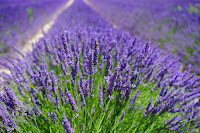
Purple flowered stalks
Lavender
Lavender (Lavendula angustifolia): (Buds) Fairly simple to care for, lavender can provide a beautiful addition to your landscape and attract beneficial pollinators to your green spaces.  English lavender is cold hard to Zone 5, can bloom twice in a single season, and is considered drought tolerant.  Preferring full sun and alkaline soils, lavender needs to be pruned annually after the plant has established. The plants have very few pests or disease problems.  However, they can be susceptible to soil diseases such as Phytophthora, so it is important to water carefully and not standing water around the plant.  Harvest the flowers and buds for drying when they are one-third to fully open and hang them in a cool, airy, shaded room.  To make a relaxing lavender tea, combine hot water with fresh or dried buds steep until you reach your desired flavor.  For a bit of sweetness, add a few drops of honey. 
Mint (Mentha sp.) (Leaves) There are a number of mint varieties to choose from, each providing a unique flavor to brewed tea.  Spearmint makes a soothing tea, while peppermint makes a sweeter tea.  A visit to a local nursery will likely present you with choices like apple mint, chocolate mint, and orange mint.  A very hardy, prolific plant, mint can quickly take over surrounding garden and landscape areas.  To keep this eager spreader under control, try growing it in containers or confining it to a bed with metal or plastic edging. Cold mint tea can be oh so refreshing during these hot months, while now is the time to also harvest and dry the leaves to be brewed up for a simple, yet delicious, hot tea as cooler temperatures make their way to the valley.
Calendula: (petals) A member of the daisy family, these beautiful yellow and orange flowers add long-lasting color to any flower bed or container.  Their frost tolerance and somewhat cold hardy nature, as well as their propensity to draw aphids away from other garden plants make them great companion plants for many of those well-loved vegetables growing nearby.  Simply pour hot water over the dried flowers and let steep to your desired flavor intensity.
Lemon balm ((Melissa officinalis): (Leaves) Adding a lovely, gentle lemon flavor, lemon balm is an easy-to-grow perennial, that tolerates full sun to partial shade and produces delicate white, pale yellow, or pink flowers.  Though, if you are interested in controlling this prolific plant, pruning to ensure that it does not set and drop seed is key.  Combined with other dried ingredients, including oat straw, rose hip, orange peel, and lavender, a cup of lemon balm tea can lift the mood on a cloudy, rainy fall day.
White flowers with yellow centers
Chamomile
Chamomile ((Chamaemelum nobile)): (Buds) From June to August, the tiny, delicate daisies of chamomile are a wonderful perennial addition to any tea gardener’s gardenscape.  Hardy to Zone 3, and loving light, dry soil, chamomile is fairly easy to grow. Two of the most common chamomiles used for tea are German chamomile (Matricaria recutita) and Roman chamomile Chamaemelum nobile.  Fresh chamomile buds can be combined with boiling water, apple slices, and a bit of honey for a calming, warm hug on those crisp fall evenings.
For educational purposes only.  This information has not been evaluated by the Food and Drug Administration.
Click on the following active links for more information and helpful resources about these and a multitude of other herbs excellent for cultivating a tasty tea garden, and cultivation, propagation, harvesting, and preservation.

Monday, July 17, 2017

A Great Untapped Resource


When working as a Master Gardener for the Cooperative Extension Service at public events, I am amazed at how many people do not know about the rich, untapped resource of their local county extension service.  Some, like me have childhood memories of mothers attending extension service club meetings, being involved in a local 4-H club, and extended family members entering lambs in the county fair.  However, many do not realize the practical information and the resources the Cooperative Extension Service provides and makes available to the public through individual counties.

            You may be asking what exactly the extension service is and what resources it provides?  The

inception of the United States Department of Agriculture Cooperative Extension Service goes back more than 100 years. The Smith-Lever Act of 1914 established informal education for agriculture and  rural businesses, thus creating an extension of learning through the land grant college system already set up in 1862, and fully funded in 1890.  Land grant colleges were colleges of agriculture and mechanical arts set up by individual states from proceeds of land sales that the federal government made available in those states.  For example, in Idaho, the land grant college was established in Moscow in 1889 and was named the University of Idaho.  It was the only university in Idaho until 1963.

            The Smith-Lever Act extended research-based education from these land grant colleges to the public in a more informal manner. Research-based information and print material was made available to farmers and ranchers, consumers, and families. Currently the U of I Cooperative Extension Service website demonstrates the diversity of information dispersed by the lead caption which states; "Growing the garden of your dreams? Preserving foods safely? Learning sound financial practices? Practical education you can trust." 

            The Information Age has increased the variety of formats and venues in which education is provided and information is accessed. Information is easily accessed through print, digital, and electronic formats, as well as traditional teaching methods.  A variety interactive and hands-on activities, teaching practical life skills are provided to youth and adults alike. Many great websites are available on the Internet and Facebook, including U of I Cooperative Extension website and individual county extension websites.  Programs are offered to the public through the Master Gardener program, local community service groups, 4-H clubs,  and partnerships with other state organizations, such as Idaho Fish and Game.

            To learn more about the Cooperative Extension Service in Idaho and to access information please refer to the links below:

University of Idaho Cooperative Extension Service:
https://www.uidaho.edu/extension
http://www.extension.uidaho.edu/links.asp

Canyon County Extension Service
https://www.uidaho.edu/extension/county/canyon
https://211idaho.communityos.org/zf/profile/program/id/846011    

 The USDA Cooperative Extension Service
https://nifa.usda.gov/extension

The Smith-Lever Act
https://nifa.usda.gov/history+

Monday, July 10, 2017

Four Season Landscaping in the Treasure Valley

The gardening books emphasize the need for planning and designing.  Landscaping involves the combination of small flowering plants, bushes, trees, and non-animate objects like ponds, fountains, rock paths and structures, wooden structures, and miscellaneous art objects placed strategically around the property.  Obviously it is possible to have too much or too little, therefore the necessity to plan and design the appearance of the property.

Generally the majority of the space will be in grass.  I need to deal with areas of full sun and almost full shade with moss. I have determined to aerate in early spring, change the watering pattern, and seed some areas with shade grass. 

Then it is necessary to plan the layout of the garden areas considering the location of vegetables, flower beds, shrubs, trees, and man-made structures like trellises, ponds, rock work, and paths.

Spring
·       If the mulch that you applied in fall consists of a coarse material, such as large, unshredded leaves, or if the mulch tends to mat down over time and form a barrier, then you should generally remove that layer of mulch in spring at a time when the threat of severe cold has passed (https://www.thespruce.com/spring-landscape-maintenance-tips-2130818)
·       Rake lawn, deeply, to remove thatch and snow mold
·       Get rid of moss.  The potential causes and solutions are:
o    Cause:  Low soil pH.  Solution:  Raise pH
o    Cause:  Lack of necessary nutrients in the soil.  Solution:  Addition of nutrients indicated by soil test
o    Cause:  Poor drainage.  Solution:  Change watering schedule
o    Cause:  Excessive shade.  Solution:  Plant shade grass.
o     
·       Aeration if soil is compacted
·       Decide on location and types of vegetables and fruits to be grown
·       The early spring flowers are very colorful but don’t last long:
o    Daffodils, iris, tulips, lilies, forsythia, lilacs
o    The bulb flowers can be interspersed with annuals like pansies
·       The heavily shaded areas are planted in hosta with some other shade perennials
·       Hanging baskets are planted with a variety of flowers and yams that will last through the fall
Summer
·       Summer Flowers
o    The beds are planted in perennials, i.e. catoneasters, with a great variety of colors
o    The box  (4’ x 4’) is planted with annuals and the choice changes each year
Fall
·       The summer flowers are those that continue blooming into the fall
·       Lawn:  fertilize in late fall (November)
·       Rake leaves (1/2” deep for dethatching)
·       Mulching for perennials.  Leaves and pine needles are left in the hostas.
Winter
·       Keep it clean and neat
·       Evergreens can provide some color other than brown and the fruit of some bushes, e.g. Oregon grape and holly can provide other color. 

·       http://extension.oregonstate.edu/gardening/so-many-cabbages-so-little-time  this website describes how winter cabbage can be grown.  This would be an interesting addition to a winter garden.