Showing posts with label Aphids. Show all posts

Sunday, June 7, 2026

Who Sneezed on the Tomatoes? What Treasure Valley Gardeners Should Know About Plant Viruses

If you've gardened in the Treasure Valley for very long, chances are you've seen a tomato plant suddenly stop growing, develop curled leaves, and never recover. While insects, weather, and nutrient issues often get the blame, sometimes the culprit is a plant virus.

Plant viruses are not as common as fungal diseases, but they do occur in Idaho gardens. Unlike fungal diseases, plant viruses cannot be cured once a plant becomes infected. Understanding how they spread can help gardeners recognize problems early and make informed decisions.

One common misconception is that plant viruses come from the soil. In reality, most plant viruses do not survive freely in garden soil. Instead, they persist in infected plants, weeds, volunteer seedlings, perennial hosts, or occasionally seed. Insects then move the virus from one plant to another.

One of the most common viral diseases in the Treasure Valley is Beet Curly Top Virus (BCTV). It is spread by the beet leafhopper, an insect that migrates from weedy and rangeland areas into gardens and agricultural fields. Tomatoes, peppers, beans, potatoes, squash, and beets can all be affected. Symptoms often include upward leaf curling, thickened leaves, stunted growth, yellowing, and poor fruit production. Unfortunately, once a plant develops curly top, there is no cure.

Other viral diseases found in Idaho gardens include Cucumber Mosaic Virus (CMV)Tomato Mosaic Virus (ToMV), and Tobacco Mosaic Virus (TMV). These viruses can affect vegetables, flowers, and weeds. Symptoms may include mottled or "mosaic" patterns on leaves, leaf distortion, yellowing, reduced vigor, and stunted growth.

One challenge with diagnosing viral diseases is that many other problems can look similar. Herbicide drift, nutrient deficiencies, environmental stress, insect feeding, and even natural genetic variation can sometimes mimic virus damage. A plant with curled or mottled leaves does not automatically have a viral disease.

Viruses are commonly spread by insects such as aphids and leafhoppers. An aphid may feed briefly on an infected weed, pick up virus particles, and then transfer them while feeding on a healthy garden plant. In some cases, transmission can occur in just a few seconds.

Because viruses are spread by insect vectors, gardeners may occasionally see viral diseases even in gardens filled with beneficial insects. Lacewings, lady beetles, spiders, assassin bugs, and other predators help reduce pest populations, but they cannot always prevent a virus from being transmitted before the insect is eaten.

So what should a gardener do if a viral disease is suspected?

First, take a closer look before removing a plant. Not every unusual symptom is caused by a virus. If the diagnosis is uncertain and the plant is otherwise healthy, monitor it closely while watching for additional symptoms. However, if growth becomes severely stunted, symptoms worsen, or a viral disease is strongly suspected, removing the plant is often the best course of action.

Finally, practice good Integrated Pest Management (IPM). Manage weeds that may serve as virus reservoirs, encourage beneficial insects, keep tools clean, and maintain healthy growing conditions.

Most importantly, remember that not every odd-looking plant has a virus. Careful observation, patience, and a healthy dose of curiosity remain some of the gardener's most valuable tools.

Sunday, June 14, 2020

It's an Aphid Invasion!

Are you noticing an aphid invasion in your garden?


Aphids cause deformed and curled new leaves, buds, and flowers.  They can also carry viral diseases and some species cause galls. 


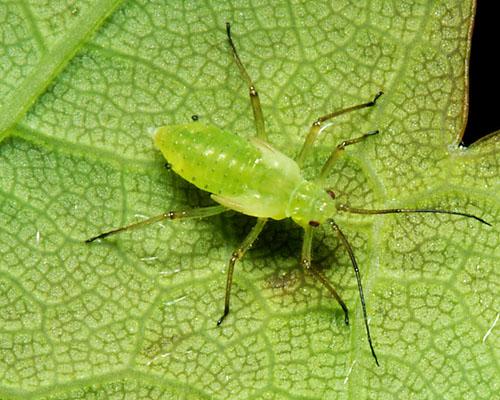
These soft-bodied, small round insects like to suck plant juices around the growing tips and tender tissues of plants.  


https://influentialpoints.com/Images/Euceraphis_nymph_accidental_on_sycamore_c2012-04-30_14-23-36ew.jpg

All aphids secrete honeydew, and this is sometimes the first symptom noticed. The honeydew attracts ants who feed on it.  You can find more information about these pesky, and destructive, garden pests at the University of Kentucky’s fact page.


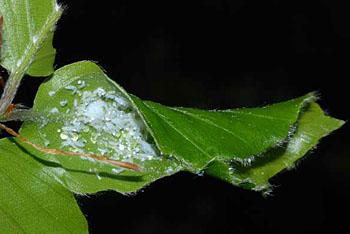
https://influentialpoints.com/Images/Phyllaphis_fagi_aptera_and_nymphs_on_Fagus_sylvatica_at_Bank_New_Forest.jpg https://influentialpoints.com/Images/Phyllaphis_fagi_colony_leaf_folded_enclosing_colony_on_Fagus_sylvatica_at_Trinity_Hill.jpg

To manage aphid populations and their nuisance of destruction, soapy water (use specially formulated insecticidal soaps) sponged or sprayed onto leaves works well. Natural solutions can be predators like lady beetles and flower fly larvae. For additional information on biological, cultural, and chemical control options, check out the University of California or Colorado State University fact sheets on aphids.


Tuesday, August 14, 2018

Turf/Tree Team Part 1

The Tree and Turf Team has been busy so far this summer.
Part 1.

There hasn’t been a slow down with mid-summer fast approaching for Tree & Turf Team.
The team has been all over the valley visiting multiple issues impacting resident’s trees and lawns. We’ll cover a few of our visits in detail, giving what we found, we will show some photos of damage and what advice we gave to help the owners.
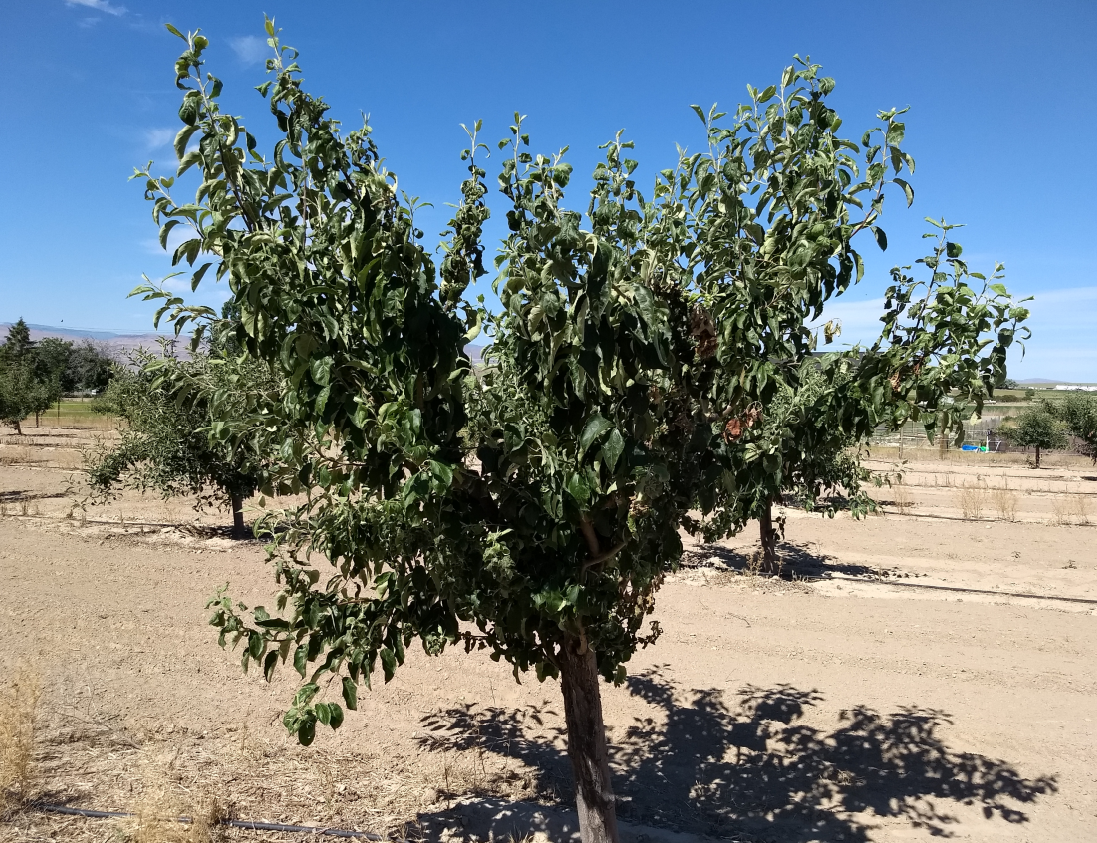
Our 1st visit takes us out to Melba where a couple have 2-acre 180 fruit tree orchard that turned out to be a lot of note taking. The couple called into Canyon County Extension Office asking for help with their apple, pear and cherry trees, each with a different problem. The apple trees were being impacted by a severe aphid infestation. “see photo’s 1 and 2”. At this point there wasn’t much we could do because the aphids would soon be gone for the summer eating grasses but they  could return in fall. We made comments about using horticultural oil before bud break next year to help control future outbreaks.  
Aphids causing the leaves to curl
Notice small black spots on the back of leaf
The second tree variety “pears” appeared to be impacted by fireblight. Fireblight is a really nasty bacteria that ends up killing large areas of the tree. The only way to try saving what’s left of the tree is cutting the impacted branch below the infected area and disposing of it. It’s important to get these limbs removed right away because the bacteria can move from blighted spurs and shoots through the vascular system into larger limbs and tree trunk. Death of the tree could result within one season if not properly taken care of.

Signs of fireblight is wilted leaves turning black
Several branches impacted with fireblight               
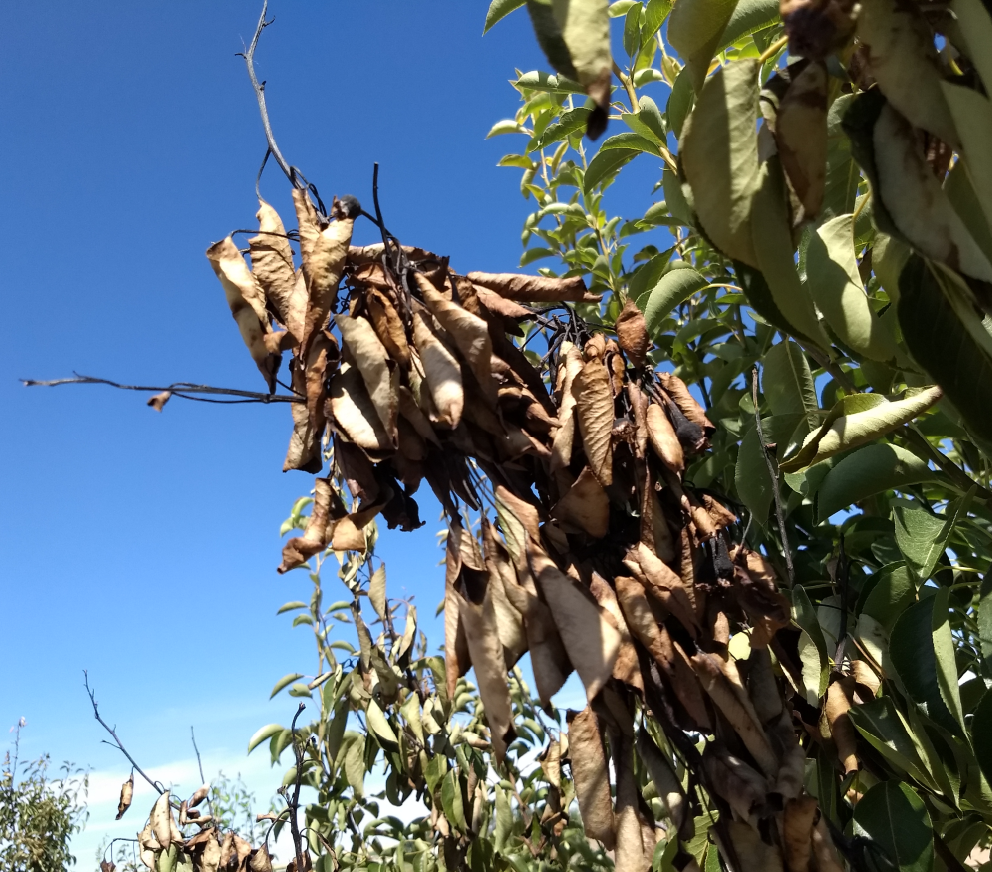
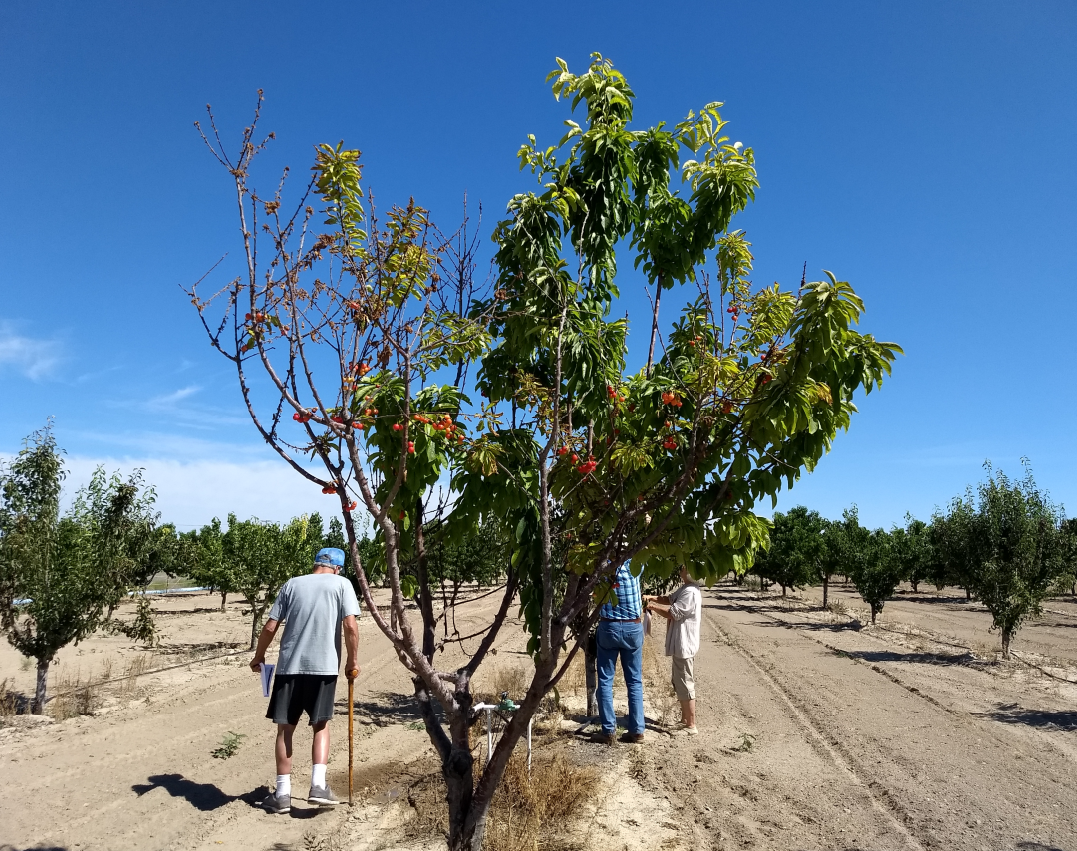
The third tree issue impacting the orchard was their cherry trees. Research is still ongoing, but we are suspecting a fungal disease called Brown Rot Blossom Blight. The branch tips die back, leaving clusters of dead, brown leaves. Fungus spores infect the tree blossoms in the spring, when the blooms begin to age. Many tiny black spores begin to cover the dying flowers. The spores become active and start to kill the branch tip and work back towards the trunk. Once the dieback begins, the disease cannot be controlled. The only recourse is to prune off the dead portions of the branches and dispose of them in the trash. However, you can help prevent the reinfection of your plants by cleaning up all ground litter from all around the base of the tree.
Clusters of brown dead leaves
Backed off to notice dead branch dieback
Last pieces of advice we gave them was about their drip water system, which was to move emitters out further toward tree drip line instead of directly next to trunk. The 2nd item was to bring in a few truck load of wood chips that could help in retaining moisture and better temperature control under the tree canopy.

Check out some of these links.


Data Reference:
Aphids impact on apples trees:  from Utah State Extension


Fire blight on pear trees: from University of California Extension


Cherry tree fungus blight: from Penn State Extension