The Turf/Tree Team recently had a couple of site visits where our clients are having issues with their lawns. The 1st was fungal issue called Brown Patch, where the grass looked dead and the 2nd issue was an over watering issue where it was impacting his lawn. We also believe the over watering was also impacting the surrounding trees that were under stress. We’ll cover both issue and talk about how to avoid these problems going forward.
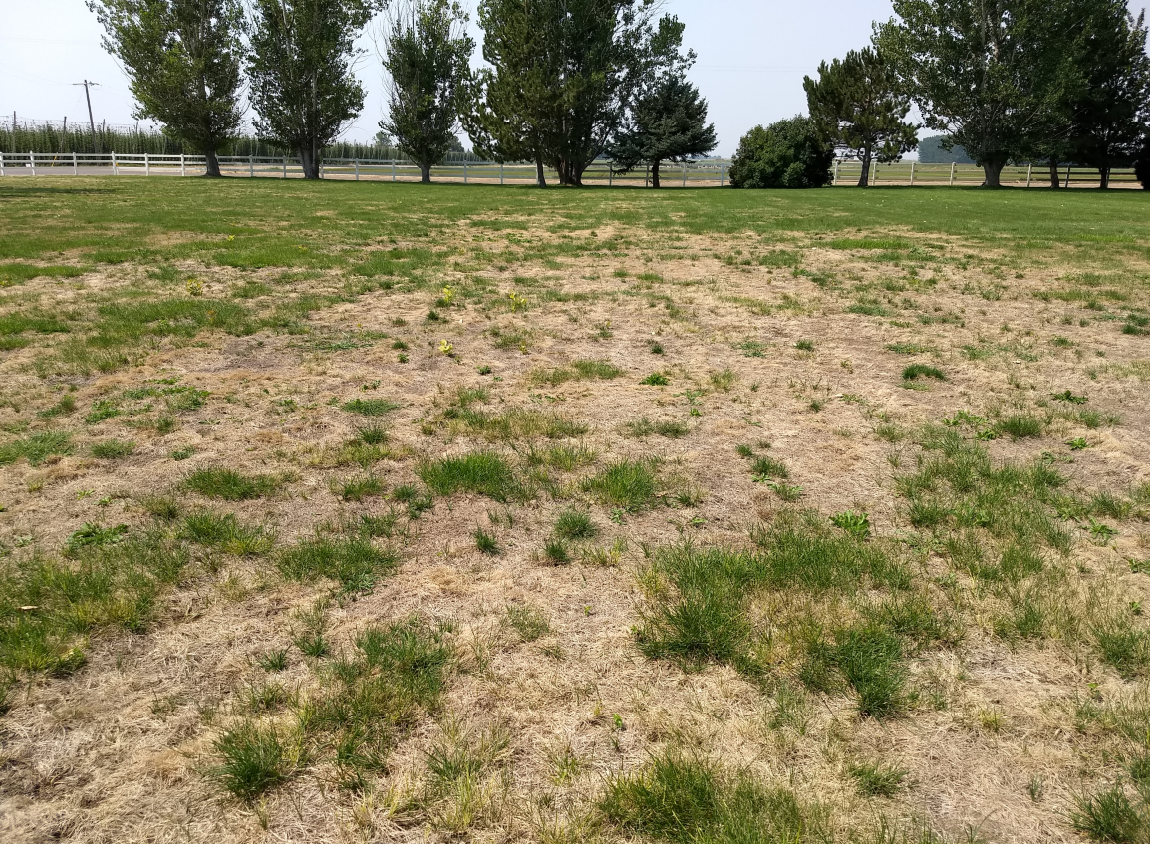
Let’s look at Brown Patch impacting a large area of the local neighbors lawn:
No insect problems, just a fungal issue.
Our client swore she was having insect problem, but after we pulled up a large sample of the impacted lawn and took it back to office for analysis. We found both the crown and roots to be intact, we also found no insect issue, because most insects such as billbugs would be eating away on roots and crown.
What we did find was good soil full of worm eggs and casting and a lot of small roly-polies. The grass though was thin with large patches of light brown grass. Our client had many unfavorable conditions that were going on from overwatering, from causing humidity levels to spike, to having a lawn service come out for multiple fertilizer applications to her lawn. All this added up for a severe case of Brown Patch to develop.
So we followed up by researching from multiple educational websites that address Brown Patch and how to prevent Brown Patch from happening next year. Those articles included attention to cultural practices, such as avoiding excess nitrogen during the summer heat, which can contribute to reducing disease pressure and help improve fungicide performance on intensively managed turf. Improving air circulation and scheduling irrigation times to avoid long dew periods to also help suppress Brown Patch outbreaks.
There are also numerous effective fungicides that are registered for Brown Patch control. When selecting a fungicide, be aware of other turf disease threats and apply fungicides for these threats at the same time to minimize costs and other potential disease problems.
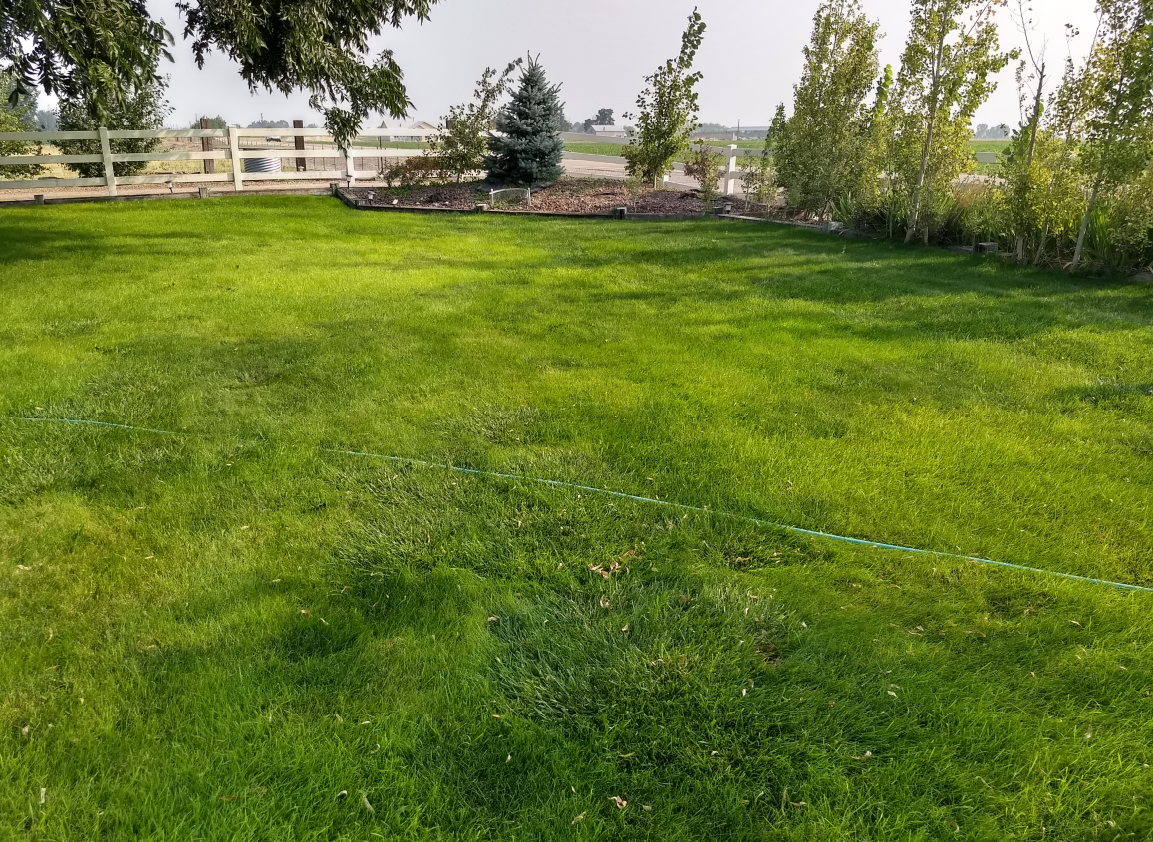
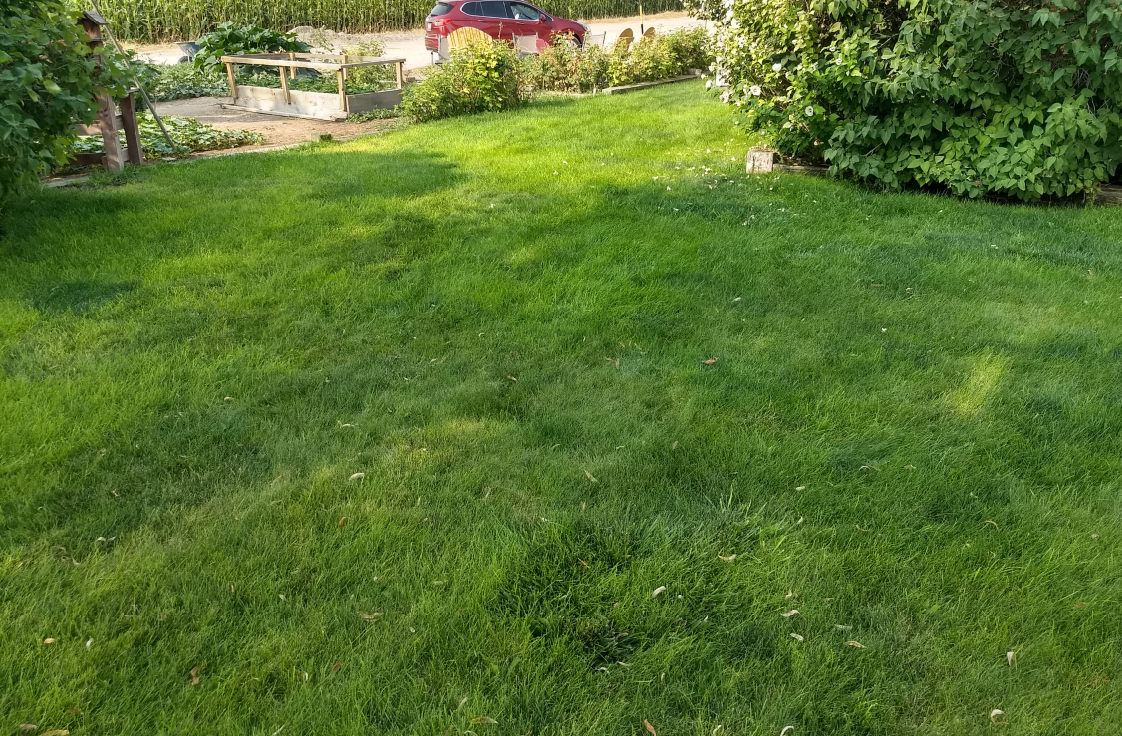
Our next site visit took us out to West Caldwell where the client was having what appeared to be dieback on multiple trees such as Ash, Pecan and Willow. At the time we didn’t have a answer for his tree problems. But after walking around his lawn area looking at the trees, we notice how soft and spongy the lawn felt. Looking around closer, we found large areas of yellowing grass and when we bent over and tugged at the lawn, we felt the crown area separating from the soil surface. We then ask about his watering and fertilizing schedule. We found out he was watering for nearly hour in each zone every other day and his local lawn care service was out frequently applying multiple applications.
Light Yellowing of grass blades
We talked for awhile about how much water his lawn really needs during the summer months and that his lawn care service may be over doing it. He did turn off the watering station to allow his lawn to dry out some while we were there.
When we got back to office we followed up by putting together a Lawn Maintenance Schedule that included how often to water and what his lawn fertilizing needs were for a whole year. He seemed pretty happy with the follow-up schedule. We also sent an older article we found from USDA where over applying the amount of Nitrogen could be causing problems with his Pecan tree. Even though I wouldn’t rule out the 3 story tall tree house surrounding the pecan tree, it may also be impacting on the life of tree.
So far this summer the Turf/Tree Team has been fairly busy with site visits and providing research based answers to the clients. They have enjoyed the opportunity to provide this service which is part of the Master Gardener Program, Canyon County Extension of the University of Idaho.