Showing posts with label culinary herbs. Show all posts

Friday, December 5, 2025

Indoor Herbs for Winter Cooking

If you love using fresh herbs in your kitchen year-round, consider growing your own herbs inside your home. Some of the best winter meals are made with the snip of a fresh branch grown in your windowsill!

For an indoor culinary garden, consider growing garlic, chives, basil, oregano, parsley, sage, rosemary or thyme. If you want to grow a tea garden you may want to plant spearmint, peppermint, lemon balm, lemon verbena, chamomile or catnip.

To start your indoor herbs, you can either buy pre-started herbs, or you can start from seeds. Either way works, but if you prefer more unique herbs, then starting from seed may be your only option.

If you decide to grow herbs that have already been started, then make sure the container has good drainage and is large enough for the plant to grow. If the container is too small, simply choose a different pot and transplant it. Be sure to water the plants regularly. 

Light is very important, so place your herbs in a sunny location that receives at least half a day of sun. New information about indoor lighting has made it easier for the home gardeners. Those labeled "cool white" work well. "Warm white" and "Daylight" may also work. Lamps tailored to a plant's needs are also available. 

A bonus to indoor herb gardens is that they can be moved outside after the threat of frost passes. Simply place your herb pots outdoors and enjoy fresh herbs all year round.


For more information on starting seeds the University of Idaho Extension provides this excellent resource: Start Seeds Indoor With Success 

Friday, November 24, 2023

Growing herbs for holidays meals...and as gifts!

Do you love using fresh herbs in your culinary creations? Consider growing your herbs indoors where you can snip a fresh branch as you're cooking your meals! PSST- they're wonderful gifts for that hard-to-shop-for person!

For an indoor culinary garden consider growing garlic, chives, basil, oregano, parsley, sage, rosemary or thyme. If you want to grow a tea garden you may want to plant spearmint, peppermint, lemon balm, lemon verbena, chamomile or catnip. It's not too late to start from seeds. 

Be sure to choose a container that provides good drainage, and fill with one or more of your favorite herbs. Light is very important so place your herb garden in a sunny location that receives at least half a day of sun. New information about indoor lighting has made it easier for the home gardeners. For grow lights, those labeled "cool white" work well. "Warm white" and "Daylight" may also work. Lamps tailored to a plant's needs are also available. Be to water regularly. After the threat of frost passes, you can place your garden outdoors and enjoy fresh herbs all year round.

With Christmas just around the corner, herb starts in pots are a welcome gift, both for hosts and under the tree. It also encourages growing fresh food in our homes.


For more information on herb gardening in Idaho, the University of Idaho Extension provides this excellent resource: Idaho Green Thumb How-To's.

Saturday, October 23, 2021

Herb Gardening for Food and Tea

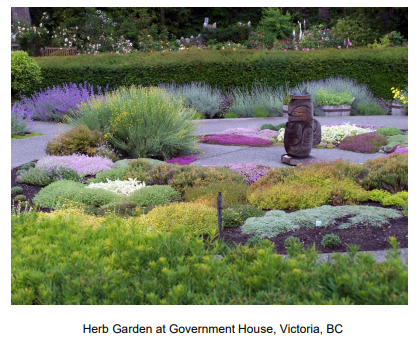
Gardening herbs can be a sustainable and inexpensive way to provide your family with meals that contain healthy characteristics which accentuate the flavor and make for delicious teas. Herbs are plants chosen for medicinal, savory, or aromatic qualities. To start an herb garden first determined what herbs to plant. Pick herbs that you will use on a regular basis. Plants must be able to grow in the USDA hardiness zone for your area. Buy plants that are easy find in local garden shops and are healthy. Look for plants that are not dry, tuning brown or losing leaves. Or start from seeds. They grow well in containers, too!

Mint - Mentha app,

Herbs are plants used for medicinal, savory, or aromatic qualities. Herbs can be trees, shrubs, herbaceous perennials, annuals, vines, or lower plants. They can be classified in many ways - method of use, culinary, ornamental, medicinal, or aromatic. Also, economic/industrial used as dyes, cosmetics, or pesticides. They can be classified by length of their growing season, whether they are annuals or perennials..

To start an herb garden first determined what herbs to plant. Herbs are either perennials or annuals. Knowing which are annuals and which are perennials is essential when planning and planting herb gardens. Perennial herbs like sage, thyme, lavender, chives, and mint comeback each year. Annuals herbs like basil and cilantro may not survive winter, they must be replanted each spring. Some annual herbs once planted reseed themselves each year. 
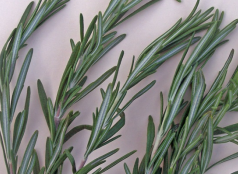
Rosemary - Rosmarinus officinalis
Plants must be able to grow in the USDA hardiness zone for your area. There are many common herbs that grow well in Idaho. Herbs from Europe and the Mediterranean are well adapted to Idaho climates and prefer full sun and well-drained soils. Some tolerate partly shady areas, catnip, chamomile, cilantro, dill, bee balm, burnet, hyssop, lemon balm and mint are among these herbs. 

Herbs generally require less water and fertilizer than other garden plants. Some varieties of sage, lavender and thyme make good choices for low maintenance or xeriscape gardens. Culinary herbs can be frozen or dried. 

In conclusion, herbs contain healthy characteristics which accentuate the flavor of homemade meals and teas. Herbs are valued for medicinal, savory, or aromatic qualities. To start an herb garden determined what herbs to plant. Pick herbs that will be used frequently. Plants that grow in the USDA hardiness zone for your area and are easy find in local garden shops. Look for plants that are healthy, not dry, tuning brown and/ or losing leaves.