Showing posts with label garden journal. Show all posts

Saturday, May 4, 2024

Start Your Garden Journal NOW!

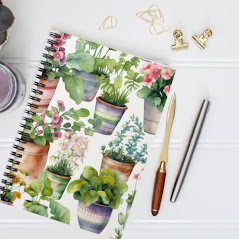
A gardening journal is a perfect place to organize and My Gardening Journal, 2023 Gardening Notebook, Gift for Gardener, Garden Log book, Watercolor Journal, Gardening Girl, Plant Lady Notepad image 1
store all of your garden-related information that will guide you in making future decisions about the plants you choose to grow, how to combat any nutrient deficiencies and pest invasions/disease problems which you encountered, and dreams about future landscape designs for your space. There is no right or wrong way to keeping a gardening journal; it is simply a personal horticultural record of your observations as well as yours hopes and dreams for your garden. 
There are as many different formats or styles of journals to choose from as there are gardeners. Based on your personal preferences, you could simply use a blank hard-cover composition book, a spiral notebook, a graph paper notebook, a scrap book, a three-ring binder with plastic dividers and pockets for seeds, a custom designed disc-bound notebook or even a digital format (there are many apps to try!). Whatever system you select, make sure it is easy and convenient for you to use.

The contents of your garden journal will depend upon what you find interesting or useful in your garden; it can be a detailed scientific collection of information, a creative expression of the beauty in your garden or anything in between. The scientific gardener could include charts and graphs to record temperatures and fertilization schedules. The artistic gardener could add pressed flowers or leaves and artwork. There are several recommended categories that ought to be included in your garden journal. Recording your hardiness zone and the first and last frost dates are critical to planting the right plants at the right time in the right places.
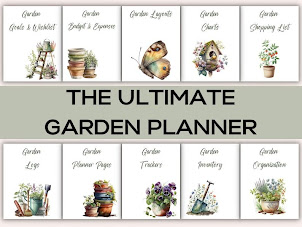
Spring Garden Planner I Plant Planner I Gardening Planner I Garden Organization I Garden Journal I Garden Layouts image 1Recording the dates of direct sowing, transplanting, blooming, and harvesting times will also be quite useful. Creating a map will help you remember the varieties of plants you planted and their locations. Some other suggested topics you may want to include are the sunlight patterns during the growing season, unusual weather and temperatures patterns with dates to help you determine best planting times, a maintenance and fertilizing schedule, any diseases or pests your plants encountered along with the most effective treatments, the soil quality, seed inventory lists, and your goals for the next year. 
Keeping a garden journal will help you celebrate your successes, learn from your mistakes, and be prepared to deal effectively with gardening issues. By simply observing and recording the dynamics of life in your garden, you will create a powerful resource for future successes in your gardening journey. 

Wednesday, May 9, 2018

Crop Rotation


Planning for crop rotation is a must for any home gardener and will help with the health and productivity of your garden year after year.  From container gardening, raised beds, or garden beds, crop rotation plays an important role in the success of your home garden.  The practice of crop rotation has been found throughout human history in agriculture.

What is crop rotation and why is it so important?
Crop rotation is simply changing the location where you grow plants within a family, every season. The practice of crop rotation each season will help maintain the health of your soil and reduce the risk of plant diseases and pests associated in certain plant families. For effective crop rotation, a plant family should not be planted in the same area for a minimum of three to four years.

What is an example of a basic four method rotation plan?
For a home garden with four garden spaces, here is an example of growing four categories of plants by legume, root, leaf, and fruit. Each growing season the category of plants are rotated to the next garden space, going right to left in the diagram shown below.

For home gardeners with more space, rotation by family is another option for more complex crop planning. Here is a table of common vegetables and their plant family classifications:

To help keep track of your garden’s crop rotation plan, it is important to keep a yearly garden map or journal where plants are located.  It can be difficult to remember plant locations by year three or four; so keeping a record is important for implementing a successful crop rotation plan.

Although crop rotations for a small garden can be a challenge, ensuring plant families are not grown in the same area each year will lead towards a healthier and more productive garden.

Crop Rotation in the Vegetable GardenAgricultural Technology
Using Crop Rotation in Home Vegetable Garden

Wednesday, March 28, 2018

Planning For An Established Garden


Maybe you recently purchased a new home with existing plants, or you’ve finally decided to tackle that project of making your yard less of an eyesore.  Those plants were there before you were, and you really have no idea what they are or where to start? Or, maybe you even planted some of them at some point, and you thought you would remember what they were, but life got busy and you had several other things to remember.  Suddenly the name of the perennial Aunt Martha gave you 10 years ago as a housewarming gift is not one of the things you recall.

If it’s the first year in your home or just the first year you are actively paying attention, the best thing to do is to slowdown and start a journal of plant notes.  That may sound like a tedious project in itself, and in your mind taking out every plant and starting fresh sounds less like a root canal than a journal of plant notes. Here's a video about garden journaling.  However, ripping out your entire landscape is equivalent to burning down your house because it hasn’t been cleaned in a long time, and it’s a lot more work than you might anticipate.  It’s likely that project will also wind up partially completed, and you’ll have an overgrown bed adjacent to a bare naked bed.  If you do actually pull everything out, you’ll forget you haven’t decided what you’re replacing it with, and each trip to the nursery to pick out plants will remind you how expensive those replacements are which could mean completion takes longer than you expected anyway.

For the first year, you’ll want to keep a plant journal of each season.  Keeping a gardening journal doesn’t mean you are at a standstill or you aren’t making progress toward the yard of your dreams.  Don’t worry about not doing enough, because you can always clear leaves and anything you are positive is a weed, and that will keep you busy year round. 
The plant journal is a great place to record what you have now and also to brainstorm what you might like in its place or in addition.  Otherwise, you’re likely to plant on top of something that is already growing there and just hasn’t shown itself yet.  It may be a good time to pull out the plat map of the property that came with your title report when you purchased your home because it can be provide a good map of the property.  Or you can make your own map of the area in your journal. 

Take photos of the garden at different times of the day as well as different seasons, and keep them in your journal.  You may want to label each photo with the type of plant or care that is necessary to keep it healthy, but to start at least keep photos with your garden notes so you can remember the changes.  You’ll also begin to notice some areas of the garden that don’t fill in and need to have something planted there.  Or, you may discover taller perennials located at the front of the bed, when they should be in the back so they don’t cover up everything behind it.

You’ll also want to start identifying what you already have to keep a master plant list, and see how that plant is doing in its current location.  It may be that when it blooms you decide you love it and won’t want to remove it after all, but you realize it’s overgrown or just not quite resembling the photos of what you think it could look like.  It may mean you relocate the plant to another area of the yard where it does better, or maybe it needs divided or trimmed.  You can use perennial finders online  to help identify plants, or download the app for tree identification leafsnap   to figure out what trees are in your yard.  Of course, for one-on-one assistance, your local University of Idaho Extension Office. can help you identify plants and trees and provide tips to caring for them also.
 
After you’ve survived 4 seasons, you’ll start to have an idea of what you like and dislike about your existing plants.   You’ll be able to decide which ones you dislike or what you might change about the location.  Plus, you’ll have seen so many plants at this point in your plant identification search that you’ll start to have your own ideas about what you would like.  You may have already written down possibilities and then selected a plant that will do well in that location as well as what you find attractive.  In the end, your garden is ever evolving and changing, but a little planning will make the actual planting a lot less painful. For even more how-to information, check out this article.