Sunday, May 29, 2022

Salad Tomatoes, Small but Mighty in Flavor & Production

Good things come in small packages. This platitude rings true for saladette tomatoes, commonly known as salad tomatoes. Their small, ping pong ball form and robust flavors deserve a special place in your garden.

Often overlooked when compared to big beefsteaks or cherry tomatoes, salad tomatoes generally grow larger than cherry tomatoes but smaller than medium-to-large paste and slicer varieties. Many varieties of salad tomatoes possess a relative tolerance to cold, so you can plant them outside when cooler temperatures prevail and other less hardy varieties must still bask in heated greenhouses. No variety of tomato, however, is frost tolerant.

Famed tomato breeder Ben Quisenberry created the Large Red Cherry, that he claims can be canned whole - seeds and all. His unique variety differs from the smaller, more commonly available tomato "Red Cherry, Large.” Lesser-known salad tomato varieties include: Garden Peach, Tigerella and Black Vernissage. As indeterminates, all three varieties require staking and pruning. Garden Peach, a "long keeper" tomato, stores well when picked green just before frost arrives in autumn. Excluding their green stems, the ripened fruit look like small, slightly fuzzy peaches. Tigerella, an English heirloom tomato, wears beautiful orange stripes over a red skin and sets fruit early, often three weeks before than other salad varieties. Immature fruits bear light and dark green stripes. Tigerella demonstrates a degree of cold tolerance and disease resistance, too. Black Vernissage tomatoes sport a deep mahogany skin with subtle green stripes. Excellent for drying, eating fresh and making tomato sauce, this variety remains productive throughout the entire season.

Another benefit of selecting a salad type tomato for your garden is resistance to the dreaded Beet Curly Top virus, a known scourge to tomato plants in the Treasure Valley. The Payette and Owyhee varieties of tomato developed in the 1960s by University of Idaho show resistance to the virus. They grow well in our region, too.
Salad Tomatoes

Salad tomatoes have earned the right to be known as the garden workhorse. They produce prolifically and ripen fruit early compared to other non-cherry varieties, making them ideal for higher latitude and altitude gardens. During years of difficult weather conditions, they can be an insurance policy to ensure a tomato harvest. Salad tomatoes also fill multiple niches in the kitchen, performing equally well for canning, making pasta sauce, or used fresh in salsa. 

Branch out, experiment, and plant new tomato varieties this season. You can’t go wrong growing salad tomatoes in your garden.

Saturday, May 7, 2022

Rose Pruning - Why, When & How

WHY

Pruning our roses stimulates new growth and allows for more flowers to bloom throughout the season. Properly pruned roses make for a healthier plant with stronger canes while allowing for better air circulation. Roses produce flowers on new growth making annual pruning an essential part of basic rose care.

WHEN

In our climate, early-mid spring is the best time to prune roses once there is no threat of a hard frost and the weather is conducive for the plants to start growing. Many rose growers suggest waiting until the forsythias start to bloom as a general guideline that it’s time to start pruning. However, diseased/dead wood should be removed immediately at any time along with deadheading spent blooms (to encourage new blooms). Even if your roses have started to bud out, you’re still ok to prune. 

page28image3699317568HOW

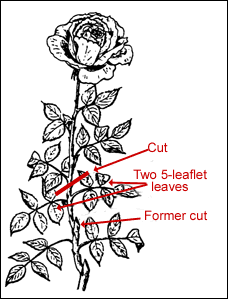
Grab a great pair of leather gloves to protect your hands, and a clean, disinfected pair of sharp bypass pruning shears (and be sure to disinfect pruners in between plants to prevent spreading disease). The best method for deadheading spent blooms throughout the summer is to cut the stem back to an outward facing bud at a 45-degree angle or about a ½” above a set of 5 leaves (not the set of 3 leaves as this will result in a weak stem). Continue as often as needed to keep your roses blooming all season long but stop September 1 to allow the plant to begin hardening off for winter.

/var/folders/m0/88q0d8m15lq_kx54plnw91400000gn/T/com.microsoft.Word/WebArchiveCopyPasteTempFiles/rose-pruning-2.png?itok=ckxr0RWV

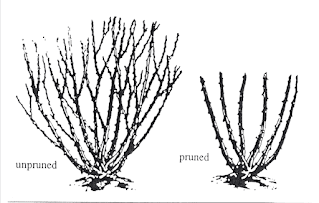
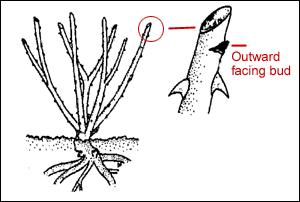
Again, starting with your leather gloves and disinfected bypass pruning shears, make your cuts at a 45-degree angle about ¼” above outward facing buds. This cut should slant away from the bud. Remove about one-half to two-thirds of the plant’s height leaving the canes about 18-30” tall. Your rose bush should have 4-7 canes that are the width of your finger/thumb and all pointed out and away from the crown for air circulation. Remove canes that are pencil width or smaller and/or dead (cut them off at the base or the point of discoloration). Here's to a great growing season for beautiful, healthy, blooming roses! page27image3784486736

Sunday, April 3, 2022

Starting Seeds for your Own Garden!

 Starting seeds is a fun and inexpensive way to get your
garden started for the season. 
To start your seeds indoors, purchase trays or pots or make your own containers and potting soil specially designed for starting seed from your local garden center or hardware store.

Start seeds about 4-8 weeks before the last frost in your area. Read the seed packet carefully to determine how much time seeds need to germinate.  Avoid starting seeds indoors too early as this will result in crowded spindly looking plants.
Sow seeds according to package instructions and water in with a fine mist sprayer and cover with a plastic dome or bag.
Place the seeds in a warm location out of direct sunlight until seeds germinate.  About 2 weeks prior to planting out, gradually move your seedlings outside and reduce the amount of water they receive to harden them off.

More info for making your own paper pots and  newspaper square and round pots.


HAVE FUN STARTING YOUR OWN SEEDLINGS!

Sunday, March 20, 2022

Pruning Grapes- You can do it!

Yes - it is possible and even easy to prune grapes your way in your yard for your personal uses. 

Whether you are cane pruning or spur pruning, here are several good resources to go to for explanation and training, with both written documents and videos.


Arbor, arch style, makes it easier to pick grapes
The Parma Research Center has an excellent grape program and 
Tom Ellies & Dr. Essie Fallahi, Parma Research grapes

Dr. Essie Fallahi has provided
 years of research to the Vitaculture Program. He has written many papers on the subject of grapes. 


Hopefully this information will inspire you to learn more about grapes  and how to make the most of them. 

Saturday, March 12, 2022

Get your Shamrocks for St. Paddy's Day!

Shamrocks represent good luck and are a 
popular house plant, especially around Saint Patrick’s Day when they are in stores everywhere! Shamrocks are easy to grow if you follow these five simple and easy to remember step
·       Shamrocks prefer direct sunlight, be sure to place your plant in a window where it will receive plenty of light. Shamrocks will flower, even during winter, if they receive enough light. Each night the plant's leaflets fold up , then reopen in sunlight the following day.
·       Shamrocks like food! Fertilize them regularly with either a liquid houseplant or time release fertilizer during their 
     growing season- always following label instructions.
·     As a houseplant, they prefer moist soil. Avoid allowing your shamrock to dry out during the growing season.
·       Give your shamrock a growing temperature between 50 and 70 °during the growing season. They can be placed outside after danger of frost has passed and are a beautiful addition to your pots or in a grouping of pots.
·       Shamrocks have a dormant period. When your shamrock
 goes dormant, usually in late summer, don’t fret! Just place 
it in a cool, dry location out of direct sunlight for 2-3 months. The purple-leaf types only need one month of dormancy!

Since your shamrock grows from small bulbs, it's easy to divide and create new plants. Here's a short video with how-to steps for propagating.  

Happy St. Paddy's Day to you!

Saturday, February 19, 2022

My Witch Hazel is blooming!!! What a treat!

When we're desperate for a bit of spring...anything popping up and out, the witch hazel 'Jelena' 
comes through for us! In late January or early February - even in the snow - she slowly begins to bloom her unique signature petals which appear crimped, twisted almost spidery and as long as an inch. She is often called 'Copper Beauty'  because of her luxurious color variations ...and her scent is very pleasant!  Her fall colors are also gorgeous! 


The genus Hamamelis is comprised of four species: 2 native to the United States and one each from Japan and China. While H. virginiana, or common witch hazel, is native to North America, most gardeners have turned to the witch hazel hybrid, H. x intermedia, for ornamental and landscape uses. 

The botanical name, Hamamelis, translates to "together with fruit", which refers to the fact that the fruit and flowers occur on the same plant at the same time (a very unique feature of native North American trees). This adds interest to your garden as the leaves fill in on the branches.

'Arnold Promise' is another popular hybrid, with lemon yellow, sweetly scented flowers. Like 'Jelena', this witch hazel is winter hardy and drought tolerant. In the fall, the leaves turn brilliant autumn color in shades of yellow, orange, and red. 

Another beauty that does well in our area is 'Diane' - with her brilliant red blossoms and red/yellow leaves in the fall. 

More details at the link below.
It's no small wonder that the Witch Hazel is called the Queen of Winter!  

Wednesday, January 19, 2022

DIY Seed Tape

There's nothing like a little garden prep, during our lead up to the growing season. If you're longing to get your hands in the soil-but it's still frozen, this is the next best thing. Launch into your garden prep by making your own seed tape.

This is my technique to achieving picture-perfect rows of lettuce, carrots, and beets, while being thrifty. Plus, the work you do now will have you proudly grinning from ear-to-ear come harvest time.

You can purchase seed tape at garden centers and online. It will organize your garden into beautiful, neighbor-enviable rows. But, seed tape can be expensive.  Solution? Make your own.
What you will need is, cheap toilet paper ( see-through, 1-ply offerings). A Dollar Store may have the right stuff, too.
You'll also need fresh seed for cold weather crops. Right now, garden centers have a plentiful supply of several brands of cool weather crop seed, i.e: carrots, spinach, lettuce, beets, etc.
Use some Elmer's School Glue or mix a paste out of flour and water to the consistency of glue. Both are non-toxic and just a tiny dab works. Grab some scissors and a popsicle stick or paint brush to dab your paste.
Use a tape measure, as well. Measure the space in the garden where you plan to place the seed tape. I cut my TP in strips, right down the middle, making them long enough to fit perfectly in my garden box. I follow the directions on the package for spacing and start "gluing." Once I get the glue and seed on the TP, I fold over the remaining TP and voila! I have seed tape ready to plant, as soon as I can work the soil. Be sure to label it.
Generally, I do this project in the dead of winter. This little gardening activity gets me excited for what is to come. A word of caution though, if you make seed tape using flour, label and refrigerate your tape until you plant. I have had some tape get moldy before I had a chance to plant it.

Once in the ground, the cheap toilet paper dissolves and the seed is left to germinate, sprout and grow, uniformly into wonderful edibles. 


Urban gardeners with very large plots may want to use a different seed distribution method than this, as it can be a little time consuming. But then again, it is a great winter project or even a fun task in which you can involve the youngest gardeners in your home. It is always beneficial for them to discover the origins of their food.