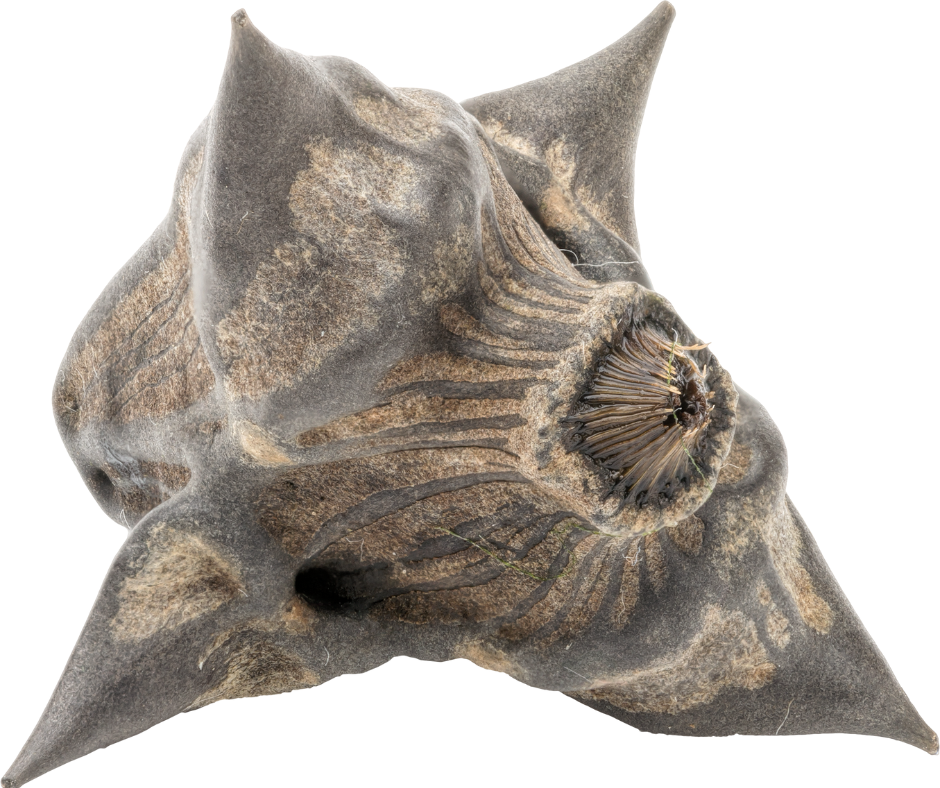
Puncturevine or goathead (Tribulus terrestris) is a very challenging weed that
is also known as Caltrop, Tack Weed, Bull Head, Cat
Head, and Mexican Sand Burr. As foreboding as these names sound, the
reality is even more sinister because they are difficult to live with and challenging
to kill. This is because goathead plants like to stay very low to the
ground where they can escape the wrath of lawnmowers, weed-whackers, and
bush-cutters, so they often get the opportunity to mature and form their
terrible seed heads. What’s worse is that each plant can produce several
hundred to several thousand stealthy, strong, and sharp caltrop-like
burs that have the potential to seriously injure people, animals, and even
thin-walled pneumatic tires (like bicycle tires). The good news (if there is
any) is that they also produce small, yellow, bee-foraged flowers that serve as
a subtle warning.

It originated
from southern Europe and northern Africa. Supposedly, it was (accidentally)
imported into the United States along with livestock from the Mediterranean
area. But how did it get into YOUR yard? The seeds themselves are designed
for animals and people to carry them to their new homes. They attach to fur or
feet and walk themselves into a new home.
WHERE DOES IT THRIVE?
Goatheads love to take root along railways, roadsides, walkways, residential
properties, cultivated fields, and other disturbed places. It thrives in hot,
dry, sandy soils; but will also grow in most other soils too. The plants don’t
generally survive freezing temperatures, but the seeds survive almost any
condition.
HOW CAN YOU GET RID OF IT?
Long-term control of
puncturevine can be achieved by reducing the number of seeds in the soil. By
removing plants before they produce seeds (flowering) over several years, the
plants will eventually go away. Burrs that have dropped after removal will need
to be collected by sweeping the ground or patting the ground with a piece of
carpet to collect the burrs. Be sure to also check places where shoes are stored
and remove any burrs that may have stuck to the soles.
Puncturevine can be killed with chemicals. Always read
the instructions carefully to ensure you are being safe, applying at times that
won’t affect pollinators, and that you don’t accidentally kill neighboring
plants.
You can also introduce your goathead plants to their
natural predators: the Puncturevine Seed Weevil (Microlarinus Lareynii) and/or
the Puncture Vine Stem Weevil (Microlarinus Lypriformis). The larvae of
these two species will bore into the seeds and destroy them.
WAIT… IS THERE ANYTHING GOOD ABOUT GOAT HEADS?
Goatheads make a fantastic organic deterrent against bare-footed or
bicycle-bound bandits. Just plant Puncturevine in the form of a natural
barrier; or, if you happen to be on the run, simply toss a handful of goatheads in the suspected path of bandit travel and your problems should be
solved in short order – unless, of course, you are dealing with
boot-wearing bandits!
Best of luck keeping your head as you attempt to remove goatheads!


 They are all the same so to speak. They are opportunistic eaters. They live on dead decaying matter, eat aphids and other small prey and love young growth of certain plants, like Marigolds. This is shown in the picture with all the cans full of earwigs and decimated marigold plants. The shallow cans were placed next to plants that the earwigs thought were the most tasty.


.png)
.png)
.png)