Friday, May 17, 2024

Mexican Sunflower-(Tithonia): To Plant or Not To Plant

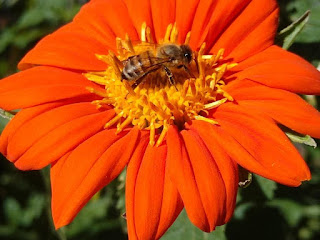
(Picture of Tithonia by Jeff Schalau)
Sharing is fun, especially when it comes from the garden. Of course I enjoy sharing produce with others, but my real love is in sharing flowers. It is an activity I can do with my wife that brings joy to our family, friends, and neighbors. I plant and raise the flowers, and my wife arranges them in mason jars to give away to whoever needs them. Maybe they just had a baby or just lost a loved one. Maybe they are sick or just had surgery. Or maybe they just need a pick-me-up or something to smile about. My wife and I were blessed to share our flower arrangements with 47 people last year.
I am always looking for new flowers to share. One flower I started using two years ago is Tithonia Rotundifolia of the Asteraceae family, commonly known as Mexican Sunflower. It has much the same open growth habit as of regular sunflowers. It grows over 6 feet tall and has vibrant orange/red, 3-to-4-inch flowers with a yellow center. They are beautiful in arrangements.

This year I hoped to still use Tithonia, but first I wanted to check out the allelopathic detriment Tithonia may have on other plants around it. The 2024 CCMG manual glossary defines allelopathy as: “The excretion by some plants’ leaves and roots of compounds that inhibit the growth of other plants.” 

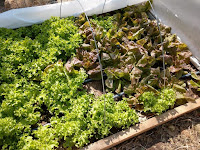
Jeff Schalau, an agent of agriculture for the University of Arizona, reported, “In my garden this year, the Mexican Sunflower (Tithonia rotundifolia) looks to have had serious allelopathic effects on my adjacent lettuce bed. The lettuce plants within four feet of the Tithonia are noticeably stunted.” 
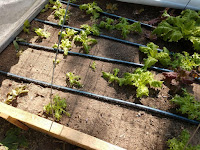

(Picture of the affected lettuce)
(Plot growing the same lettuce seed but isolated from Tithonia)

Good thing I don’t grow lettuce. Although Tithonia can have negative effects on other plants (Schalau also mentions legumes and cereals), it appears that it is only within close proximity. In my own garden, beans and tomatoes were planted about 10 feet away from the Tithonia but produced great, as did chard, peas, and peppers.


So of what benefit is Tithonia? As the North Carolina state extension Gardener Toolbox discusses, one of its ecological positives is its role as a pollinator. It is commonly used in gardens to attract butterflies, hummingbirds, songbirds, and other pollinators. I remember in my garden last year I had to pick them early each day before the plants were covered with bees. 


Now that I know Tithonia better as a great pollinator and understand the precautions needed to decrease allelopathic effects, I will invite this beautiful flower back into my yard. Who knows? Maybe my wife and I will share 50 arrangements this year.


Friday, May 10, 2024

Idaho Native Flowers

When you hear the phrase “native flowers”, what do you picture? Maybe a landscape full of beautiful, colorful, and beneficial flowers? Or does your mind conjure up an image of valueless, unattractive, and dull flowers? In this article, I will present three native flowers to consider planting in your landscape or garden: Common Yarrow, Wild Blue Flax, and Common Camas, emphasizing reasons to plant Idaho native flowers.

Yarrow (Achillea millefolium) is a perennial that grows early spring and blooms through mid-summer. It has long leaves that appear fern-like and flowers that range from white, yellow, pink, or red. Yarrow was a food source in the 17th century and North American tribes used it to treat many ailments. Its rapid growth from seed and rhizomes encourages spreading. It also tolerates many conditions and soil types and is relatively pest-free. Because it attracts beneficial pollinators and is a food source for big horn sheep, deer, sage grouse, and their chicks, Yarrow seed has been added to other nature seeds to rehabilitate disturbed sites along roadways and parks and is very well suited for xeriscaping. Yarrow is also good for composting.

Wild Blue Flax (Linum lewisii) is an annual which blooms from May to June. It produces concentrations of small, cheery blooms balanced on thin green stems. Flowers last a day and are replaced with fresh blooms of light blue, blue, yellow, and red. Blue Flax produces a lot of seeds and reseeds itself. It is adaptive to most soil conditions and is drought tolerant with minimal problems with disease. It is a food source for deer, antelope, and birds and may provide protective cover for small animals and birds. Blue Flax is also valued by land management for helping with erosion control.

Common Camas (Camassia quamash) is a perennial herb grown from an edible bulb in the Lily family. It blooms from April through June and produces many seeds. A single plant may live from fifteen to twenty years. Flowers range from light to deep blue. Camas is a food source for elk, deer, moose, and gophers. Common Camas is still considered to be one of the most important (root) foods and medicinal plants of the North American Indigenous population. The bulbs are usually harvested after flowering in the summer. It is recommended that people use caution when identifying and harvesting Common Camas so as not to confuse plants with Death Camas which can be toxic if eaten.

Native flowers are not invasive, but rather protect the biodiversity that supports our local ecosystem maintaining land development and conserving resources. Native plants are almost effortless to grow and nurture. Native plants are masterfully adapted to our unique environment, saving time and money. Along with providing beauty and benefits, with some experimentation and education, you could format your landscape for year-round attraction. For these reasons, consider planting Native flowers and help support and safeguard Idaho’s legacy.

Saturday, May 4, 2024

Start Your Garden Journal NOW!

A gardening journal is a perfect place to organize and My Gardening Journal, 2023 Gardening Notebook, Gift for Gardener, Garden Log book, Watercolor Journal, Gardening Girl, Plant Lady Notepad image 1
store all of your garden-related information that will guide you in making future decisions about the plants you choose to grow, how to combat any nutrient deficiencies and pest invasions/disease problems which you encountered, and dreams about future landscape designs for your space. There is no right or wrong way to keeping a gardening journal; it is simply a personal horticultural record of your observations as well as yours hopes and dreams for your garden. 
There are as many different formats or styles of journals to choose from as there are gardeners. Based on your personal preferences, you could simply use a blank hard-cover composition book, a spiral notebook, a graph paper notebook, a scrap book, a three-ring binder with plastic dividers and pockets for seeds, a custom designed disc-bound notebook or even a digital format (there are many apps to try!). Whatever system you select, make sure it is easy and convenient for you to use.

The contents of your garden journal will depend upon what you find interesting or useful in your garden; it can be a detailed scientific collection of information, a creative expression of the beauty in your garden or anything in between. The scientific gardener could include charts and graphs to record temperatures and fertilization schedules. The artistic gardener could add pressed flowers or leaves and artwork. There are several recommended categories that ought to be included in your garden journal. Recording your hardiness zone and the first and last frost dates are critical to planting the right plants at the right time in the right places.
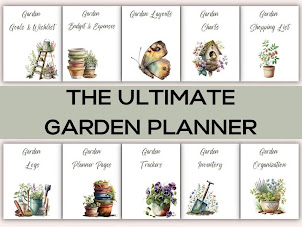
Spring Garden Planner I Plant Planner I Gardening Planner I Garden Organization I Garden Journal I Garden Layouts image 1Recording the dates of direct sowing, transplanting, blooming, and harvesting times will also be quite useful. Creating a map will help you remember the varieties of plants you planted and their locations. Some other suggested topics you may want to include are the sunlight patterns during the growing season, unusual weather and temperatures patterns with dates to help you determine best planting times, a maintenance and fertilizing schedule, any diseases or pests your plants encountered along with the most effective treatments, the soil quality, seed inventory lists, and your goals for the next year. 

Keeping a garden journal will help you celebrate your successes, learn from your mistakes, and be prepared to deal effectively with gardening issues. By simply observing and recording the dynamics of life in your garden, you will create a powerful resource for future successes in your gardening journey. 

Friday, April 19, 2024

5 Reasons to Add Hummingbird Groundcover to your Yard

Who doesn’t want to find late-season bloomers for their garden? Let’s face it, most of our favorite blooms fade out by August. I discovered Creeping Hummingbird Trumpet Zauscherhneria garrettii (Fire Chalice)® or (Orange Carpet)® or Z. latifolia (Woody's Peach Surprise)® as a way to add color, then discovered it has many other benefits.

1. As a late season evergreen perennial, Creeping Hummingbird Trumpet Fire Chalice, blooms year after year. It is adaptive to low water conditions. This superb plant spreads to form a loose mat of low growing, bright green foliage. Starting late July, it lights up the garden with a profusion of bright red or orange flowers. With a drooping habit, it looks great in containers, rock walls, and hanging over raised beds. Regular watering when in bloom keeps the flowers popping for 4 to 8 weeks.

2. The plant's continuous bloom is key to bringing back birds year after year. The crimson color inch-long blooms attract hummingbirds and provide much-needed nectar forage.

3. Creeping Hummingbird Trumpet
Zauschneria garrettii
Orange Carpet ®  is a native plant. It originated from the mountains of southern Idaho and thrives in our climate. 

4. You can use it in a lot of ways - not only as ground cover, but also in containers, rock garden, and mass-plantings. You can plant it anytime during the spring or summer.

5. My personal favorite: deadheading is not required! (!!)
Other late season bloomers that attract hummingbirds: Hummingbird Mint (Agastache), Scarlet Hedge Nettle, Beard Tongue Penstemon, Salvia, Columbine, Coral Bells, Red Birds in a Tree, Texas Red Yucca, Bee Balm.

Where to buy Creeping Hummingbird Trumpet: Look for a seedling at nurseries that sell native plants.
I have found it at:
Gardening to attract hummingbirds requires nectar-rich flowers as well as water and shelter because not all birds will visit feeders. Adding Creeping Hummingbird Trumpet to your bird buffet can help insure the future for the birds, replacing food lost due to human activities like agriculture and urbanization.

Friday, April 12, 2024

Earthworms for Your Garden

Have you ever wondered what the best worms are for your garden? There are many benefits to having them, but which ones can give you the most benefits? This article will shed some light on our wriggly little garden friends and help you understand their benefits.

In North America, we have about 180 species of earthworms, and approximately 4,000 species worldwide. They play a critical role in breaking down and decomposing plants and other organic material in our yard, garden, and compost pile. In their wake, they also leave nutrient-dense waste (called “castings”) which is second to none when it comes to improving your soil.

Earthworms can be divided into three groups, each having unique characteristics. Anecic worms play an important role in soil formation and leaf decomposition by pulling leaves into their deep vertical permanent burros. These are also known as nightcrawlers. Endogeic worms build lateral burrows in the soil and have little effect on the surface as they are the only worms that prefer to eat large amounts of soil rich in organic material. They also play a role in the aeration and decomposition of dead plant roots. Epigeic worms, which include the common red wiggler, live on top of the soil eating rotting organic matter, and have a high rate of reproduction. They are also commonly used in vermicomposting systems.

As much as we love earthworms, some problems can arise in their presence. The biggest complaint that homeowners have is that they create lumpy surfaces in grass and other areas that people prefer to keep level (see photo to the left). On a worldwide level, humans can create issues when we introduce worm species to new places and create an imbalance in the local ecosystems. But, generally speaking, the benefits of native earthworms far outweigh their inconveniences.

What are the main benefits to earthworms? To start, worm castings contain concentrated humus and may contain 5 times more nitrogen, 7 times more phosphorus, and 1000 times more beneficial bacteria than the original soil that helps plants thrive. Worms aid in soil aggregation, creating pores for the movement of air, water, nutrients, and roots. Worms can also eat their body weight in food a day.

So, what are some ways to attract and keep worms? In general, it is recommended to disturb the soil as little as possible because we have learned that we can disrupt the soil food web, release precious carbon, and more. Tilling also harms our earthworms. Reducing or eliminating tilling is a great start to keeping earthworms in your yard or garden. Additionally, covering the soil with mulch and organic matter on the surface will help feed the worms as well as reduce the need for tilling and weeding.

Creating a welcoming place for earthworms in your garden, yard, and compost pile has many benefits that you can’t get anywhere else. These little creatures offer big payoffs if you attract and keep them around. Happy worm farming!

Friday, April 5, 2024

Tomato Cages

It’s about this time of year when gardeners begin to get excited about growing tomatoes. Regardless of whether the tomatoes you grow will be used in sauce, salads, or soups, the plants will require proper support. Let’s talk about some options for tomato cages!

There are as many designs and material options for tomato cages as preferences for their use. Here are some things to consider about materials:

Wood
Wooden cages can be built or purchased and are relatively inexpensive, but the wood will eventually rot so you may get fewer years of use from this type of support.

Wire

Supports made of wire will last longer than wood, but sometimes they aren’t strong enough to support larger, indeterminate varieties of tomatoes.

PVC
PVC works well but sometimes takes longer to put together and the sun will eventually weaken them. Additionally, these cages tend to be bigger and bulkier.


Heavier Gauge Metal

Concrete reinforcing mesh is made of stronger metal that will last many years and you can make them very tall to accommodate tomato plants that reach for the stars. But making cages out of this material is more difficult and expensive.

Once you determine the material you prefer, it’s good to consider the design elements of your tomato cage. Pruning and harvesting your tomatoes will require spaces for reaching through with your hands or tools, so make sure your cage accommodates that. The bottom of the cage needs to be open enough to allow for easy weeding and watering. It’s also good to consider where and how you will store your tomato cages over winter. Collapsible options are convenient, but sometimes weaker than cages that take up more space and weigh more.

Once you have determined what design and material you want to use, numerous websites will give you detailed instructions on building your tomato cages and the pros and cons of the multitude of designs available.

One thing is certain, you will need to support your tomatoes to get a healthier and more abundant harvest. Enjoy!

Friday, March 22, 2024

Adding Milkweed to your Landscape


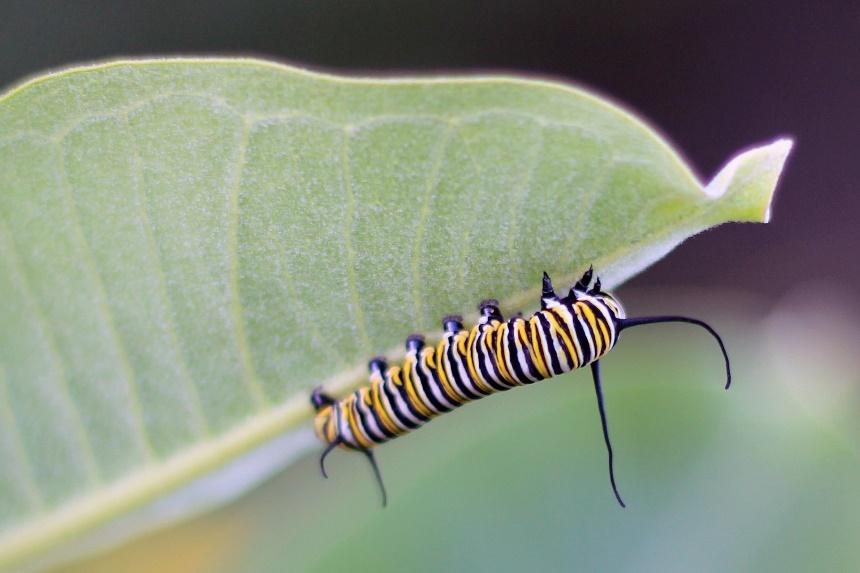
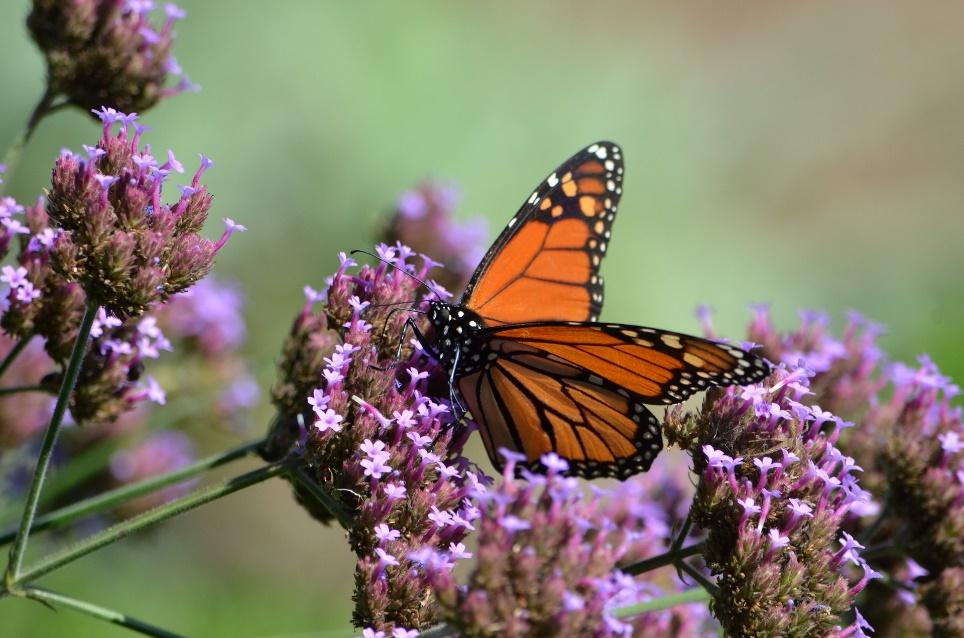
There was a time that it was common to see milkweed growing alongside ditch banks in the farming areas of Idaho. As housing developments replaced farm lands the ditch banks disappeared and the use of chemical agents became more common. You may ask, “Who cares?”  If the monarch butterfly could talk to us, you can be sure they would say that they care. Monarch butterfly larvae, or caterpillars, feed exclusively on milkweed leaves. Without the milkweed host plant the larvae are unable to develop into adult butterflies. 

Members of the community who enjoy the presence of butterflies and understand their value as pollinators also care. Recognizing a fall in the population the U.S.Fish and Wildlife Service applied for endangered species protection for the Monarch butterfly in 2014.

A large part of the effort to support monarch preservation is providing milkweed plants to replace those that have been lost in the environment. It is important to use milkweed native to the area in which you live. Milkweed creates toxins. Monarch butterflies have used these toxins to their benefit as anti-predator and anti-parasite defense. Milkweed plants that are not native to an area can contain larger amounts of the toxins and create harmful levels for the monarchs.


Antelope horn milkweed  (Asclepias asperula)  is found in southern Idaho, especially in the Preston area.


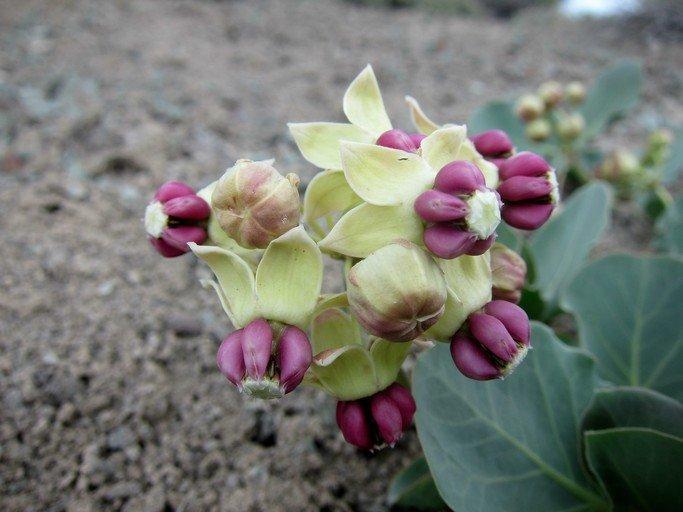
Pallid milkweed (Asclepias cryptoceras) is found on clay or gravelly soils in southwestern Idaho (Owyhees) to Utah.

Photo ©Luis Stevens


Narrow-leafed  or Mexican whorled milkweed  (Asclepias fascicularis) is found in Idaho’s western Panhandle. Very weedy.

Jennifer Anderson, hosted by the
 USDA-NRCS PLANTS Database


Swamp milkweed (Asclepias incarnata) is common in eastern U.S., also found in Idaho and in Utah.


Robert Tatina, hosted by the
 USDA-NRCS PLANTS


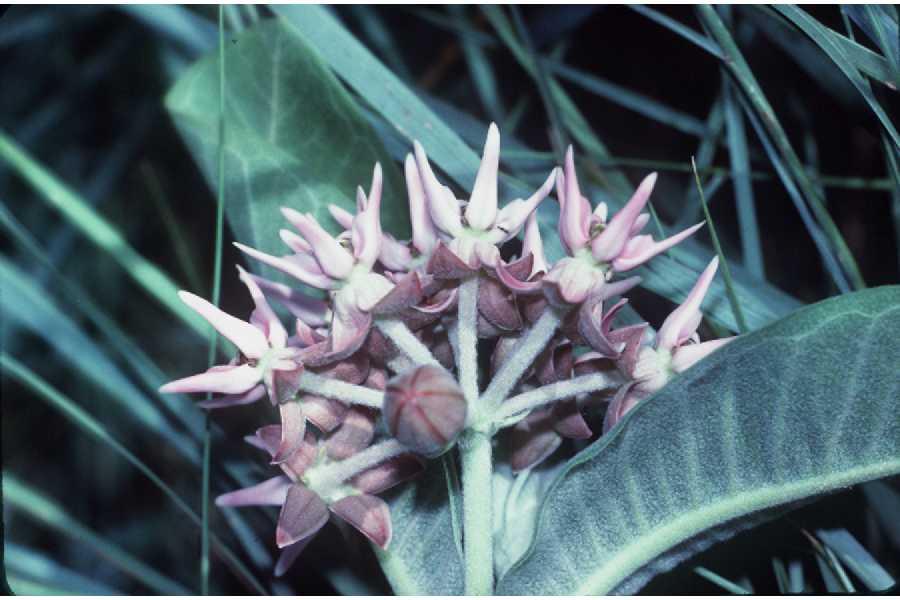
Showy milkweed (Asclepias speciosa) is Idaho's most common species. It grows up to 1 meter tall with fragrant flowers in late summer. The corona is in the shape of horns, and contains nectares. Each inflorescence usually grows only one follicle (seed pod).


Photo ©Al Schneider
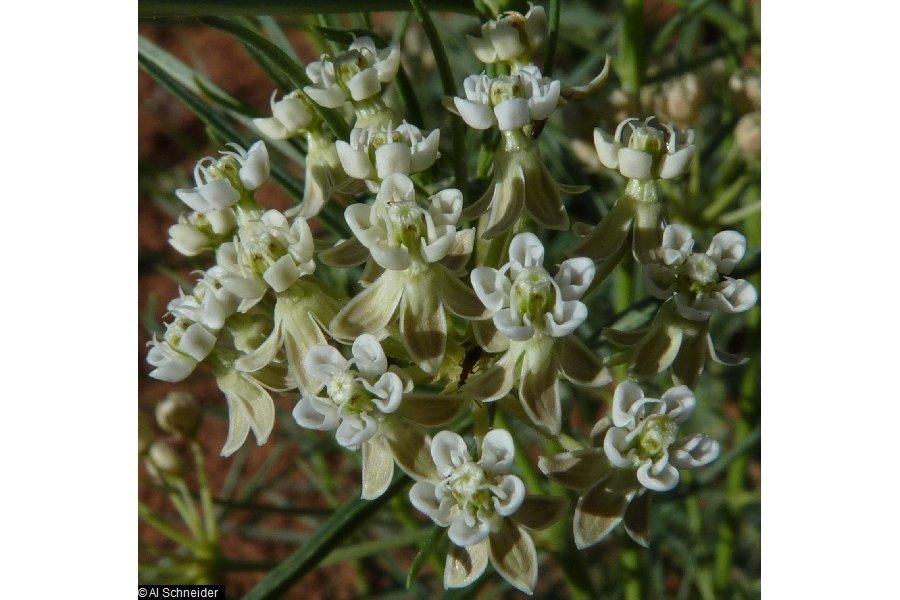
Poison or Horsetail milkweed (Asclepias subverticillata) is a weedy species with small white flowers and narrow leaves.

Seeds for most of these milkweed species can be found from seed vendors on-line. Milkweed seeds are wild seeds. They have evolved to thrive in a natural environment, not your backyard. The seeds  require conditions that mimic environmental conditions to germinate. The LadyBird Johnson Wildflower Center has developed and tested a protocol that results in good germination rates for native milkweed species. The process involves four steps that take 4 to 8 weeks to complete. So start now!

Recognizing the importance of the monarch butterfly, a partnership of federal and state agencies, non-governmental organizations, and academic programs, The Monarch Joint Venture, has been working to support the goals of North American Monarch Conservation Plan. They provide educational resources to the public about Monarchs and Milkweed.

MonarchWatch is another resource for the gardener interested in supporting and attracting pollinators. They offer guidelines for gardening methods that support Monarch butterflies and offer Monarch Waystation designation when their guidelines are followed.

The addition of milkweed to the milkweed to the environment around your home will provide needed host plants for Monarch butterflies. When nectar producing plants are also added your landscape can attract a variety of pollinators. Successful gardening is a partnership. The gardener provides the plants needed by the pollinators to survive and the pollinators give the gardener new seeds to continue the process.