Showing posts with label Idaho native plants. Show all posts

Friday, June 27, 2025

Edible Native Landscaping - “Paleo” in Your Own Backyard

Curating your home landscape or garden connects you with a tradition thousands of years old in which humans and plants share a special relationship. Native Shoshone people living nomadic lifestyles began expanding into the area now designated as Idaho as early as 4,000 years ago, and the principle diets of these hunter-gatherers included many edible plants, not to mention the many practical and symbolic uses of plant material. For thousands of years (until contact with Westerners), the indigenous peoples lived off a diet sourced by wild (unfarmed) plants. These wild native plants are still around today, and are ecologically adapted to the Idaho climate and its diverse plant hardiness zones.

Here is a sampling of plants gathered by Shoshone Native Americans for sustenance:

  • Arrowleaf Balsamroot
    Camas Bulb (Camassia quamash)
  • Wild Onion
  • Bitterroot
  • Arrowleaf Balsamroot
  • Tobacco Root
  • Serviceberry
  • Chokecherries
  • Bitterroot
    Currant
  • Pine nuts
  • Seeds from Junegrass, Bluebunch Wheatgrass, Thickspike Wheatgrass, and Nevada Bluegrass


Berries were ground and mixed along with hunted meats to form nutritional patties, called pemmican, which were preserved chemically by the acidic berries. Additionally, native tribes in Idaho such as the Nimi’ipuu (Nez Perce) collected:

  • Kouse
    Wild Carrot
  • Kouse (also called “Biscuit Root” by non-native travelers)
  • Sunflowers
  • Huckleberries
  • Wild Rhubarb


The list could continue, and the above links will give more information about each type of plant. But which ones would grow well in your garden? A good place to start collecting some tips is at the 
Idaho Native Plant Society resource website. Specifically, the publication Landscaping with Native Plants of the Intermountain Region from the BLM which contains detailed notes and descriptions of nearly all of the edible plants from the above list. The guides include landscape uses and notes, regional considerations, availability, and pollinator attractiveness. Additionally, the two guides specify which of the plants are drought tolerant, how large they grow, how much water and sunlight they need, when they flower, and what color they bloom. 

If there aren’t already enough reasons to focus your landscaping efforts on native plants, the fact that these selected plants have been used in antiquity up to the present because of their important nutritional value to humans gives one more benefit to carefully designing your landscape with location-appropriate plants. The provided references will get you started, and remember also to keep learning along with archeologists and ethnobotanists about how people and plants have survived by cooperating for thousands of years. 


Friday, June 21, 2024

Xeriscaping Doesn't Mean ZERO Scaping

Xeriscape is a landscape design emphasizing little to no water usage and is a realistic alternative to traditional landscaping in any climate. Low water use landscaping does not mean one is limited to cacti, succulents, and rocks. Instead, it involves designing a landscape that utilizes low-water plants and reduces turf. Other benefits of xeriscape include reduced yard maintenance and reduced water bills while attracting wildlife to your yard. 

The most vital part of your xeriscape plan is ensuring that watering and irrigation zones are laid out efficiently. A successful xeriscape relies on minimized water usage through efficient irrigation methods. A drip system can deliver water directly to a plant’s roots deep within the soil, reducing evaporation and allowing us to water with less frequency.   

Turf uses large amounts of water. By limiting, or eliminating, turf in your landscape planning, you can significantly cut down on water usage. Turf areas will be irrigated differently than border areas containing flowers and shrubs. Flowers and shrubs can utilize a drip system using less water while turf requires irrigation or sprinkling using significantly more water. 

Now it is time to decide where to place everything, choose low water usage plants, shrubs, and trees. Drought-tolerant species can withstand Idaho’s dry conditions. Arrange plants with similar water requirements together. Some recommendations for drought-tolerant plants include Sagebrush (Artemisia tridentata) and Penstemon. Wavy-leaf oak and Mountain Mahogany are examples of drought-tolerant trees. Make choices that will provide pops of color in your yard throughout the year.

Before planting, you must enhance the soil quality to retain moisture. Soils in the Treasure Valley tend to be heavy with clay. Add organic matter, compost, and mulch to improve the soil and enhance water retention. The use of mulch can also aid in weed abatement. Plastic and other non-porous materials are not recommended for use in the garden for keeping down weeds.

Finally, you may also want to add rocks and boulders for visual interest. Often, rocks are arranged in such a way that it appears there is a dry stream bed running through the yard.

Regularly maintain your xeriscape by pruning, weeding, and adjusting irrigation as needed. Watering early in the morning reduces the amount of water lost to evaporation. Early morning irrigating also reduces the risk of disease because plants have time to dry out during the day.


Friday, May 10, 2024

Idaho Native Flowers

When you hear the phrase “native flowers”, what do you picture? Maybe a landscape full of beautiful, colorful, and beneficial flowers? Or does your mind conjure up an image of valueless, unattractive, and dull flowers? In this article, I will present three native flowers to consider planting in your landscape or garden: Common Yarrow, Wild Blue Flax, and Common Camas, emphasizing reasons to plant Idaho native flowers.

Yarrow (Achillea millefolium) is a perennial that grows early spring and blooms through mid-summer. It has long leaves that appear fern-like and flowers that range from white, yellow, pink, or red. Yarrow was a food source in the 17th century and North American tribes used it to treat many ailments. Its rapid growth from seed and rhizomes encourages spreading. It also tolerates many conditions and soil types and is relatively pest-free. Because it attracts beneficial pollinators and is a food source for big horn sheep, deer, sage grouse, and their chicks, Yarrow seed has been added to other nature seeds to rehabilitate disturbed sites along roadways and parks and is very well suited for xeriscaping. Yarrow is also good for composting.

Wild Blue Flax (Linum lewisii) is an annual which blooms from May to June. It produces concentrations of small, cheery blooms balanced on thin green stems. Flowers last a day and are replaced with fresh blooms of light blue, blue, yellow, and red. Blue Flax produces a lot of seeds and reseeds itself. It is adaptive to most soil conditions and is drought tolerant with minimal problems with disease. It is a food source for deer, antelope, and birds and may provide protective cover for small animals and birds. Blue Flax is also valued by land management for helping with erosion control.

Common Camas (Camassia quamash) is a perennial herb grown from an edible bulb in the Lily family. It blooms from April through June and produces many seeds. A single plant may live from fifteen to twenty years. Flowers range from light to deep blue. Camas is a food source for elk, deer, moose, and gophers. Common Camas is still considered to be one of the most important (root) foods and medicinal plants of the North American Indigenous population. The bulbs are usually harvested after flowering in the summer. It is recommended that people use caution when identifying and harvesting Common Camas so as not to confuse plants with Death Camas which can be toxic if eaten.

Native flowers are not invasive, but rather protect the biodiversity that supports our local ecosystem maintaining land development and conserving resources. Native plants are almost effortless to grow and nurture. Native plants are masterfully adapted to our unique environment, saving time and money. Along with providing beauty and benefits, with some experimentation and education, you could format your landscape for year-round attraction. For these reasons, consider planting Native flowers and help support and safeguard Idaho’s legacy.

Monday, September 18, 2023

What Pollinators Need in the Fall

Fall flowers for pollinators
 Pollinators Feed Us as We Feed Them Now is a critical time for Pollinator Bee Care! Here's what we need to do to keep the bees and the butterflies in our garden and help them prepare for winter.

Give Them Food.  Plant many different colors of flowers and different shapes and sizes to increase pollinator diversity.  Provide a variety of blooming plants throughout spring to fall.  Of particular importance are early spring blooming plants because they provide an immediate food source after the long winter.  Plant a variety of annuals, perennials, and flowering trees and shrubs. Late summer and early autumn (end of August through October) are very important periods for the production of adult worker bees that form wintering clusters in their colonies. Click the picture caption for more.
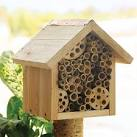
Make a Bee Hotel.  Your bee hotel might be as simple as a couple holes in some untreated wood or something more decorative and elaborate. - build one.  The bees won’t care what it looks like as long as it’s sheltered from too much sunlight and the elements - mainly moisture.  Or leave an area of bare dry soil or a brush pile to encourage ground nesting.  It doesn’t have to be unsightly.  An area behind a shed or out of the way so it’s not as noticeable will do wonders to attract bees.  Just make sure it’s in an area that doesn’t have a lot of human interaction so bees will be encouraged to stay.
Plant Native Species.  Plant different flowers, shapes, sizes, colors, and group together in a sunny location.  By planting in groups, you’ll provide the nectar all in one easily accessible area.  Native plants not only survive more easily than non-native plants, they attract more pollinators.  
Open face roofed wooden shelter for bees
Bee Hotel
Avoid Pesticides.  Sometimes we rush to use a chemical as a quick-fix instead of realizing a plant that is stressed needs a diagnosis.  Your local extension office can help determine the problem with your plants so bring your sample in, and if detected early there is often a non-chemical solution.  If pesticides can’t be avoided, make sure to follow the instructions and apply the right amount during a cooler time of day.  Applying more chemicals than instructed won’t help get rid of them faster, but it might result in a chemical drift to other areas and plants you don’t want to be affected.  Make sure if you do apply it’s not to flowers or weeds that are already in bloom.  Keep in mind, spraying insecticides can cause an outbreak of aphids or spider mites because beneficial insects have been killed. Wise pesticide use is key.  
Provide Water Sources.  Bees need water to make honey, and other insects besides bees also need water to pollinate.  Even if you don’t have a pond or stream, you can hang a dripping bottle or just leave a small container of water in the open for pollinators to drink from.  Or, install a bird bath. Keep in mind, bugs can’t get out of a water dish unless there are stepping stones for them to get in and out.  Even placing a sponge inside of a dish of water can make it easier.  Here's a short video of bees drinking!