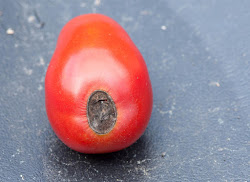
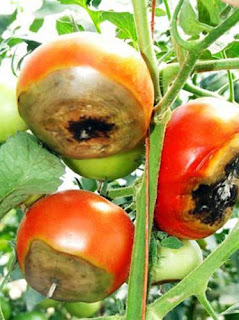
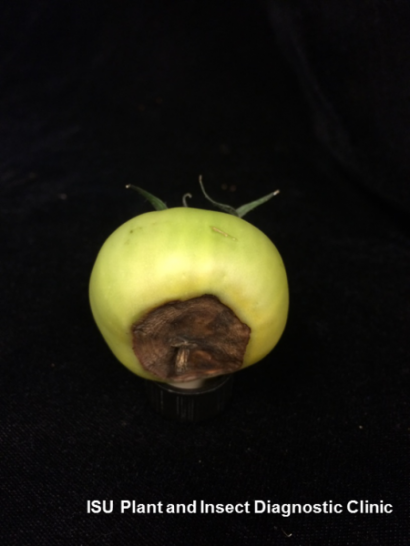
Blossom End Rot - A Common Disease in Southern Idaho Tomatoes.
Few things are more discouraging than babying your tomatoes all season only to find that the new fruit
has developed brown, leathery bottoms. To be a tomato grower in Southern Idaho is to know this
discouragement at some point. The good news is that this physiological disease, called Blossom End Rot,
is not contagious and is preventable.
Prevention,
If you are still planning your garden and have not yet planted your tomatoes, preventing Blossom End Rot starts with ensuring that your soil has good drainage and contains enough available calcium. It is recommended that you get a soil test to understand the nutrient content of your soil before you plant anything or attempt to make any adjustments. For more information on conducting a soils test. If a soil test determines that your garden is low in calcium, you can add pulverized limestone to the top 8-12 inches of your garden soil and mix it in thoroughly before planting.
Once your tomatoes are planted in well-draining soil, your next preventative measure will be to focus on consistent watering throughout the growing season. Soil should be consistently moist to the depth of 2 feet below the surface-- not too wet nor too dry. This can be tricky in Southern Idaho where summer often starts out cool but quickly becomes very hot and dry. This requires deep soaking rather than shorter, shallow watering cycles. Applying mulch can help hold moisture in the soil as well.
If I Already Have Blossom End Rot, Can My Plants Recover?
The above pointers are great if you’re reading this in the early spring before your garden is planted, however, if you found this article after discovering that the disease has already affected your tomatoes, not to fear! The following tips will help salvage your tomatoes mid-season after discovering Blossom End Rot:
1. Pick and discard the tomatoes that have Blossom End Rot. This will stop the plant from sending any more energy to the damaged fruit.
2. Address you're watering immediately to ensure the plants get consistently moist soil to the depth of 2 feet.
3. Avoid deep cultivation around tomato plants as root damage leads to insufficient water uptake and subsequent risk of Blossom End Rot.
4. Tomatoes require a lot of nutrients as they grow, so to keep them healthy and growing, be sure to fertilize your tomatoes with a balanced fertilizer.
5. Foliar calcium can be sprayed on leaves to help increase tissue calcium in plants affected with
Blossom End Rot.
Blossom End Rot is certainly not a fun thing to discover in your tomatoes, but it is also not the end of the world. Like all gardening adventures, you can learn to manage and hopefully prevent this disease so you can enjoy many tomatoes from your garden.