Wednesday, March 28, 2018

Planning For An Established Garden


Maybe you recently purchased a new home with existing plants, or you’ve finally decided to tackle that project of making your yard less of an eyesore.  Those plants were there before you were, and you really have no idea what they are or where to start? Or, maybe you even planted some of them at some point, and you thought you would remember what they were, but life got busy and you had several other things to remember.  Suddenly the name of the perennial Aunt Martha gave you 10 years ago as a housewarming gift is not one of the things you recall.

If it’s the first year in your home or just the first year you are actively paying attention, the best thing to do is to slowdown and start a journal of plant notes.  That may sound like a tedious project in itself, and in your mind taking out every plant and starting fresh sounds less like a root canal than a journal of plant notes. Here's a video about garden journaling.  However, ripping out your entire landscape is equivalent to burning down your house because it hasn’t been cleaned in a long time, and it’s a lot more work than you might anticipate.  It’s likely that project will also wind up partially completed, and you’ll have an overgrown bed adjacent to a bare naked bed.  If you do actually pull everything out, you’ll forget you haven’t decided what you’re replacing it with, and each trip to the nursery to pick out plants will remind you how expensive those replacements are which could mean completion takes longer than you expected anyway.

For the first year, you’ll want to keep a plant journal of each season.  Keeping a gardening journal doesn’t mean you are at a standstill or you aren’t making progress toward the yard of your dreams.  Don’t worry about not doing enough, because you can always clear leaves and anything you are positive is a weed, and that will keep you busy year round. 
The plant journal is a great place to record what you have now and also to brainstorm what you might like in its place or in addition.  Otherwise, you’re likely to plant on top of something that is already growing there and just hasn’t shown itself yet.  It may be a good time to pull out the plat map of the property that came with your title report when you purchased your home because it can be provide a good map of the property.  Or you can make your own map of the area in your journal. 

Take photos of the garden at different times of the day as well as different seasons, and keep them in your journal.  You may want to label each photo with the type of plant or care that is necessary to keep it healthy, but to start at least keep photos with your garden notes so you can remember the changes.  You’ll also begin to notice some areas of the garden that don’t fill in and need to have something planted there.  Or, you may discover taller perennials located at the front of the bed, when they should be in the back so they don’t cover up everything behind it.

You’ll also want to start identifying what you already have to keep a master plant list, and see how that plant is doing in its current location.  It may be that when it blooms you decide you love it and won’t want to remove it after all, but you realize it’s overgrown or just not quite resembling the photos of what you think it could look like.  It may mean you relocate the plant to another area of the yard where it does better, or maybe it needs divided or trimmed.  You can use perennial finders online  to help identify plants, or download the app for tree identification leafsnap   to figure out what trees are in your yard.  Of course, for one-on-one assistance, your local University of Idaho Extension Office. can help you identify plants and trees and provide tips to caring for them also.
 
After you’ve survived 4 seasons, you’ll start to have an idea of what you like and dislike about your existing plants.   You’ll be able to decide which ones you dislike or what you might change about the location.  Plus, you’ll have seen so many plants at this point in your plant identification search that you’ll start to have your own ideas about what you would like.  You may have already written down possibilities and then selected a plant that will do well in that location as well as what you find attractive.  In the end, your garden is ever evolving and changing, but a little planning will make the actual planting a lot less painful. For even more how-to information, check out this article.

Monday, March 19, 2018

DIY Seed Tape

There's nothing like a little garden prep, during our lead up to the growing season. If you're longing to get your hands in the soil-but it's still frozen, this is the next best thing. Launch into your garden prep by making your own seed tape.
This is my technique to achieving picture-perfect rows of lettuce, carrots, and beets, while being thrifty. Plus, the work you do now will have you proudly grinning from ear-to-ear come harvest time.
I am a  lazy urban gardener And, thanks to sound, parental guidance, I'm also a THRIFTY urban gardener. You can purchase seed tape at garden centers and online. It will organize your garden into beautiful,neighbor-enviable rows. But, seed tape can be expensive.

     Solution? Make your own.
What you will need is, cheap toilet paper (I grabbed some from my sister-in-law's house. She is FAMOUS for her see-through, 1-ply offerings). A Dollar Store may have the right stuff, too.
You'll also need fresh seed for cold weather crops. Right now, garden centers have a plentiful supply of several brands of cool weather crop seed, i.e: carrots, spinach, lettuce, beats, etc.
Use some Elmer's School Glue or mix a paste out of flour and water to the consistency of glue. Both are non-toxic and just a tiny dab works. Grab some scissors and a popsicle stick or paint brush to dab your paste.

Use a tape measure, as well. Measure the space in the garden where you plan to place the seed tape. I cut my TP in strips, right down the middle, making them long enough to fit perfectly in my garden box. I follow the directions on the package for spacing and start "gluing." Once I get the glue and seed on the TP, I fold over the remaining TP and voila! I have seed tape ready to plant, as soon as I can work the soil. Be sure to label it.
Generally, I do this project in the dead of winter. This little gardening activity gets me excited for what is to come. A word of caution though, if you make seed tape using flour, label and refrigerate your tape until you plant. I have had some tape get moldy before I had a chance to plant it.


Once in the ground, the cheap toilet paper dissolves and the seed is left to germinate, sprout and grow, uniformly into wonderful edibles. 


Urban gardeners with very large plots may want to use a different seed distribution method than this, as it can be a little time consuming. But then again, it is a great winter project or even a fun task in which you can involve the youngest gardeners in your home. It is always beneficial for them to discover the origins of their food.

Sunday, March 4, 2018

Pruning Fruit Trees, an Introduction

Did you know that it's that time of year, again, to prune your fruit trees.
Nampa Parks and Recreation Dept. is offering a free course on tree care.
Another source of informaton is the University of Minnesota Extension.

Happy pruning, stay warm and please make sure that your pruning tools are clean and sharp.


Monday, February 5, 2018

Butterfly Gardening

A successful butterfly garden will have several key features which create a suitable habitat for butterflies and their larva called caterpillars. The first thing to remember is to avoid using insecticides in your garden, even those considered organic. There are several good alternatives such as soap sprays and horticultural oils.

Next, be sure your garden has the proper water. Create areas where water can puddle, then add rocks in the sun so butterflies can sun and warm themselves. 

Create an easy mini pond and you'll be rewarded with other visitors that will benefit your backyard ecosystem: frogs and birds - bees, too, need water!


Last, add plants which will provide shelter and food throughout the entire season. Butterflies tend to be attracted to brightly colored fragrant flowers.
Plants to consider growing for a butterfly garden in Idaho include bee balm, butterfly bush, cornflowers, dill, lilac, parsley, yarrow, zinnias, and other nectar bearing plants.
For other pollinators that will love your butterfly garden, click below
Bee Habitat
Attracting Native Bees to your landscape

Monday, January 8, 2018

A Winter-time Activity

Loomcraft Loom
Here's a Winter-time Activity that may be new to you. 
Do you feel the need to start a new project, maybe something to do with your hands besides playing in the garden? Maybe that new hobby in your future is Looming, "weaving on a loom", one that that can be fun and rewarding...and one that you can feel a sense of accomplishment yet have fun with. You will be able to see your progress while you learn something new and then give it away to friends. This also can become a way to make another income, however large or small it is.


Louet S11 Spinning Wheel
Are you yarning to spin your own yarn for that knitting project? Raw wool can be purchased to use, but you will have to clean it and prepare it, or you may opt to buy wool already processed and ready for you to spin into your favorite yarn.
Don't feel sheepish, you may like it after all.


Front to back, Jerry, Ben, Shawn, Mary.
We can all say that this is truly a Farm to Table type of hobby. And if you own your sheep, there is an added benefit called good compost for your garden. You just have to put in a compost pile and let it age to the proper consistency.

Ben's first cutting of wool.


Keep Idaho Growin

Tuesday, January 2, 2018

Welcome to 2018

Hi Everyone and Welcome to 2018!

It is a new year and one that you can be proud to be a part of.
Have any of you made the traditional New Years Resolution? 
Did you include any that are going to be easy to uphold? How about some of these ideas for the New Year.

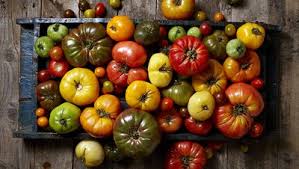
Let's plant a new kind of tomato, preferably an Heirloom
or a Landrace variety. Don't know what that means? Click on the word link to find out more. 

Maybe you are into Flowers and want to explore new colors for the garden or new strains for the plant show. What's stopping you? Just do it! Remember, it is your garden and you can do what you want to, and next year is a new year again.


Did you plan your garden layout and planting design for this coming year only to get more information that made you change your mind? There are a lot of services and educational opportunities available locally and online


Lets get out there and keep Idaho Growin!


Monday, December 11, 2017

Have you seen my pet Gopher Snake?

Gopher Snake (Pituophis catenifer)

These snakes live in our area and they are a beneficial predator. Gopher snakes are muscular, long serpents that can be intimidating because of their size; however, but there’s little to fear because they are nonvenomous. In fact, they are important to keeping the rodent population in check and maintaining their local ecosystems.

Gopher snakes are large, powerful snakes and typically reach lengths of 36-96 inches [3 to 8 feet]. Compared to other snakes of the same size, they have relatively large eyes with large, distinct heads with narrow necks. They often have two dark lines on their faces that go from the top of their head around either side of their eyes. Gopher snakes’ coloring can depend on their subspecies and location. Often their colors blend in with local vegetation. They range from cream to light brown and have dark blotches on their backs and smaller dark spots along their sides. They generally have light-colored bellies, sometimes with spots.
Gopher snakes are sexually alike, with both males and females being around the same size. They have keeled (ridged) scales.
One way to check if a snake is nonvenomous is by the shape of their eyes. Round eyes and a head shaped like this one pictured are the norm.
“Gopher snakes are nonvenomous constrictors. This means that they squeeze their prey to death. There are some common misconceptions about how constricting works. One is that constrictors crush or break the bones of their prey. Another is that they suffocate it, squeezing the prey’s lungs too tightly to work. “It turns out that the squeezing overwhelms the circulatory system. “Blood cannot get to the brain, and the animal dies within seconds due to ischemia.”
Gopher snakes feed on small mammals, birds, bird eggs, lizards and of course gophers. They actively seek out prey and often follow small mammals down their runways or burrows.
Gopher snakes mate during July and August. It is the only time of year they socialize. Females emit a chemical through their skin that draws males to them and stimulates mating behaviors. Males will mate with as many females as they can each year. Males sometimes engage in ritualistic wrestling for the female.
Gopher snakes are oviparous, meaning they lay eggs. Females sometimes lay two batches (called clutches) of eggs per season. Eggs incubate in nests, which are sometimes communal with other gopher snakes. After a 65-75 day incubation period, 2 to 24 young hatch and are instantly independent. Gopher snakes have no parental involvement after laying eggs. Babies are born 12-18 inches (30 to 45 cm) long and can be up to 3 feet (92 cm) long after one year.

Female gopher snakes reach sexual maturity between 3 and 5 years of age. Males reach it between 1 and 2 years of age. In the wild, they live up to 15 years. They have been known to live up to 33 years in captivity.


Range/ Habitat

 The gopher snake is one of the most widespread snakes in North America. Its range extends from the Atlantic to Pacific oceans, as far north as southern Canada, and as far south as Veracruz and southern Sinaloa, Mexico, including Baja California. This species occurs in a lot of different habitats, including prairies, conifer forests and deserts, but it seems most common in semi-arid brushy areas adjacent to farms. Gopher snakes tend to spend about 90% of their time living in underground dens or burrows and they probable hibernate there during the cold months. When it is warm out, we tend to see them sunning themselves on roadways and dirt lots, but give them space so they can do what they do best. Happy Gopher Snake Day.
The taxonomy of the gopher snake,
Kingdom: Animalia
Subkingdom: Bilateria
Infrakingdom: Deuterostomia
Phylum: Chordata
Subphylum: Vertebrata
Infraphylum: Gnathostomata
Superclass: Tetrapoda
Class: Reptilia
Order: Squamata
Suborder: Serpentes
Infraorder: Alethinophidia
Family: Colubridae
Genus & speciesPituophis catenifer