Showing posts with label Julie Eldredge. Show all posts

Friday, December 29, 2023

Fungus Gnats in Your Indoor Houseplants

Fungus Gnats can become a problem on potted house plants, especially during the holiday season because we are bringing in flowering plants from nurseries, and big box stores, as well as receiving them as gifts. They are difficult to control because of their tiny size and life cycle.

Here are some effective ways to treat them:

Proper Watering
Let the potting soil dry out between watering. The dry surface is less attractive to females depositing eggs, and if eggs are deposited, they fail to hatch because of lack of moisture. This cultural approach can be very effective.

Fly Tape or Sticky Traps 
The gnats are drawn to the yellow color. No need to fall for the trap of buying anything with pheromones either. Simply a yellow sticky trap.

Biological Control
Bt is available (Sold under the names Gnatrol, Mosquito Bits) is very effective in controlling the larvae, is not harmful to beneficial insects, and is approved for organic growers. Plus, it is so easy to use! Just sprinkle it on the soil in the pot!  Nematodes are also a natural option.

In severe infestations, you may consider washing the roots and re-potting your plant in fresh soil, or simply spraying a light application of indoor houseplant insecticide. When you use any insecticide, be sure to read and follow all label instructions! Finish by creating a tent over your plant and secure the bottom with a rubber band. Watch for a couple of weeks to see if there is still activity.  Don't worry about watering because you have created a little greenhouse but keep the plastic from touching the leaves. 

Contact your local University of Idaho Extension office
 for more information on controlling fungus gnats in your home.

Saturday, April 20, 2019

Spring Soil Prep - What you can do Now! (or as soon as the ground thaws :>)

The best way to begin preparing your soil is with a soil test. 
Your local University of Idaho Extension office can help you with this. This test is a great place to start because it tells you what to add to your soil to help your garden perform better. 
soil sample probe
Organic soil amendments also provide an important source of nitrogen for your plants.  Till or turn under with a spade 3-4 inches of compost into your soil at a depth of 6-8 inches and rake your bed smooth.

With a soil sample probe, the task is much  easier... and worth the cost - since you'll probably check your soil many times over the years.

This video shows how to gather your soil sample.

The most important thing you can do for your garden’s soil is to add organic matter. Organic matter aids in drainage and minimizes soil compaction, which reduces soil oxygen.


When choosing an amendment, consider carefully what you use. Animal based products and bio-solids are high in salts and heavy metals which build up in your soils. Consider using well aged plant based compost instead.


Now...check your plant temps, and frost days and...enjoy planting! 


Wednesday, September 12, 2018

September Community Newsletter

In case you missed this issue - here's what's happening in September with Canyon County Master Gardeners! Newsletter link

Keep informed! Sign up for our monthly newsletter here

Sunday, July 22, 2018

Look what our IPM Team has found this month...

IPM Team researching after each walk
The IPM (Integrated Pest Management) Team is a group of trained and dedicated University of Idaho Extension Master Gardener volunteers in Canyon County who actively scout for insect, weed, and disease pests that impact home gardeners and landscapers in the lower Treasure Valley. This information is then submitted to the Pacific Northwest Pest Alert Network which educates the home gardener/landscaper so that they can act on the information before the pest becomes an infestation; thus, saving time and money while benefiting the environment.
Here are a few of the notable findings for this month from 2 of our regular places:


Hollyhock Weevil

ID Veterans Garden  


"Hollyhock weevils are small, gray snout beetles with orange legs. Their most notably feature is their forward projecting snout that is extremely long, particularly on the female." Have you noticed their damage? Continue reading...


"Poison hemlock, also called poison parsley, is a member of the plant family, Apiaceae. Other members of this plant family include carrots, celery and parsnip." Here's how to tell the difference...


Blue Barn Produce
an organic farm in Caldwell


Crab Spider "The stars of this week’s episode are not insects, but crab spiders, one of the Bug Lady’s favorite critters." More on this helpful bug


This toad was an unexpected treat during our scouting walk! He's a Garden Good Guy!

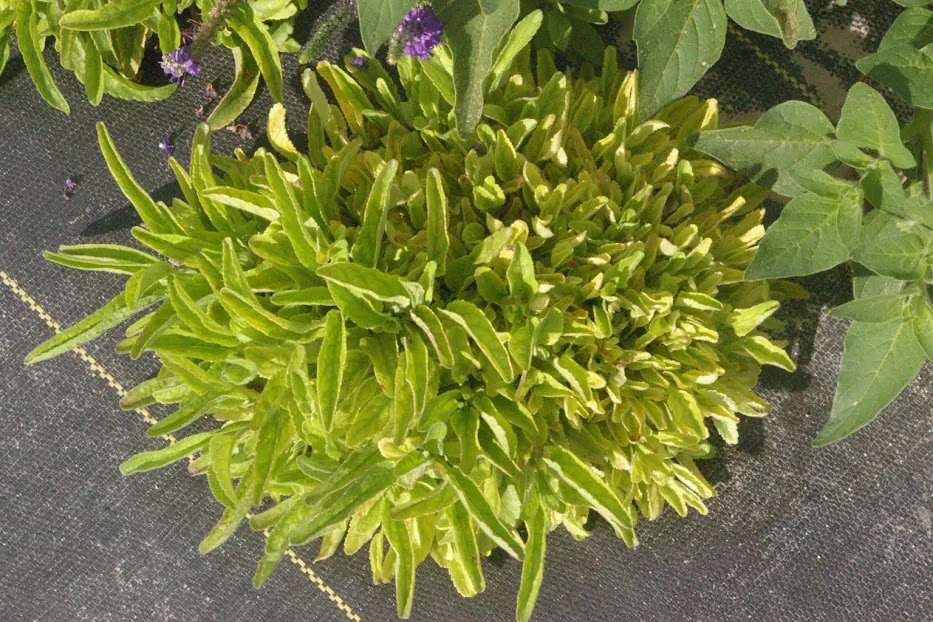
"Aster yellows is a plant disease that occurs throughout North America, affecting a wide range of plants, including many important crops and ornamental plants. Home gardeners are most likely to notice its effects on purple cone-flower and some other daisy-like flowers, as the symptoms on those flowers tend to be more dramatic than on other types of flowers or the foliar symptoms." For more about this common disease, see Aster Yellows.


Buffalo bur is generally considered a nuisance in its native range and is toxic.


Stay tuned for more finds next month.

Saturday, June 16, 2018

Are Bees the Only Pollinators?

With real evidence of bee population loss in the last few years, the term ‘pollinator’ might be on a gardener’s mind right now.  But what about other pollinators? Can you encourage other beneficial insects to your landscape and do they have any other benefits?  Do they all sting? 

In the chart below, we can find some common plant pollinators who you may not have thought of as beneficial, but all have something to give to your garden.  

Wasp_March_2008-3[1]
European Paper Wasp

Let’s start with one of the hardest to accept, the European Paper Wasp. Difficult as it may be to have around because they do sting, not only are they pollinators, but they also feed on soft bodied, leaf-eating pests - caterpillars, aphids.

hoverfly_in_november_iii_by_dalantech-d8eox4q[1]
The Hoverfly is a pollinator in disguise.  They have evolved to look like bees, mainly to ward off predators. Lucky for us these little flies are harmless, unless you’re an aphid. Once the adult Hoverfly has selected the best aphid colony in your garden to lay its eggs beside, soon those eggs develop into aphid-eating maggots. 
4927975966_d1bd6d17e1_z[1]Butterflies and Moths are also good pollinators because of the large amount of pollen that collects on their feet and legs. Some special characteristics that set them apart from bees are not only do they taste with their feet, but they can also see the color red.


Less known but just as important as pollinators are bats, birds, mice, and other vertebrates. 
Psst...they also eat their weight in bad bugs!

With these factors in mind, you might want to try to attract these pollinators to your yard and garden by planting a wide variety of plants that bloom from early spring until late fall. Plant is clumps with native plants and don't forget night-blooming plants. You could also install a bee hotel for native bees and mason bees.

You may be able to do less pest control and more relaxing while these and other beneficial pollinators do the work for you. 
Follow us on Facebook during Pollinator Week June 18-23!