
 |
What Is Heat Stress?
When temperatures climb high enough, plants can’t cool themselves efficiently through transpiration. Moisture evaporates faster than roots can replace it. To conserve water, plants close their stomata—but that slows growth, reduces yield, and weakens the plant. Long stretches of heat can cause real damage, and in some cases, even kill the plant.
Vegetable Gardens: First to Feel the Heat
Vegetables, especially those in full sun or shallow soils, are usually the first to suffer.
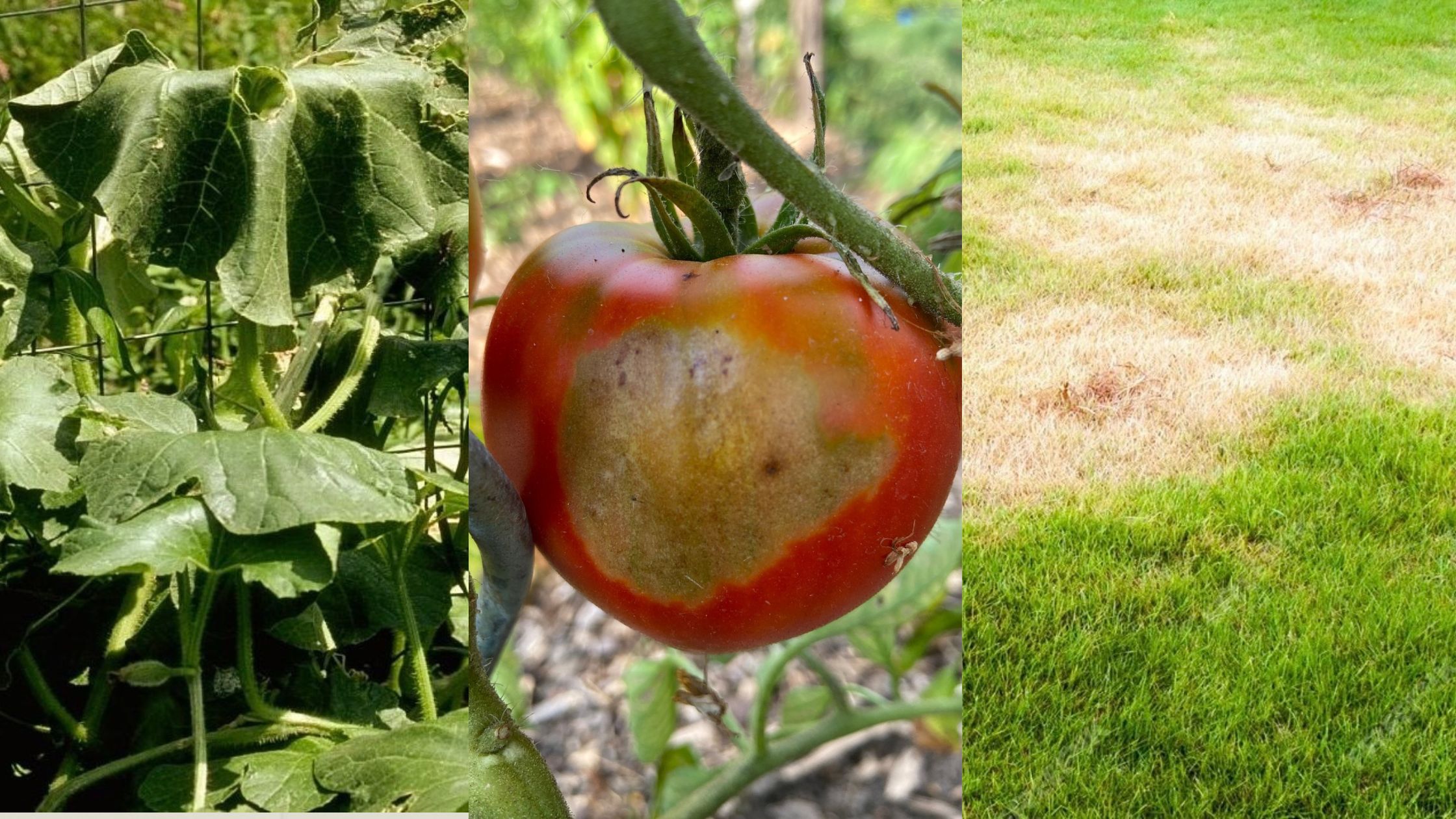
Common Signs:
Wilting at midday, even when the soil is moist
Blossoms dropping from tomatoes, peppers, beans, and squash
Curling or rolling leaves (especially on tomatoes and corn)
- Sunscald on fruit and foliage
- Bolting in cool-season crops like lettuce, spinach, cilantro, and broccoli
When days top 94–96°F and nights stay above 70–75°F, tomato blossoms may drop and pollination can fail. Beans and peppers are even more heat-sensitive—blossoms can drop when temps reach the low 90s.
Tips to Beat the Heat:
- Water early and deeply so roots get moisture before the heat peaks
Mulch with straw, shredded leaves, or compost to keep soil cool
Use shade cloth or temporary shade for vulnerable crops
Hold off on fertilizing during heatwaves—new growth is too fragile
Group plants with similar water needs for better care
Always check soil moisture a few inches down. A damp surface can be deceiving.
Container and Raised Bed Gardening: Needs Extra TLC

Containers:
Use light-colored or large pots to help keep roots cool
Check moisture daily (or twice daily during extreme heat)
Add mulch to container surfaces to reduce water loss
Move pots to afternoon shade if you can, or use umbrellas or shade cloth
Skip the fertilizer until the weather cools a bit
Raised Beds:
Amend with compost to hold more water
Water deeply and consistently—daily in temps over 90°F
Use drip irrigation or soaker hoses to water efficiently
Add 2–3 inches of mulch to moderate soil temperature swings
Shade cool-season crops like lettuce and spinach to delay bolting
Raised beds and containers can be powerhouses—but only if you stay ahead of the heat.
Lawns: Tough, But Not Invincible
Cool-season grasses like Kentucky bluegrass, ryegrass, and tall fescue thrive in spring and fall. But when summer highs hang out above the mid-80s, even tough turf shows stress.
Heat-Stressed Lawn Signs:
Grass looks dull green or bluish
Footprints linger long after walking
Growth slows, blades feel dry or brittle
Keep Lawns Alive Through Heat:
Mow high—3–4 inches helps shade the soil
Use a mulching mower to keep moisture and nutrients in the lawn
Water deeply, aiming for 1–1.5 inches per week in 2–3 sessions
Sharpen mower blades to reduce tearing
Avoid fertilizing in peak heat
A lawn under stress doesn’t need rescuing—just steady, gentle care. With consistent watering and mowing, it’ll bounce back strong once cooler weather arrives.
 Flower Beds: Fragile but Recoverable

Annuals and tender perennials often struggle most in summer heat. Blooms fade fast, leaves scorch, and plants may wilt even after watering.
Watch For:
Drooping leaves
Smaller or faded flowers
Brown leaf tips
Early flower drop
Flower Bed Survival Tips:
Mulch to keep roots cool and moist
Water at the base of plants to reduce disease and improve efficiency
Choose heat-tough favorites like zinnias, lantana, marigolds, and black-eyed Susans
Shade delicate flowers using nearby plants or lightweight covers
Deadhead often to keep blooms coming without over-stressing the plant
Container-grown flowers may need water once or twice a day during heatwaves—and they’ll appreciate a break from that blazing afternoon sun.
Resilience Through the Heat
You can’t change the weather, but you can outsmart it. With a few adjustments—like early watering, smart mulching, temporary shade, and timing your tasks—you can help your garden survive and thrive through the hottest stretch of the year. Plants are surprisingly resilient. With a little help, they’ll bounce back beautifully once the heat breaks.


