Tuesday, August 30, 2022

If You Can't Beat 'Em, Eat 'Em - Purslane

Weeds are the bane of every gardener, but did you know that many are edible and very healthy? The common weed known as Purslane (Portaluca oleracea) is one of those. It is pretty much guaranteed that this plant is somewhere in your landscape and it is a power plant in more ways than one.

Purslane is an opportunistic plant and grows in nearly every country in the world. It has been cultivated for over 4000 years both for food and for its medicinal qualities. It is easily identified by its prostrate habit and succulent-like leaves that resemble those of a miniature Jade plant; about fingernail sized. The stems are reddish and radiate from a central point. The side stems can also root, so there may be several radians in the same plant. The taste is described as slightly tart, salty, and similar to spinach or watercress. Believe it or not, it has been found to have more beneficial nutrients than most vegetables! It is described as a "superfood" and one of the most nutritious foods on the planet.

There are some great ways to use this superfood in your kitchen. The leaves and stems are edible and can be prepared in many ways, both raw and cooked. But remember, as with all vegetables you eat, ensure that the product is clean and free from pesticides or herbicides. Give this “weed” a place on your table at least once and try it. Remember, if you can’t beat ‘em, eat ‘em! Especially when they are so good for you! 
While an internet search will yield many recipes, following are a couple I have prepared and enjoyed.

https://brooklynsupper.com/purslane-with-grilled-corn-red-onions-and-a-creamy-avocado-dressing/


https://adanmedrano.com/verdolaga-purslane-best-cooked-greens/


Saturday, August 13, 2022

Meet the Mason Bees

Once you know the mason bees, you may want to invite them to your slice of earth to help counter the negative effects of declining honeybee colonies. Encouraging mason bees could be an important step in ensuring that some of our fresh foods continue to be available and affordable. Orchardists and home gardeners can raise them.
Mason Bees (also known as Orchard Bees) are exceptional pollinators. Pollen collects on their bellies rather than on their hind legs. Masons work with mud to build and seal their nests in naturally occurring gaps such as between cracks in stones or other small dark cavities. They also readily accept premade nests of hollow tubes or bee houses placed by the small gardener. Only use nesting materials that allow you to open, inspect, and harvest cocoons. Visual inspections can greatly reduce predator populations. Watch out for a new predator, the Houdini Fly.
Each female bee tends to its own brood. The first brood cells that the bee makes (those that are furthest back) will develop into female bees, while the ones closer to the entrance of the nest will become males. Scientists believe that bees do this for one of two reasons: males need to emerge first. They gorge themselves with food while they wait for new females to hatch, they mate, and then they die. Females are much more important to the reproduction of a species. Putting the males as a barrier increases the survival and fitness of the species. 
The favorite food for their brood includes anything that flowers in spring and some nectar. They generally travel only short distances from their nesting site for nectar sources (around 200 to 300 feet is normal). Females collect this food, bring it to their nests and knead it into a ball, mixing it with nectar and their saliva. When the food store is big enough, they lay an egg on top of this mass and seal-off the chamber or cell with mud. Then they go to work on the next cell. The larvae grow and by the end of summer, metamorphose into pupae and later into adults, which remain safe and sound inside the nest until the next spring. They begin emerging when temperatures reach 50 to 55 degrees. 
Mason Bees are pollinators that are worth some time and effort. Attract them to your garden, provide them a place to nest, and keep them coming back.

Wednesday, August 3, 2022

Don't Move Firewood!

Transporting firewood is one of the 
most common methods for 
introduction of damaging pests 
Cankers Disease. By “buying it 
where you burn it”, you can play 
an important part in protecting our natural and urban forests.

Mountain Pine Beetle
Gypsy Moth
Thousand Cankers Disease


Some important things to consider before buying firewood 
include :
  • Do you know where the wood was cut? 
  • Never transport or burn wood from out of state. 
  • If available, purchase local firewood. 
  • Firewood is often available at the camping location. 
  • Leave any unburned wood in place. Do not transport it. 
  • Know if the wood is treated, kiln dried or debarked. 
  • Know what species of wood you are burning. 

 For more information, contact your local University of Idaho 

Monday, August 1, 2022

Too much sun for my tomatoes?

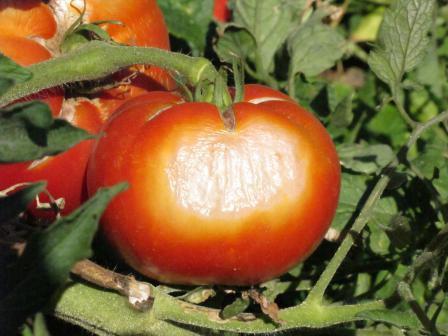
Of course, tomatoes need sunlight but as with most everything, there can be too much of a good thing. Sun scald is common in plants(video) that are suffering from leaf loss from a leaf spot disease, insect damage, or over-pruning. The problem often occurs when defoliation or pruning of leaves is heavy. Sun scald results in a pale yellow to white spot on the side of the fruit facing the sun, this area may become a flattened, grayish-white spot. The surface may dry out to a paper-like texture. Sun scald spots are frequently invaded by decay-causing fungi and bacteria that further rot the fruit.
There are several biological and physical methods to reduce sun scald damage. One simple approach is to identify and plant sunburn-resistant cultivars (that produce more foliage or that have a fruit color that reflects more sunlight). Second, use good agricultural practices to grow healthy plants because good leaf cover will naturally shade the fruit. Provide adequate water, fertilizer, and monitor plants closely for insects and diseases that can cause defoliation or leaf curling. Large healthy leaves provide good shade if the fruits set and grow within the plant canopy. Over-pruning can also lead to sun scald if too much of the leaf canopy is removed and the fruits are subject to direct sun.
Shade cloth is a highly effective option to reduce sun scald. Tomatoes are most susceptible to sun scald at the mature-green stage and somewhat susceptible at the immature-green stage. When tomatoes turn red, they are more resistant to sun scald. Shade cloth can be applied earlier but waiting until fruit set ensure plants grow to their maximum vegetative capacity before sun scald protection is needed. Shade cloth is available at garden centers or online. Before purchasing, evaluate the percent of light reduction. For most fruits and vegetables, 20 to 40% shade is ideal. For a home garden, create a simple frame around tomato plants using wood or row cover hoops, then drape with shade cloth and securely attach to the structure. A structure that is open to the east will allow the plants to receive morning sun.
Now enjoy those healthy tomatoes straight from your garden!

Sunday, July 31, 2022

Edible Native Plant Landscaping - The Real “Paleo” Diet Available in Your Own Backyard

Blue Camas Lily

Curating your home landscape or garden connects you with a tradition thousands of years old in which humans and plants share a special relationship. Native Shoshone people living nomadic lifestyles began expanding into the area now designated as Idaho as early as 4,000 years ago, and the principle diets of these hunter-gatherers included many edible plants, not to mention the many practical and symbolic uses of plant material. For thousands of years (until contact with Westerners), the indigenous peoples lived off a diet sourced by wild (unfarmed) plants. These wild native plants are still around today, and are ecologically adapted to the Idaho climate and its diverse plant hardiness zones.

Here is a sampling of plants gathered by Shoshone Native Americans for sustenance:


Berries were ground and mixed along with hunted meats to form nutritional patties, called pemmican, which were preserved chemically by the acidic berries. Additionally, native tribes in Idaho such as the Nimi’ipuu (Nez Perce) collected:

  • Kouse
    Wild Carrot
  • Kouse (also called “Biscuit Root” by non-native travelers)
  • Sunflowers
  • Huckleberries
  • Wild Rhubarb


The list could continue, and the above links will give more information about each type of plant. But which ones would grow well in your garden? A good place to start collecting some tips is at the
Idaho Native Plant Society resource website. Specifically, the bulletin Landscaping with Native Plants from the University of Idaho and the Landscaping with Native Plants of the Intermountain Region from the BLM contain detailed notes and descriptions of nearly all of the edible plants from the above list. The guides include landscape uses and notes, regional considerations, availability, and pollinator attractiveness. Additionally, the two guides specify which of the plants are drought tolerant, how large they grow, how much water and sunlight they need, when they flower, and what color they bloom. 

If there aren’t already enough reasons to focus your landscaping efforts on native plants, the fact that these selected plants have been used in antiquity up to the present because of their important nutritional value to humans gives one more benefit to carefully designing your landscape with location-appropriate plants. The provided references will get you started, and remember also to keep learning along with archeologists and ethnobotanists about how people and plants have survived by cooperating for thousands of years. 


Sunday, July 10, 2022

Drip Irrigation for Flower & Vegetable Gardens

PVC drip system 
Have you ever wondered if there was a better way to water your plants and use less water, especially during the hot days of summer? Maybe you just want to leave town in the summer and not return to your basket of petunias looking like a basket wilted lettuce. A drip irrigation system might be the solution to your problems. 

As a user of drip irrigation for over 20 years, I can attest to the benefits. By putting water directly next to the plant, you water only the plant and not the soil around it. This means fewer weed seeds can germinate, which means fewer weeds! A drip system can also save you time, while giving you better results in the garden. Studies in drip irrigation conducted by the University of Utah found that participants experienced up to 90% time savings in watering and weeding the gardens. Throughout the growing season, the study participants observed that the plants were healthier and produced at a higher level. 

Drip lines in flower baskets
Summers in Western Idaho get HOT! Using a drip system with a timer, water can be applied when and where it is needed. Unlike a sprinkler that waters a broad area and loses water to evaporation in the air, the drip system puts water directly on the plants when and where you need it. In an article by Colorado State University, it was noted that, “Drip irrigation exceeds 90 percent efficiency whereas sprinkler systems are 50 to 70 percent efficient. Drip irrigation delivers water slowly immediately above, on or below the surface of the soil. This minimizes water loss due to runoff, wind and vapor.” If you pay for your water from a city or municipality, a drip system could result in a lower water bill.  

A watering system set up on timers eliminates the possibility of your gardens not getting watered while you’re gone. At our house for example, if the temperatures are hot, we know can leave our home for a few days and come home to healthy plants.  

Any time is a good time to invest in a drip system. However, springtime is an ideal time to consider designing a drip irrigation system because you can plan your vegetable and flower gardens around the water system. 

While it may sound complicated, it is easy to design and install. There is a lot of information available on drip systems, so do your research. I use a PVC pipe system for the vegetable garden and flexible tubing for our flower gardens.

Sunday, July 3, 2022

Raised Bed Gardening for the Mobility Challenged

Injuries, aging, surgery, and arthritis can all limit gardening and growing your own food. But, use of raised beds can enable a growing population to participate in this activity.

Raised beds can be constructed or purchased in heights as short as 5 inches and as tall as 3 feet. For gardeners looking to avoid painful bending, we recommend taller beds. It is also helpful to build beds narrow enough so that the owner can reach half the width from either side easily to weed and care for their plants. Additionally, space beds wide enough apart to easily allow a wheelchair, walker, scooter or wheelbarrow to pass between them and have sufficient space at the ends to turn around.

Since most vegetables require full sun, the beds should be placed in a southern exposure to provide full sunshine. To alleviate concerns of too much sun, consider 
stretching shade cloth over bent hoops of PVC pipe. Drip system irrigation will provide the best water delivery system and can be easily and inexpensively installed so that mobility-challenged gardeners can irrigate without the difficulty of dragging hoses to hand water.
Above is a picture of David and Anita Henning’s
raised bed system in Kimberly, Idaho.

Raised beds can be constructed of many materials i.e. cement blocks, weathered railroad ties, cedar, redwood, pine or fir lumber, or pressure treated boards. Fir and pine will not last as long and those materials treated with chemicals will need to be lined to prevent treating compounds from leaching into the soil and contaminating the plants.
Home gardeners can construct their own beds using simple tools or purchase pre-made kits from garden centers. Regardless of which option you choose, the raised bed investment is definitely one to consider to allow you to continue gardening well into old age.