Showing posts with label MJB. Show all posts

Monday, February 26, 2024

Pruning Your Landscaping and Fruit Trees

 Knowing the right time to prune landscape 
trees and fruit trees is a key part of your yearly landscape maintenance. 
Late winter, at the end of the dormant season is generally the best time to prune most trees and shrubs. When pruning takes place between February and early April, the wounds on the plants are only open for a short time before new growth occurs and begins to seal them. On deciduous plants, it is also easier to see the shape of the branches when they have no leaves. 

While dormant season is the best time for
 pruning most plants, early blooming trees 
 and shrubs, such as ornamental plum, lilac, witch hazel, or cherry, should never be pruned in the dormant season. Instead they should be pruned as soon as they are done blooming in order to promote the new growth that will produce blossoms the following year.

Using the proper equipment is very important when pruning so you don't damage to your plants. Hand pruners are for making cuts up to 3/4 inch in diameter - bypass not anvil shears. Lopping shears are great for cuts of 3/4 to 1 inch. Larger branches should be removed using a hand saw or a chainsaw. 

Be sure to clean your tools often and consider cleaning after each cut to ensure that you aren't passing a possible infection from one tree to the next. Making sure that your blades are sharp will ensure that your cuts are clean and any damage to the tree is minimal. These small things will keep your trees healthier and your job easier. 

Pruning all of the trees in your landscape should not be a scary task. With some instruction, a little patience and a willingness to prune year after year, you can keep your trees healthy and and your fruit trees producing. It is important to follow the guidelines for the particular cultivar. When you start pruning, step back and look at your tree and visualize what the end product may look like. Start with the dead, dying, diseased, and crossed branches. When they are out of the way, you will have a better picture of the starting point of trimming and pruning your fruit trees.

There is a plethora of instruction documents and videos available online and, of course, you can go to your local Extension Office and ask them for help. 

Happy pruning!

Friday, October 27, 2023

Soil health? Now is the time to prepare!

The season is winding down. The weather is getting colder and it's about time to start putting away your yard and garden tools. But hold your horses! Now is an excellent time to prepare your soil for next year! 
I recommend 2 articles written by Ron Patterson - from the University of Idaho Extension office. The first article talks about the importance of soil health (found here), and the second article talks about the good and bad (mostly good!) of planting cover crops (found here).
Having healthy soil is worth every effort.  From better tasting vegetables to fewer weeds, it is absolutely worth it! 

Sunday, October 8, 2023

Potato harvest time! How do you like them?

One of my favorite vegetables is the humble and oh so delicious potato!  Watch this video for tips on when and how to harvest. You can harvest young potatoes when the vines are still green - or wait until the vines die for final harvest...or both!  

Here's an article about how to have a successful potato garden. Also there are many ways to store and then enjoy throughout the seasons.

My family enjoys it mashed, cubed, roasted, shredded...I don't think there is a potato preparation they would turn down. One of the simplest - and most delicious - is oven roasted potatoes. Easy to prepare and oh so delicious!

Roasted potatoes in a convection oven

3-4 large potatoes, cubed

1 tablespoon of olive oil

salt and pepper to taste

dried or fresh herbs (optional). We love Rosemary or Thyme

Directions: add your cubed potatoes to a large bowl.  Pour the olive oil over the potatoes and then toss them until they are evenly coated.  Evenly coat them with salt and pepper.  

Put them on a rack (we use a cooling rack that is oven safe) on a cookie sheet. Place in a convection oven at 400 degrees for 35-40 minutes or until the edges of the potatoes are crisp and brown.

Remove from oven, and enjoy!  Find more delicious potato recipes here!

Friday, September 22, 2023

Planting trees in the fall? Let's do this!

Fall is a great time to plant trees. What is the best way to plant them? Whether you plant them yourself, or you use a landscape contractor to plant your trees for you, there are recommended practices you should follow. Improper planting of trees, both in the nursery setting, and in the landscape setting, contribute to more tree deaths than all other factors combined!
Let’s review what are currently the best management practices and minimum standards which should be followed when planting a tree.

First, call 811 before you dig. Your spouse will be extremely unhappy with you if you should cut the internet cable, or worse, hit a gas line.

Next, look up. Make sure you have vertical clearance for your trees. Avoid planting them under the utility’s right of way.
Once you have done a site analysis to ensure you have selected the right tree for the right place and that you are not going to disrupt any utilities, head to the nursery to buy your plant material.

Here is where it becomes important to know what to look for when purchasing plant material. Look and shop around. Examine plant material carefully. You are making an investment that could add $20,000 or more to the value of your property, treat the experience as you would buying a new car! Check your tree for signs of girdling or circling roots. Make sure the tree is free from broken, rubbing, or damaged branches, and any place where the trunk has been injured. A tree should have good structure with a single trunk. Avoid co-dominant trunks.

The next step is to dig a proper hole. Standards state that the planting hole should be a minimum of 1.5 times the diameter of the root ball. Research from land-grant universities suggest a saucer shaped planting hole three times the diameter of the root ball. This allows the roots to establish quicker and avoid post planting stress. In our poor soils and arid climate, establishing the root system and minimizing stress factors is extremely important.

Be sure you are planting the tree at the proper depth. As mentioned above, planting trees too deep, either in the nursery setting, or in the landscape setting can lead to circling, and/or girdling roots and eventually, death. Check the depth of roots in the root ball by using a blunt probing instrument, such as a screwdriver. Do not assume it was planted correctly in the nursery! Two to three structural roots should be no deeper than one inch measured four inches out from the trunk of the tree. If roots are deeper than that, you will want to remove soil from the top of the root ball and adjust the depth of the planting hole. 

Handling the tree carefully by the root ball, place the tree in the planting hole with the root ball rising above the soil grade one to two inches on firm, undug soil. Once the tree is in place, remove the burlap and wire baskets from the top third of the root ball. Fabric, paper pulp pots, and containers should carefully be removed.  

Once the tree is properly in place, begin backfilling the planting hole. It is not recommended to add amendments to the planting hole as this creates a second container roots to have to grow through to establish. Planting holes should be amended with no more than 10% organic matter.  When backfilling, add the soil in small amounts and use water to settle it. Avoid compacting the soil around the roots.

Now you may add mulch. Just avoid mulch volcanoes
and don't allow mulch to touch the trunk of the tree. Mulch should be kept a minimum of four inches away from the tree's trunk. Not following this practice allows for disease and decay organisms to rot the trunk of the tree. Mulch should be applied at a depth of four inches. For young trees prone to winter damage, or in areas where animals can cause damage to the tree, consider protecting them. Tree staking is not recommended except in wind prone or high traffic areas. 

With this information, you are ready to go out and plant a new tree. Although these steps are an increase in labor, the return on the investment is a higher quality, longer lasting landscape.

Friday, August 4, 2023

Let my kids help in the garden? Why not?

Share your love and passion for gardening with your kids by bringing them into the garden to discover the pleasure of growing food. Gardening may be the solution for parents struggling to find ways to encourage their kids to eat a healthy and balanced diet. Allowing your child to pick fresh produce from your garden will increase their desire to eat fresh vegetables. Tomatoes warm from the sun are delicious. My son loved green onions and once harvested and ate an entire row! Fresh peas are so delicious.
 
Give them a small piece of ground that is their own, along with gardening tools and gloves. Provide instruction on how to plant seeds and plants. Show them the flowers, bugs, worms, and growing plants. Let them dig a hole and plant something!

Show your child the difference between weeds and plants, pull and cultivate weeds, water, fertilize and care for their plants. Don’t forget to show them the importance of bugs in the ecology of gardening. Observe the bees and teach them about making honey and pollination of plants.

Kids who participated in gardening projects scored higher in science achievement than those who did not. Seeing a garden grow may spark your kids to ask questions like: Why do the plants need sun? How does the plant “drink” water? Why are worms good for the plants? Why are spiders needed in the garden? The questions your kids will ask will provide plenty of subjects for discussion.

Sunday, June 25, 2023

Stay sharp! Maintaining your lawn care equipment.

To keep your mower in tip-top running condition, have a competent service professional thoroughly inspect your mower at least once a year.
Inspection areas:
Sharpening and balancing the blade - A dull blade tears grass and can leave it prone to disease, and an unbalanced blade can cause your mower excess wear and tear.
Check the air filter - If you are using the mower in dry or dusty conditions, you will need to replace the air filter more often.
Check the spark plug - Always ensure that the spark plug is clean and gapped correctly.
Check the carburetor - and have it adjusted if necessary.
Check the oil - and have it changed if needed.
Check the wheels, bags, and
belts
- and replace as needed. Consider blowing off mower after each use.


Your lawn mower is likely the most frequently used piece of outdoor power equipment that you own - here's a maintenance calendar that's handy to use. Proper maintenance is extremely important to maximizing efficiency, reducing emissions, preventing costly repairs and extending the life of your lawn mower. By keeping your mower in proper working order, you can help maintain a healthy environment, pocketbook and lawn.
For more information on lawn care, contact your local University of Idaho Extension office!

Monday, June 19, 2023

Mosquitoes? Consider Your Lawn Watering.

It’s warming up so we are all watering our lawns. With the warm weather and water, come those irritating and possibly disease infested mosquitoes.

What do mosquitoes have to do with yards? When you over water your lawn the earth beneath doesn’t dry out and creates a perfect mosquito habitat. There are certain species of mosquito that will lay eggs in the damp mud and the next time your water comes on; the water sits on top of the earth for a period of time that allows the mosquito eggs to hatch. On warm days it doesn’t take very long for a mosquito to go from egg, larvae, pupae to adult. Once the female adult mosquito hatches, it looks for a blood meal. Yep, you and your family!

Another problem is the water filling up buckets, flower pots, wheel barrows or other items left outside. This water then sits, heats up and then becomes stagnant. Female Culex species of mosquito love to lay their eggs in this water. This species can carry West Nile Virus and transmit it to you and your family with one bite.

You can help keep your family safe by making sure you are watering your yard properly, and that your sprinklers are only watering the things they should be and that they are not leaving puddles below the heads. 
Another thing to consider is a smart sprinkler controller. Many of these come with the ability to track the weather and skip a watering if it isn't needed. It can save water, money, and help avoid standing water.
There are many published articles on the web about how to water your type of grass and how much water is enough...and the kind of pests that can flourish in unhealthy turf. A great publication for Idaho residents to refer to for guidance is The Pacific Northwest Handbook

The “Rule of thumb” that is widely used is: water as deeply and as infrequently as possible. This stimulates root growth resulting in healthy drought tolerant and pest resistant turf (like mosquitoes)! A healthy root system produces vigorous turf: rooting depth is determined primarily by genetics and soil condition, not irrigation!

Thursday, May 11, 2023

Gardening Tools for Gardeners with Limited Motion

Have you given up some of your gardening time due to arthritis, injury or mobility issues? There are adaptive tools that will allow you to continue your hobby with less pain and difficulty with grip strength and movement. Tools can be purchased or created that have longer handles, larger grips and supportive cuffs.

Long handles allow gardeners to reach further from a seated position or into a flower bed. Using a child-size rake in this case may be the better option due to lighter weight of the tool. Hand trowels can also be adapted to have long handles. Shovels can be adapted to have large, D-shape or round handles at the top to make pivoting while digging easier. 

Hand tool grips come in a variety of adaptation to help gardeners. If gripping the tool is difficult, the handle should be the same size as when you put your thumb on your fingertips creating a circle – about two inches. If current tool handles are too small, you can add tape or pipe insulation to the handle to create a larger and softer handle. Easy grip trowels and weeders are also available for purchase with a vertical handle rather than a horizontal handle. This keeps the wrist and forearm from twisting and causing pain. Ratcheting pruners allow the gardening to grip multiple times to cut through limbs rather than one hard grip to prune.
When wrist or forearms are injured or in pain, handles can be adapted or purchased with a special grip cuff. The cuff keeps the wrist in a neutral position and can also have an adapted handle on the side allowing for more strength coming from the upper arm to be used. Velcro arms straps can be added to other tools with similar results.

If the injury is temporary, tools can be adapted with options that can be removed. Permanent conditions may need to include remodeling the garden to include some structural changes such as raised beds and larger hardscape paths. Tools are available to make gardening a pleasurable hobby for all gardeners.

Thursday, April 13, 2023

Why Raised Garden Beds?

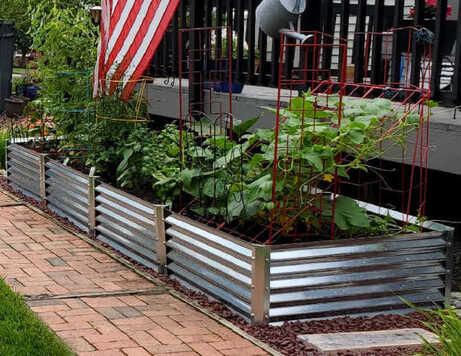
Raised garden beds are a great choice for anyone who has a small space or wants to control the soil quality. Another good reason for raised garden beds, it is great for all ages, health conditions, and mobility types. We all love healthy grown foods, so with raised gardening beds it is easier to manage and control the quality of the soil to get better yields.


Evaluate what your needs are, how much room you have, and how much time you want to commit to your gardening space. 
   Consider the different designs available and see what appeals to you. You will want to know your budget and choose the layout or plan that will work best.  

fresa garden beds

    Check out this site for many great ideas on types of gardening beds and different designs. 
    Look at your location and decide what plants you want, the amount of sunlight you are going to have, and how long your growing season is for your region. Make sure to add in drip irrigation, which will conserve water; set the drip at the base of your plants. Leave space for walking paths around your beds.
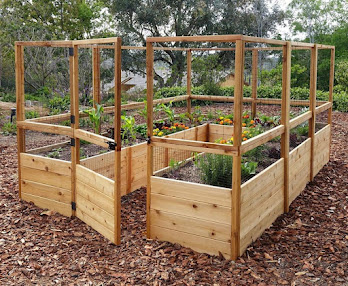
    Think ahead, if you need to cover your garden beds to keep out flying bugs and birds, add design components that will make it easy to net the spaces. This type of design is very useful for fall cold snaps when you need to shelter plants from the cold evenings. You can also use hoops for coverings. The size of your bed should be an arms length to reach far enough to get to your produce; 4 feet is a good width for your beds. If you have rodents that burrow, you may need to put down a wire mesh to block any digging into the bottom of garden boxes.
Deer Proof Cedar Complete Raised Garden Bed Kit - 8' x 12' | Eartheasy.com

    Soil preparation is key in a raised bed, so adding in compost and organic material is necessary. The beds can be filled cheaply with rocks, gravel for drainage, grass clippings, fall leaves, twigs, branches, logs, even cardboard boxes, or paper sacks.
    Don’t forget to get your mulch on top to retain the moisture. Keep in mind you do not want to put any items in the bed that have insect contamination or chemicals.  
    Get creative in your planning and designing, use what you have, so many different components can be used for raised beds. REPURPOSE, RECYCLE, REUSE!!


Thursday, March 23, 2023

Early Spring Lawn Care

Spring is here! The days are getting warmer and longer. We look out at our lawn coming out of a long winter that has not been fed for a while. Its color is off and we think: if I hit it with lots of water, dump some fertilizer on it that will fix it. But wait… there are a few things to consider about feeding and watering your lawn before you start.

C:\Users\jbbow\AppData\Local\Microsoft\Windows\INetCache\Content.MSO\A278CA17.tmpWhen to Fertilize
A program that applies fertilizer four times a year, using the holidays of Easter, Memorial Day, Halloween and Thanksgiving as a guide is desirable. An application of a quick release formula, where the nitrogen is quickly available to the plants, is best in the spring and slow release formulas, where the release of nitrogen is slower can be used for the rest of the applications.  It is better if the late fall application is slow release so the nutrients are released into the soil during the winter to help with lawn recovery in the spring.
Image result for lawn fertilizerWhat Type of Fertilizer
The ratio of nutrients on any plant food is represented by Nitrogen- Phosphorus- Potassium (N-P-K) in numbers. The numbers state the amount of each. For instance, a 10-10-10 is a balanced food with equal parts nitrogen, phosphorus and potassium. A fourth number would represent Sulfur (S).
Nitrogen promotes foliar growth and color. Phosphorus is useful in encouraging flower and root growth. Potassium in lawns enhances the plant’s ability to use nitrogen.
Lawns in southern Idaho can be fertilized by following one of two strategies: soil testing or nutrient ratios. In one, fertilizer rates for the lawn are based on a laboratory analysis of a soil sample. The other is based on the fact that lawns do best when fertilized with a fertilizer having a 3:1:2: ratio of N, P, K.  Spring applications can use a ratio where the phosphorus ratio is higher to promote root growth.                                 
Watering
Water deeply and less often to promote deep roots. Apply between 1”-1 1/2” of water weekly, depending on weather conditions, soil type, and landscape terrain (slopes, etc.). Soil should be moistened to a depth of about six inches. To test sprinkler output, place empty tuna fish cans or cat food tins along the water arc to see how long it takes your sprinkler to put down this amount of water. Output is greater the farthest point from the sprinkler head. (You can allow the cans to fill 1/4” or 1/2” and multiple accordingly.) One application a week may be all that is necessary, or you can divide the time into two or three applications per week. Also, take into consideration the areas where sprinklers overlap an area, and that sprinkler output varies. During hot weather, increase the water to 2” per week and apply more frequently if necessary. Visual clues that the lawn needs watering are when the grass begins to take on a blue-green color or has lost its spring, leaving an imprint behind when walked upon.
Aeration
Core aeration opens up avenues for water and fertilizer to reach down to the root zone, thus stimulating the activity of soil microorganisms and increasing root development. Lawns that have not been aerated before or those that get heavy foot traffic may benefit by aerating twice per year, once in the spring and again in the fall for the first two or three years, then drop back to once per year. On lawns that are regularly core aerated once per year in the spring is enough. Do not rake up plugs afterwards, these are topsoil and will decompose naturally, mow over them and they will soon disappear. An application of no more than a ¼” of compost after spring aeration is beneficial for all lawns.
Thatch
Image result for lawnThatch is not caused by leaving grass clippings on the lawn, as is commonly believed. It is an accumulation of dead and partly decomposed leaves, stems and roots above the soil surface but below the green leaves. Up to 1/2 inch of thatch is beneficial, acting as natural mulch, insulating the soil, reducing water evaporation and soil compaction, and increasing the lawns spring and wear tolerance.
Too much thatch serves as a barrier preventing air and moisture from moving into the root zone of the plants, causing the turf to dry out much too rapidly. This provides a haven for insects and disease. If thatch is over 1/2 inch, power raking in early spring is advised. Power raking every year is not necessary and may actually damage the lawn.
Giving your lawn an application of a slow release fertilizer in the fall will give your lawn a jump-start in the spring.

Thursday, March 16, 2023

Pruning Correctly and Other Ways to Avoid Bitter Pit in Apples

Bitter Pit
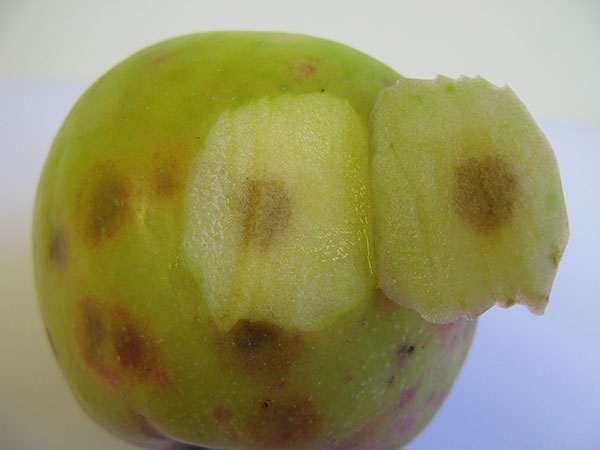
Imagine going out to harvest your apples only to find that all of your hard work has resulted in apples covered with brown sunken lesions on the skin, and brown spongy tissue below the skin surface. What caused this? Likely it was the result of a disorder called Bitter Pit!

Bitter pit can affect many apple varieties. The Granny Smith, Jonathan, Honeycrisp, Northern Spy, Gravenstein, Cortland, Fuji, Crispin, Empire, Ida Redd, and Baldwin are a few of the susceptible varieties. Rome Beauty, Winesap, Mackintosh, and Gala are all less susceptible varieties.

There are several things that can cause Bitter Pit, and a few different ways you can avoid or treat them.
  • Avoid wide fluctuations in soil moisture. Trees that have received too much or too little water are more prone to Bitter Pit. Mulch around the tree with a low nitrogen material to help retain moisture.
  • Do not over fertilize. Excessive nitrogen or potassium seem to coincide with Bitter Pit.
  • Do not over prune in the spring. Over pruning causes vigorous shoot growth. These shoots compete for calcium and it may result in Bitter Pit.
  • Do not over thin in the spring. Large apples from small crops seem to be more prone to Bitter Pit.
  • Late harvested fruit is prone to Bitter Pit. It can also develop if the fruit has been stored for a long time. Consider using the fruit quickly if bitter pit has been a problem in the past.
  • Calcium sprays should be applied carefully and according to packaging directions if none of the above methods works.
With a little extra effort and care you can avoid the dreaded Bitter Pit. It doesn’t take much effort and before you know it you will be harvesting the apple crop you always dreamed of.
Note: Bitter Pit can resemble damage caused by Stink Bugs. To learn more about Bitter Pit click here.

Wednesday, August 3, 2022

Don't Move Firewood!

Transporting firewood is one of the 
most common methods for 
introduction of damaging pests 
Cankers DiseaseBy “buying it 
where you burn it”, you can play 
an important part in protecting our natural and urban forests.

Mountain Pine Beetle
Gypsy Moth
Thousand Cankers Disease


Some important things to consider before buying firewood 
include :
  • Do you know where the wood was cut? 
  • Never transport or burn wood from out of state. 
  • If available, purchase local firewood. 
  • Firewood is often available at the camping location. 
  • Leave any unburned wood in place. Do not transport it. 
  • Know if the wood is treated, kiln dried or debarked. 
  • Know what species of wood you are burning. 

 For more information, contact your local University of Idaho 

Tuesday, June 7, 2022

Don’t Let Crabgrass Make You Crabby!

Crabgrass is a nuisance! It is a group of weedy grasses in North America - Digitaria sanguinatis (large or hairy crabgrass) and Digitaria ischaemum (small or smooth crabgrass). It likes lawns that are under watered, under fertilized and badly drained or in other words, a “neglected lawn”. Even a well-cared-for lawn will have an occasional visit especially during difficult weather conditions and drought.

Crabgrass was introduced into the United States in 1849 by the U.S. Patent Office as a potential forage crop. It is good in dry and hot areas for summer forage, but we don't want it in our lawns.


Smooth crabgrass.
Smooth crabgrass
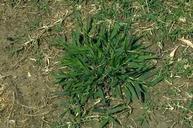
Large crabgrass in a lawn.
Large crabgrass in a lawn
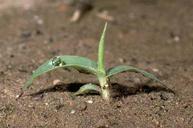
Smooth crabgrass seedling.
Smooth crabgrass seedling


As an annual, crabgrass germinates, sets seed, and dies within one year. There is no need for fall expenses to get rid of it. Winter will do it for you.


Even when you mow it closely, crabgrass can still seed and will hurt your lawns vitality. A single plant can produce 150,000 seeds and the can remain viable for three years in the soil. 

DO NOT LET IT GO TO SEED.

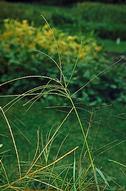
Flowering stem of smooth crabgrass.
Flowering stem of smooth crabgrass


There is no biological control to get rid of crabgrass other than livestock, however there are complete treatments you can buy and apply to get rid of crabgrass:

- Preventive treatments

- Organic sprays and treatments

- Selective chemical herbicides

- Non-selective herbicides

Or you can establish practices for maintaining a healthy lawn that naturally discourage crabgrass from thriving:

1)  Planting the right turf grass species (shade, traffic, sun).

2)  Watering correctly (full coverage and depth for good rooting for your variety of grass).

3)  Proper fertilization (periodic application during growing season for your grass variety).

4)  Regular dethatching and/or core aeration every couple of years.

5)  Mowing the proper height for your grass variety and season.

How about here in the Treasure Valley?

For problem lawns in the Treasure Valley, start with applying per-emergent when temperatures in soil reach 50-55 degrees F for at least 4-5 straight days mid-March/April.  Mow proper lawn height for your grass. Apply per label instructions, water in and have no rain for 24 hours. Use a broom and not a blower to remove from concrete. You especially want crabgrass protection between the grass and concrete. Wait a least two days to mow after application to keep from lifting any residue. Apply again in 3 months / 90 days.

For small infections, crabgrass can be removed by hand, the younger the easier. Water area and pull at base of plant gently to remove. Do not put weeds in your compost pile.

For bigger problems, check the following website or your local cooperative extension office for help.