Wednesday, April 14, 2021

Invest In Your Health By Growing Blueberries!

Home Gardening: Rabbiteye Blueberries - Alabama Cooperative Extension System

Blueberries are one of the healthiest garden planting options. Not only are they highly nutritious, they rank #1 in antioxidant activity (neutralizing harmful metabolic by-products that can lead to cancer and age-related diseases), slow loss of mental capacity with age, reduce cholesterol build-up, prevent infections, improve eyesight, and provide numerous other health and even cosmetic benefits.

Growing this superfood successfully in Idaho does however require a fair amount of effort in planning, preparation, and maintenance

  • Select a site with full sun exposure to develop good fruit flavor and high yields. 

  • Cool, moist, well-drained sandy loam or silt loam soils with about 3% organic matter and an acidic pH between 4.5 and 5.2 are best. Since alkaline soils are common in southern Idaho, soil acidification with sulfur 1 to 2 years before planting may be necessary. A soil test will tell what you’ll need to do or not do – add limestone to increase the pH or elemental sulfur to decrease the pH and if you need to increase magnesium concentration with potassium magnesium or magnesium sulfate. 

  • Highbush varieties can grow 10 feet tall and 6 feet wide and should be spaced 4 to 5 feet apart. Select early, mid, and late season cultivars for optimal yields throughout the growing season. Yields for different cultivars vary from 2 to 20+ pounds per bush so determining how many bushes you’ll need is an important part of planning. On average, 1 pound of frozen blueberries yields 1 pint. I eat ½ pint/day 5 days/week – that math works out to 130 pounds annually for just my breakfast.

  • Blueberries are intolerant of standing water and drought conditions so irrigation needs to be installed and operational before planting. 

  • For the first two springs after planting, strip off all blossoms to establish healthy canes and increase long-term yields. Afterwards, yearly, moderate pruning in late winter or early spring will maintain health and productivity. Older, dead, or diseased wood should be removed. 

  • Organic mulch should be applied to control weeds with any that thrive under the mulch removed by hand or eradicated with glyphosate herbicide. 

  • Blueberries are heavy feeders and prefer ammonium sulfate (21% N) fertilization because it not only adds nitrogen but acidifies the soil. Alkaline irrigation water makes regular fertilization even more critical.
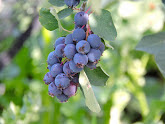
After the planning, preparation, and maintenance effort, it will take 2 to 3 years to get harvestable fruit and 6 to 8 years to reach maximum production, so patience is also required.


Once your bushes are established and productive, preserve your health and harvest off-season by individually quick freezing your blueberry bounty. This and other easy preservation techniques will keep you supplied with superfood all year long. Here's a great jam recipe to try.

No matter how you like to prepare or eat them, invest in your health by making the effort to grow blueberries.

Sunday, April 4, 2021

Why Gardening with Native Plants matter.

 Native plants provide many benefits to people and wildlife, while significantly adding to healthier soil and water.  Of the many benefits, my top six motivations for landscaping with native plants include: fewer fertilizers, pesticides, herbicides, and water. Plus, indigenous plants promote cleaner air, food, and shelter for wildlife, and they have proven to save money in many ways.


Excess phosphorus and nitrogen, main components of fertilizers added to our soil become toxic, and the runoff leaches into our waterways, causing excess algae growth. This surplus fertilizer depletes oxygen from our waters, harms aquatic life, and interferes with recreational uses.  Pesticide and herbicide runoff from lawns can contaminate our rivers and lakes with poisonous substances. Native plants have deeper roots and require less water.


As to cleaner air, our native landscapes do not require mowing, and they do not need nearly as much maintenance.  Lawns must be regularly mowed, weed-whacked, and often blown with leaf blowers.  These tools cause harmful emissions and air pollutants like carbon monoxide, carbon dioxide, nitrous oxides, sulfur dioxide, volatile organic compounds, and air toxins like benzene and particulates created from power tools. 


Our native plants attract a variety of birds, butterflies, and other wildlife by providing diverse habitats, food, and pollinator sources. In contrast, non-native plants offer little or no food or shelter to most native wildlife.


Essential to many home gardeners is the need to save time and money.  When compared to the high-maintenance of lawns and the added care necessary for exotic plants, it is easy to measure the economic benefits of landscaping with native plants.  Planting with selective native plants can create a beautiful and scenic landscape.


References that were used in creating this article.

It is easier to list them here for your use than to insert them into the text, this way you can choose which one you want to follow.

University of Idaho Extension | Short-Season, High-Altitude Gardening

http://www.extension.uidaho.edu/publishing/pdf/BUL/BUL0862.pdf 


Idaho Native Plant Society | Boise Area Native Plants Local Chapter: Pahove.  http://www.idahonativeplants.org


U.S. Fish and Wildlife Service | Native Garden Guide for Southwestern Idaho.

http://www.fws.gov/pacific/pdf/BLM_USFWS_Native%20Garden%20Guide_SW%20Idaho_2019_web.pdf


U.S. Forest Service | Basic Instructions for Native Plant Landscaping Projects.

https://www.fs.fed.us/wildflowers/Native_Plant_Materials/Native_Gardening/instructions.shtml


East Multnomah Soil & Water Conservation District (EMSWCD) Portland, OR.
emswcd.org select ‘Native Plants’

Pictures from the Idaho Native Plant Society and College of Agricultural and Life Sciences – University of Idaho


Sunday, February 28, 2021

Shamrock luck!

Shamrocks  are for  good luck and are a popular house plant, especially during St. Patrick’s Day. 

Shamrocks are easy to grow if you follow these five simple and easy to remember steps:
·       Shamrocks prefer direct sunlight, be sure to place your plant in a window where it will receive plenty of light. Shamrocks will flower, even during winter, if they receive enough light. Each night the plant's leaflets fold up , then reopen in sunlight the following day.
·       Shamrocks like food! Fertilize them regularly with either a liquid houseplant or time release fertilizer during their growing season- always following label instructions.
·     As a houseplant, they prefer moist soil. Avoid allowing your shamrock to dry out during the growing season.
·       Give your shamrock a growing temperature between 50 and 70 °F during the growing season. They can be placed outside after danger of frost has passed and are a beautiful addition to your pots or in a grouping of pots.
·       Shamrocks have a dormant period. When your shamrock
 goes dormant, usually in late summer, don’t fret! Just place 
it in a cool, dry location out of direct sunlight for 2-3 months. The purple-leaf types only need one month of dormancy!

Since your shamrock grows from small bulbs, it's easy to divide and create new plants. 

Here's a short video with how-to steps for propagating. 
Happy St. Paddy's Day to you!

Sunday, February 21, 2021

Tomato Types

 What is Determinate or Indeterminate tomato seeds?

Determinate tomatoes are varieties that grow to a fixed mature size and ripen all their fruit in a short

     (image Ida Gold Cherry)
period, usually about 2 weeks. Once this first flush of fruit has ripened, the plant will begin to diminish in vigor and will set little to no new fruit. 

Indeterminate tomato varieties are vining plants that continue growing in length throughout the growing season, which is why you will sometimes see them referred to as "vining" tomatoes, Indeterminate tomato varieties will also continue to set and ripen fruit throughout the growing season, until the plants are killed off by frost.  

Both determinate and indeterminate tomato varieties have their pluses and minuses. It really depends on what you are going to be using the tomatoes for and also, how long is your growing season. If you want a thick tomato for making sauces, you are better off with a paste tomato and those tend to be determinate.

If you tend to eat your tomatoes fresh and want a season-long supply, go for indeterminate varieties.

An heirloom tomato (also called heritage tomato) is an open-pollinated (non-hybrid) heirloom cultivar


of tomato. Any tomato that is at least fifty years old and is not a hybrid. According to tomato experts, heirloom tomatoes can be classified into four categories: (image Black Brandywine)

  • family heirlooms,
  • commercial heirlooms,
  • mystery heirlooms, and 
  • created heirlooms.  
They usually have a shorter shelf life and less disease resistance than hybrids bred to resist against specific diseases. They are grown for a variety of reasons, such as for food, historical interest, access to wider varieties, and by people who wish to save seeds from year to year, as well as for their taste. "Heirloom Tomatoes". Spiritfoods. Archived from the original on 22 February 2013. Retrieved 24 August 2012. 

When the plants of an open-pollinated variety self-pollinate, or pollinated by another representative of the same variety, the resulting seeds will produce plants roughly identical to their parents.

 Hybrid tomato – A tomato bred by crossing varieties. Hybrids offer better disease resistance, higher

yield, and other improved traits.

Early variety – A tomato that matures in 50 to 60 days; these are prized for early harvests and late summer planting for a fall crop. Sometimes we refer to tomatoes that mature in more than 60 days as “early,” but only in comparison to their peers. For example, the earliest beefsteak type is only early compared to other beefsteaks. Beefsteaks are typically longer maturing than other tomato types because they are so big! 

Tomato Disease Resistance Codes 
Tomato names are often followed by capital letters that stand for resistance to certain diseases. This is very important because these diseases can wipe out a tomato crop. 


Sunday, February 14, 2021

Xeriscape not ZEROscape

Drought tolerant landscape doesn’t have to mean gravel, and spiky gray plants. Xeriscape (xeri=Greek for dry and scape=view) emphasizes the use of drought tolerant plant species combined with creative landscaping practices to conserve water.

The following terms: water-wise, drought tolerant, water thrifty, and water smart all refer to plants requiring less water in a managed landscape. We all want to use less water in our landscapes and don’t want to be that house with the ugly brown yard.

Whether you have established landscape or total do-over, take a look at the following Eight Principles of Xeriscape:

1. Plant and Design comprehensively from the beginning.

  • Lower your water bill.
  • Create a more interesting landscape. Plan your annual flower and vegetable gardens and create a planting guide.
  • Invite more pollinators into your landscape.
  • Don’t just plant and hope for the best
  • Create a landscape plan. Identify all the plants in your landscape, their water, sun, and soil needs, and the seasonal maintenance for those plants.
  • Record the micro climates in your landscape. Record the plants you add and take out of your landscape and why. Record monthly and annual tasks to remind you when to perform them.
  • Develop a fertilization and mulch plan.

Legacy buffalo grass lawn in Boise, ID
2. Create practical turf area. Consider size, shape, and appropriate grasses. Turf uses the highest percentage of water. When planning, consider regionally appropriate turf. Sheep’s fescue (Festuca ovina), and Buffalograss (Bouteloua dactyloides) are two examples of grasses that require less water and grow well in the Treasure Valley. Raise mowing height to 2-4 inches on your mower. The taller grass shades the ground so slows evaporation and promotes deeper root growth. Research shows mulching the clippings instead of removing them, can replace one application of fertilizer per year.

You might consider replacing some of the grass with a  more planting beds for flowers or vegetables. Don’t forget to check your HOA rules when considering the removal of turf.

3. Choose plants for your growing zone.
Once established, regionally appropriate native and low water use plants require little water beyond the normal rainfall (about 12 inches per year of precipitation in the Treasure Valley with 5 of those inches between April-October. Consider soil type, exposure to sun, and choose the right plant for those conditions. 

4. Consider improving the soil with organic matter.  Healthy soil retains water and absorbs excess nutrients, Have your soil tested for nutrient content, PH, soil composition and organic matter. The report will give you suggestions for adding anything that is lacking.

5. Strongly consider using organic mulches such as wood chips.  Adding mulch controls weed growth and slows evaporation, so conserves water. 

6.Irrigate efficiently. Create zones to provide the right amount of water at the right time by grouping plants according to their water needs. Your tree, shrubs, flower and raised beds have different water requirements than your lawn. Consider drip irrigation or soaker hoses for flower beds, shrub and trees. More targeted watering cuts down on weeds and uses less water.
Avoid sprinklers that produce a fine mist or spray high into the air in order to reduce water loss from evaporation and wind.  To check your sprinkler output, use tuna cans or similar straight-sided cans placed at various places around your lawn.  Run lawn sprinklers for 5 minutes and measure the output.  Now calculate the time needed to get  1 inch of water per week on your turf.
Water requirements change often so don’t just set automatic systems and forget them. Review the water requirements often taking into account rainfall, temperature and wind. Adjust the time you water accordingly.

7. Water Harvesting. Direct your roof water into rain barrels or onto your landscape. This recharges Idaho's aquifers as well as irrigating our arid environment. Here's how to build a rain barrel.

8. Maintain your established landscape.  Learn how to prune and fertilize each plant in your landscape and record the requirements in your maintenance schedule.

.Consider visiting xeric demonstration gardens in the Treasure Valley area. Hopefully they will inspire you to improve water conservation in your own home landscape.

The Idaho Botanical Garden has several gardens within its footprint, including The Water Wise Garden and The Fire Wise Garden.

 
These following two links will give you an extensive overview of xeric gardening.

Sunday, February 7, 2021

How are your overwintering bulbs: Dahlias, Cannas, Gladiolas, and more...?

Dahlia
If you are trying to overwinter bulbs (includes tubers, corms, and rhizomes) such as Dahlias, Tuberose, Amaryllis, Canna Lilies, Gladiolas - now is a great time to check them to see what condition they are in. Here are the main things to check:

#1 Check for Disease If bulbs are damaged in digging and not "cured" well while preparing them for storage, you can get a soft rot in them and it will spread from bulb to bulb, or tuber to tuber very fast. A fast way to check for this is to use your nose, the rot will give off a rather bad smell, once you detect the smell, then use your eyes to look for discolored material or material that is oozing and looks moist.
Remove all bulbs that show the discolored symptom or are soft, you should also check with a master gardener to see is there is a fungicide that you can treat the ones not affected to protect them.

Canna lily rhizomes
Canna Lily
 #2 If you have put the bulbs in an organic bedding material, check it for moisture content - if it is damp that could increase problems with soft rot.

#3 Check the bulbs to see if they are wrinkling up which shows that they are drying out. Outside air can become very dry when it warms up causing a severe problem in over wintering your live material. 

Tubers such as dahlias are very prone to not surviving the winter unless they are in bedding material. If the bedding material is too dry,  it can allow the bulbs to dry out and die, of course if it is too damp then soft rot can be a problem.
Gladiolus corms

#4 Check the temperature of the area you are storing them in. It should be less than 50 degrees F. and more than 40 degrees. It is very important that the bulbs do not freeze and if it gets too warm the bulb will start to grow and that can kill it.

For more information on growing flowers, contact your local University of Idaho Extension office!

Monday, December 28, 2020

Winter: The best time to ponder the bones of your yard & garden - old

With the leaves on deciduous plants gone, you can see where you need structure, where you need evergreens and where you need to prune. Here's 10 suggestions. 
You also have time out from planting and harvesting when you can think about building structures, such as walkways, decks, raised beds, trellis/gazebos, or seating areas. 
Are you thinking of creating or converting to a backyard forest garden. Here's a bridge over a dry river rock bed that flows through a wildlife area...even in a small yard! 

Dr. Douglas W. Tallamy has written a seminal book, Bringing Nature Home, on how to plan for the best ecosystem in your own yard. He has followed it with a second book, Nature's Best Hope, outlining how we can help grassroots conservation with native plants! While he is from the NE USA, his ideas are applicable here. This is the time..."one yard at a time!" 

Our winter sunshine is a plus in this, as you can get outside even in January and February to mess with lumber, edging or stepping stones (unless the snow hits). 

Go out and stare at your gardening space and draw a map of what is already there.

Consider what you’d like to keep and what isn’t working. Refer to your garden journal for successes and failures.
  • Envision what you’d like to see there and draw it in on your map. 
  • Draw a plan for how to build what your mind’s eye sees and make a materials list. Watch this video for a simple plan. 
  • Gather the materials and get started. 
  • Then, any day that’s warm enough to work, you’re ready.