There are so many beautiful plants that are native to Idaho that can be used to landscape around your home. These plants include many different colors, shapes, heights and peak seasons for blooming! By using native plants, you can help keep a beautiful landscape almost year-round with little effort on your part. Let the Idaho seasons begin!
Reasons for having native landscape plants include; the short-seasons here in Idaho, native plants have adapted to our regions, native plants have lower water use, and they take less labor and maintenance. Who wouldn’t want to have a native landscape with all of those amazing perks?
Picking your favorite native plants may be the hardest part of changing your landscape to a native landscape as there are so many beautiful options to choose from.
When using native plants to create your landscape you are also helping provide wildlife habitat, improving your soils, and helping your local pollinators. You will reduce your water use as these plants were made to survive Idaho. You will create a beautiful scenery for yourself, a place for pollinators to roam, and a home for wildlife.
Information on how your native landscape is helping provide wildlife with habitat visit Washington State University’s website.
Need more reasons to choose to plant a native garden? Check out this video from Michigan State University and listens to Laurie Kaufman explain her reasons for switching from a traditional landscape to a native garden.
Have you always wanted a garden but didn’t think you had enough outdoor space? How would you like to grow your own ‘salad wall’? Not everyone has access to large garden spaces and cities are becoming more crowded and dependent on apartment living. By 2050, almost 80% of the earth's population will be living in urban areas.
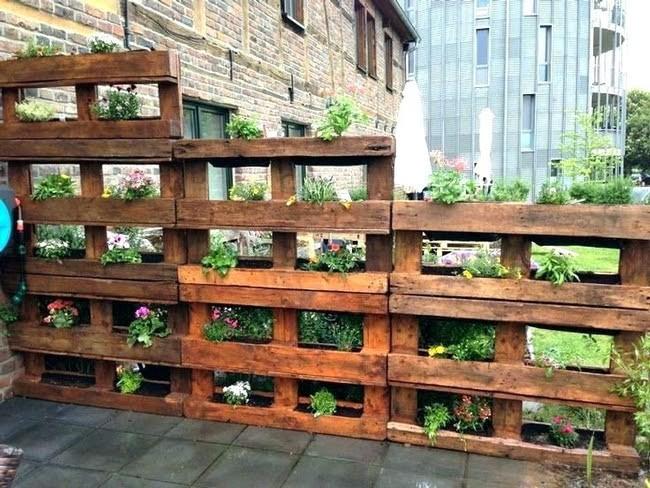
Vertical pallet gardens or “green walls” are an innovative solution that has become quite popular! They are easy to create and very sustainable. Imagine being able to create a decorative succulent wall near your front door, or being able to have fresh vegetables right on your balcony! Vertical gardens help to reduce the carbon footprint by filtering pollutants and carbon dioxide out of the air, which improves our air quality.
Not only is pallet gardening fun and easy, below are a few benefits:
use your space more efficiently
conserve water
decrease insects and disease
reduce the need to weed
eliminate back pain by decreasing bending which is easier on your back, knees, and hips
Wood pallets are a perfect choice for your green wall. You can often find them for very little money, or even for free! You can choose to lean or hang your pallet on a wall or fence, or make a stand to hold it. See this video for a variety of pallet gardening examples.
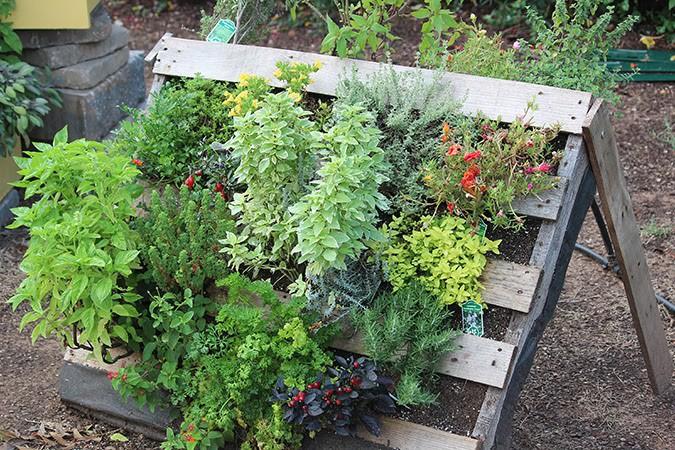
When selecting plants for your vertical garden, choose plants with a shallow root system: lettuce, tomatoes, strawberries, cucumbers, arugula, spinach, chard, dwarf peas, parsley, bush beans, and kale. Herbs like rosemary, thyme, and basil are also perfect for pallet gardening as well.
It is important to know the right type of pallet to use. If you decide to grow food plants, use a pallet that is stamped “HT,” which means heat treated. This type of pallet does not have chemicals that can leach out into your garden. If recycling a used pallet, kill any bacteria that may be lurking inside by scrubbing down the wood with a bleach solution and then soapy water and let it dry before planting.
How to Build a Pallet Garden: See this video for a demonstration.
If you choose to line all 4 sides of the pallet with landscape fabric and cut holes in front for your plant, complete steps 1-3 first. If you choose not to, skip to step 4.
Lay your pallet down horizontally, and use a staple gun to adhere landscape fabric to the pallet.
Once you have 3 sides done, fill the pallet with potting soil. Press potting soil down firmly.
Staple the last landscape fabric to the front of the pallet.
Transfer your plants while the pallet is still lying flat. It is a good idea to leave the pallet laying horizontally for 1-2 weeks to allow the young plants to take root.
When watering, start at the top and water each section a little less because the water will seep downward to the bottom of the pallet. Water frequently as plants will dry out quickly.
Fertilize your plants, as recommended specific to your plants, to provide them the nutrients they need to grow.
Selecting fruit trees to grow in your yard or orchard depends on several factors:available space, height and width restrictions, soil type, exposure to good light and air circulation, preferred type of fruit, type of root-stock, and much more.
The first step is to plan.
·The following factors should be considered as you plan:
Climate zone,
Soil type and pH,
Location and surrounding landscaping,
Drainage,
Overhead restrictions (power lines, other trees, shading),
Underground restrictions (sewer/power/telephone lines, septic tanks or drain fields, layers of poor soil, wells),
Irrigation and fertilizing,
Time needed for tree care,
Pruning,
Harvesting,
Spraying.
Selection of the trees is one of the most important steps.
There are several great resources to help you select a tree for your yard. The Pacific Northwest Handbooks publication EC 819, Growing Tree Fruits and Nuts in the Home Orchard The Treasure Valley is Area II in this publication.
Other factors to consider are:
Choose a reliable nursery with appropriate stock selected for this area,
Choice of fruit,
Varieties of chosen fruit that grow best in this region,
Dwarf or semi-dwarf root stock,
Bare root, ball and burlap (B&B), or containerized stock,
Need of a pollinator or self-pollinator,
Blooming and harvest times,
Pests – insects, birds, or disease resistant.
To maintain a strong tree or orchard, time must be given towards tree health.There are numerous publications from Extension Services through the University of Idaho, Washington State University, and Oregon State University to assist you with your specific trees.
This helpful publication below is specific to the Treasure Valley. It can be obtained free of charge from the University of Idaho Extension Services offices in Canyon County (208) 459-6003.
In summary, a backyard fruit tree or orchard is a wonderful addition to your landscaping. Be sure to choose trees that are compatible to your region, soil, and property. With the proper selection, you can enjoy fruit from your backyard trees for many years to come.
There are as many designs of tomato cages as there are preferences to their use. There is a variety of materials to use for tomato cages, as well. You need to consider what you want out of your tomato supports. How long do you want them to last? Wooden crates can be built or purchased and are relatively inexpensive but the wood will eventually rot so you may get fewer years of use from this type of support. Wire supports will last longer but sometimes they aren’t strong enough to support large tomato plants. PVC works well but sometimes take longer to put together and the sun will eventually weaken them. You also have to consider where you will store the cages when they aren’t being used.
How much room do you have?
Can the cage be dismantled so it will store in a smaller spot?
Now you need to consider design:
How easy will it be to prune and harvest your tomatoes in the cage you use?
Do you need the bottom open to allow for easy weeding and watering?
Do you need the top more open to make harvesting your ripe tomatoes easier?
Once you have determined what design and material you want to use, there are numerous sites that will give you detailed instructions on building your tomato cages and pros and cons of the multitude of designs available. One thing is certain, you will need to support your tomatoes to get a healthier and more abundant harvest. Enjoy!
Coleus (Coleus blumei)Coleus plants are eye-dazzlers and easy to grow with impossibly
colorful leaves. They are not grown for their flowers but for their leaves.In fact you should pinch flowers off when they appear so that plant energy goes to the leaves. The leaf patterns and
colors are distinctly on the wild side — spotted, splashed, and edged in shades
of color ranging from purple, yellow, pink, intense red, and
luminous chartreuse. Coleus thrives in heat
and part shade and only need regular watering to flourish all summer. Some coleus trail so they make the perfect “spiller” for shady area pots.
Coleus can stand
alone in the shade garden but are spectacular added to the Hostas or Ferns in
the shade garden.Coleus come in so many
colors and shapes that they can be placed from the back to the front of your
shade garden and make a statement or blend nicely with the perennials you
already have planted.
Coleus are fairly
easy to start indoors from seed or plants are readily available just about
anywhere nursery plants are sold.Coleus
will be the first plant to succumb to fall frost but if you move them indoors
prior to that frost they make colorful houseplants over the winter.
With signs of Spring all around, you look out at the patch of dirt you put to bed last Fall and feel excited at the prospect of what you might plant there.
Then one beautiful, warm day you plant seeds and starts then stand back and admire your work. You are soon discover your work has only begun. The primary hurdle in keeping your garden alive will be to provide adequate amounts of water throughout the dry, arid Southwest Idaho Summer.
Keeping your plants wet may not seem like a big hurdle in May but, trust me, if you do not have a good plan in place you’ll be very frustrated by mid-July.
It turns out, there are a few different ways you can effectively keep your garden watered. Let’s summarize 3 basic methods for watering and analyze pros and cons for each method.
Probably the simplest and most straight forward way to water a garden is to strategically set up an overhead sprinkler. Of course, there are different styles of sprinklers many with a moving head that can provide water to a large garden area. Two advantages of using an overhead sprinkler system are of course ease of installation and low cost.
Another advantage for this method is the ease with which you can measure the amount of water being applied to your garden. You can see the water hitting your garden then place bowls or buckets throughout to catch and measure the amount emitted.
There are some disadvantages and cautions to keep in mind when using overhead sprinklers. First, with most overhead sprinklers it is estimated that only about 30% percent of water coming from the sprinkler is utilized by the plant due in part to evaporation.
Also, along with providing water to your plants you are also refreshing the weeds that share the garden space allowing those to thrive as well. You will find that you have bigger, happier weeds alongside your plants.
Finally, overhead watering provides water to the plant leaves which, especially if wet through the night, encourage mold and fungal disease.
Another popular way to water a garden is to utilize the drip system. A drip system was invented to combat all the dangers of overhead watering by applying water directly to the base of the plants.
A visit to your local hardware store will reveal the various types of tubing and attachments available to apply a drip system. One type of tubing comes with holes 12-18 inches apart so that when attached to your hose and laid in rows the water runs onto the plant’s base.
Drip irrigation provides water near the base of the plant, leaving the upper foliage dry and less susceptible to fungi.
You can also utilize a type of thick black tubing that does not have pre-made holes. With this you purchase smaller “feeder tubes” then puncture them through that main tube. You can customize exactly which plants you’d like to receive the water by placing the emitter tube at the base of the plant. This works especially well in flower beds or with the bigger plants in your garden such as tomato plants.
Drip systems are great for weed prevention by watering the plant and not the entire garden area. They use less water because less is obstructed by leaves and lost to evaporation and/or wind.
As a disadvantage, installing a drip system can be costly, especially if you have a large garden area. It can also be labor intensive at the start to purchase and install. Incorporating a drip system into your sprinkler timing zones adds another level of labor and requires some expertise. Yet this can sure save precious time and allows you to go on vacation without worrying about your garden.
Also, a drip system will require that you dismantle and store the parts in your garage every Autumn. You will also need to keep an eye on your system to be sure the tubes remain unclogged and the parts in good working order, then replace or maintain parts as necessary. Because the holes that emit water in the tubing are small they can become clogged from sediments in the water. Installing a filter at the water’s outlet source or hose bib.
Finally, another watering method that replicates the drip is the use of a soaker hose. A soaker hose attaches to your main hose and when the water is turned on it literally seeps out of the hose wetting the area around it. Like the drip tubes, a soaker hose is applied to the base of plants so its roots receive needed moisture and the leaves stay dry. It can also wrap around an area making it useful for a crop of small shoots like carrots.
A soaker hose will apply more water between plats than the drip tube so you may find a trail of weeds there.
Soaker hoses are generally less expensive than drip tubes but because of their woven fabric and depending on your water type, soaker hoses don’t last through multiple seasons. This means you’ll have to expect the regular purchase of replacements.
You may find that you use more than one method for your garden area depending on each plant. Or, you may enjoy the ease of staying with one method.
The task of developing an ideal system for watering that fits your needs and matches your time and budget will be a process. Don’t be afraid to explore different methods, get out there and enjoy what you create!
There are many hydroponic
growing systems on the market in various price ranges but using inexpensive
canning jars is a budget-friendly option. With a little creativity, your
hydroponic mason jar garden can be an essential part of your kitchen.
Follow these simple steps to
make your hydroponic mason jar garden:
Plant the seeds in the rockwool growing cubes. (See Hydroponics Part 1)
While they are germinating, you can prepare the mason jars.
Once the seedlings have roots extending out of the bottom of the cube, it’s time to plant your hydroponic garden in glass jars
Wash the mason
jars and rinse the clay pebbles.
Prepare the
mason jar by spray painting it black, coating it with tape or enclosing it in a
fabric sleeve.
Place the net
pot in the jar. Screw the band onto the jar to hold the net pot in place.
Fill the jar
with water, stopping when the water level is about ¼ inch (6 mm.) above the
bottom of the net pot.
Filtered or
reverse osmosis water is best.
Add hydroponic
nutrients. (for more information see Nutrients below)
Place a thin
layer of clay pellets in the bottom of the net pot.
Next, put the
rockwool growing cube containing the sprouted seedling onto the clay pellets.
Continue
carefully placing clay pellets around and on top of the rockwool cube.
Place your
hydroponic mason jar garden in a sunny location or provide adequate artificial
light.
Nutrients: Without soil, the nutrients that plants need to live and thrive must be delivered directly to their roots (or occasionally, their leaves). Doing this in a practical, effective way is the goal of any hydroponic grower. But the goal of delivering the ideal amount of each nutrient to plants is not as simple as dumping hydroponic fertilizers into the system water.
To be ‘complete nutrients’ for hydroponic plants need to have the essential elements for growth these are:
Nitrogen (N)
Potassium (K)
Phosphorus (P)
Calcium (Ca)
Magnesium (Mg)
Sulphur (S)
Iron (Fe)
Manganese (Mn)
Copper (Cu)
Zinc (Zn)
Molybdate (Mo)
Boron (B)
Chlorine (Cl)
The
levels that these elements are present in your hydroponic nutrient tend to vary
between brands, since there is no one single recommendation for concentrations.
Many nutrients may also contain some of the ‘beneficial elements’ such as
Nickel (Ni), Cobalt (Co), Silica (Si) or Selenium (Se). While these are not
‘essential’ (plants will still grow without them), they can be beneficial to
many plants.
Selecting and Preparing Nutrient Solutions:
You can create your own nutrient mix or get a
Hydroponic nutrient package from the store. For beginners, I highly recommend
you buy it, saving the experimenting and mixing your own nutrients when you get
a bit experience.
Normally, you will see listed in the
ingredients and formula of the solutions sold at the store are 3 numbers in
percentages. These are the 3 most important minerals that listed above -
Nitrogen (N), Phosphorus (P), Potassium (K). For example, they come at the
ratio 10-10-10, meaning that each the nutrient is composed of 10% of the
solution. The rest of 70% is water, micro-nutrients, and other chelates that
assist the nutritional process.
Of course, that ratio will be different,
depending on a variety of criteria:
Plants types
Plant growth stage
Parts of plants you want to bring the most yields (leaf, fruit,
root)
Light intensity, weather, temperature, the season of the
year.
If you are to choose
available solutions for your hydroponic garden, the one thing to keep in mind
is that you should get the nutrient designed specifically for Hydroponics only.
Forget all about the all-purpose package which can be used in both soil and
hydroponics. Common fertilizers used in soil do not contain necessary
micro-nutrients that Hydroponics plants require.
Second, it is recommended to
use the 2 or 3 parts solution in the liquid. Normally, a liquid solution is
easier to work with than powder form because it easily digests in water, and
most of the liquid solution comes with pH buffers.
And you should buy the 3 part because it does help you later
when you need to blend and mix in different combinations for the plant's growth
purpose, and specific stage of growth.
Check which stages of growth
your plants are in order to mix the 3 parts with the correct ratio. Check
the manufacturer instruction of your nutrient products.
Start by adding fresh water to
the reservoir.
Add the Micro part first to the
water. It contains elements like Calcium, Copper, Boron, Iron,
Manganese and Zinc and some Nitrogen. Stir the solution
Next is the Grow part. This
contains ammoniacal nitrogen, nitrate nitrogen, phosphate, potassium, and
magnesium. Stir well.
Add the Bloom Hydroponics
solution. This contains phosphate, potassium, soluble magnesium and sulfur.
Again, stir the solution.
It's very important to Check the pH of the nutrient mix after getting all nutrients
into your nutrient tank. Plants fail to take up important nutrients when
the pH level goes out of its recommended range. The ideal one is between
5.5 to 6.5
Don't forget to check the
temperature of the solution. About 64 to 66 degrees Fahrenheit is ideal.
Harvest:
The growth rate on a hydroponic plant is 30-50 percent faster than a
soil plant, grown under the same conditions. The yield of the plant is also
greater. Scientists believe that there are several reasons for the drastic
differences between hydroponic and soil plants.

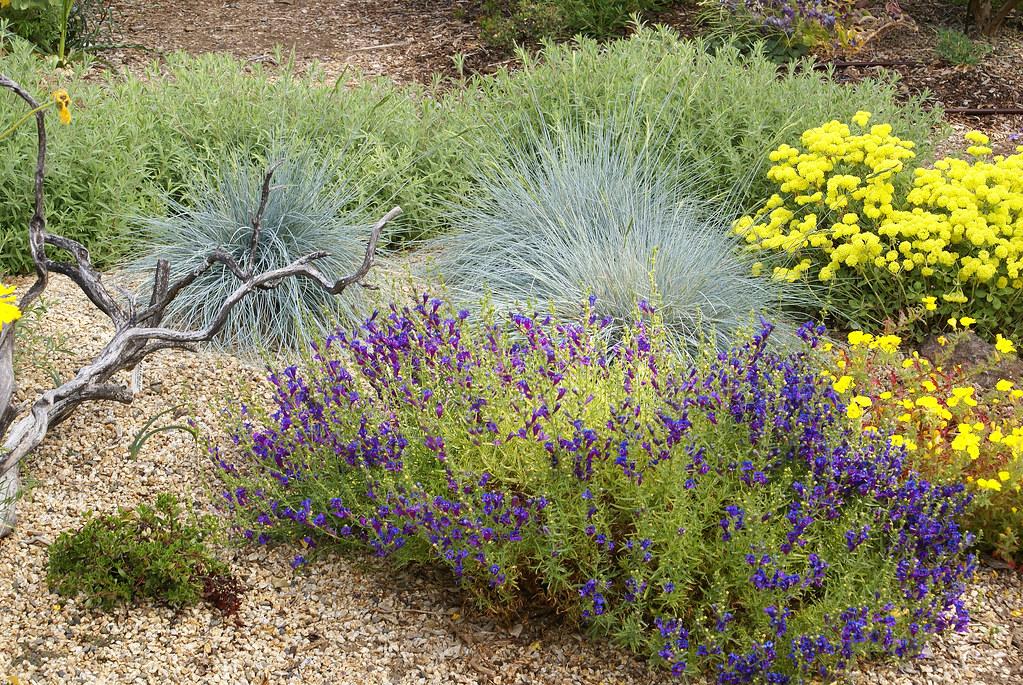 There are so many beautiful plants that are native to Idaho that can be used to landscape around your home. These plants include many different colors, shapes, heights and peak seasons for blooming! By using native plants, you can help keep a beautiful landscape almost year-round with little effort on your part. Let the Idaho seasons begin!
  Information on landscaping with native plants can be found at University of Idaho’s College of Agriculture and Life Sciences website.
  Information on how your native landscape is helping provide wildlife with habitat visit Washington State University’s website.