Idaho Average First Frost Date Map will give you accurate information for your county.
Friday, October 13, 2023
Frost, Freeze, or Hard Frost? It's that time of year...!
Idaho Average First Frost Date Map will give you accurate information for your county.
Sunday, October 8, 2023
Potato harvest time! How do you like them?
One of my favorite vegetables is the humble and oh so delicious potato! Watch this video for tips on when and how to harvest. You can harvest young potatoes when the vines are still green - or wait until the vines die for final harvest...or both!
Here's an article about how to have a successful potato garden. Also there are many ways to store and then enjoy throughout the seasons.
My family enjoys it mashed, cubed, roasted, shredded...I don't think there is a potato preparation they would turn down. One of the simplest - and most delicious - is oven roasted potatoes. Easy to prepare and oh so delicious!
Roasted potatoes in a convection oven3-4 large potatoes, cubed
1 tablespoon of olive oil
salt and pepper to taste
dried or fresh herbs (optional). We love Rosemary or Thyme
Directions: add your cubed potatoes to a large bowl. Pour the olive oil over the potatoes and then toss them until they are evenly coated. Evenly coat them with salt and pepper.
Put them on a rack (we use a cooling rack that is oven safe) on a cookie sheet. Place in a convection oven at 400 degrees for 35-40 minutes or until the edges of the potatoes are crisp and brown.
Friday, September 29, 2023
Is this true...Chrysanthemums don't help Pollinators?
I do love the Autumn Asters in my yard and the constant buzzing of pollinators around them - I, also, have several chrysanthemums planted that come back every year and when area nurseries bring out new colors, I'm so tempted. So let's talk...
- Pollination is the process that takes place when pollen is moved between flowers for successful seed and food production and ensures that a plant or tree will produce mature fruit and a viable set of seeds that are capable of germination. What do birds and bees have to do with this? Birds, domestic honeybees, butterflies, and other insects and animals are responsible for the moving of the pollen among the flowers. Without the pollinators, there is no plant growth.
- Pollinators prefer some flowers over others, a concept known as Pollinator Syndromes. For example, because a butterfly has a long, slender mouth part (proboscis), they prefer flowers that are long and tube-like, also think hummingbirds. Some flies, on the other hand, have short, round mouth parts much like a sponge. For these pollinators and most bees, a wide-open flower is preferred. Or, for other pollinators, like moths, a flower that is open at night is preferred because that is when moths are active.
- My primary goal is to create a backyard ecology that promotes all pollinators - bees, birds, mammals, reptiles, insects - with plants that sustain them - whether native or non-native throughout the flowering seasons.

| Echinacea choices - Tufts Pollinator Initiative |
![]() |
| My new favorite bush Caryopteris 'Blue Mist' |
Friday, September 22, 2023
Planting trees in the fall? Let's do this!
Fall is a great time to plant trees. What is the best way to plant them? Whether you plant them yourself, or you use a landscape contractor to plant your trees for you, there are recommended practices you should follow. Improper planting of trees, both in the nursery setting, and in the landscape setting, contribute to more tree deaths than all other factors combined!

Next, look up. Make sure you have vertical clearance for your trees. Avoid planting them under the utility’s right of way.
Once you have done a site analysis to ensure you have selected the right tree for the right place and that you are not going to disrupt any utilities, head to the nursery to buy your plant material.

Handling the tree carefully by the root ball, place the tree in the planting hole with the root ball rising above the soil grade one to two inches on firm, undug soil. Once the tree is in place, remove the burlap and wire baskets from the top third of the root ball. Fabric, paper pulp pots, and containers should carefully be removed. Now you may add mulch. Just avoid mulch volcanoesand don't allow mulch to touch the trunk of the tree. Mulch should be kept a minimum of four inches away from the tree's trunk. Not following this practice allows for disease and decay organisms to rot the trunk of the tree. Mulch should be applied at a depth of four inches. For young trees prone to winter damage, or in areas where animals can cause damage to the tree, consider protecting them. Tree staking is not recommended except in wind prone or high traffic areas.
Monday, September 18, 2023
What Pollinators Need in the Fall
![]() |
| Fall flowers for pollinators |
![]() |
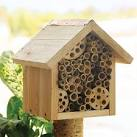
| Bee Hotel |
Friday, September 8, 2023
Intro to Seed Saving
Tomato Seeds
Tomatoes are a popular seed-saving choice and a good place to start. For tomato seeds, you will need a pint sized canning jar (with its ring) and a piece of paper towel large enough to cover the top. You will also want to have a sharp knife, a spoon, a fork, and a cutting board. Finally, you’ll need a paper towel for drying, labeling paper, and an envelope to store your dry seeds.
The process starts while your tomatoes are still growing on the vine. Choose the tomato that you want to save seeds from and remember no to pick it. It will need to continue to grow till it is just past its ripened state before you cut it off the vine. The next steps are to cut it in half, scoop out the insides into the pint jar and add water until it is half to two thirds full. Using the fork, mash/puree the seed mixture in the jar till it is all separated. Swirl the jar to see if the mix is even. Put the paper towel over the top and fasten it in place with the ring. Let the jar sit on your kitchen counter where you can watch it and swirl it at least once a day for the first two to three days. Let it sit then until it develops a fuzzy moldy looking top. Then add a little more water, swirl, and then let it sit for a minute or so, so the heavy viable seeds settle to the bottom. You can use the fork to lift out and dispose of the slime from the top. Add water, swirl, and let it sit again, then pour off the top mixture leaving the seeds on the bottom. You may have to do this several times until clear water and seeds on the bottom are all that remain. Then pour off the water and dump the seeds on your drying towel. Once they are dry, place them in a labeled and dated envelope and store them in a cool, dry place until you’re ready to plant them next season.
Pepper Seeds
Peppers (Bell, Jalapeno, Poblano, Anaheim, etc.) are another popular seed-saving choice. Just as described above, you want to choose the pepper that you like and want to grow again next year. Cut the pepper open so you can remove the seeds. Put the seeds on a paper towel to dry. Make sure you label your seeds. When they are dry, usually in a couple weeks, soak them in water for a day or so. The seeds that sink to the bottom are your most viable seeds, these are the ones you want to save.
Tomatoes and peppers are a great place to start, but you can save seeds from all of your favorite plants, with a little research. Seed Sowing and Seed Saving, written by Carole Turner, is a good book on how to save seeds and plant them. Also consider your local University of Idaho County Extension Office, your local library, and your favorite bookstore.